Introduction
Artificial intelligence is no longer a future prospect for the fashion industry — it is here, operational, and reshaping every dimension of how fashion is designed, produced, marketed, and consumed.
From generative AI tools that produce thousands of design concepts in minutes, to recommendation engines that have transformed e-commerce, to demand forecasting systems that are beginning to solve fashion’s chronic overproduction crisis — AI is not replacing creativity in fashion, but it is fundamentally augmenting and accelerating every part of the industry.
This guide maps the full landscape of AI in fashion: where it is being used, by whom, with what results, and what it means for designers, brands, and consumers.
Table of Contents
- Introduction
- AI in Fashion Design and Ideation
- Generative Design
- AI in Trend Forecasting
- AI Tools Used in the Fashion Industry
- Real-World Case Studies of AI in Fashion
- AI in Personalized Shopping
- AI in Demand Forecasting and Inventory Management
- AI in Sustainable Fashion Production
- AI in Fashion Marketing and Content
- How AI Is Changing Fashion Careers
- Challenges and Concerns Around AI in Fashion
- Key Statistics on AI in Fashion
- The Future of AI in Fashion
AI Tools Used in the Fashion Industry
AI in fashion is powered by a growing ecosystem of specialized tools used by designers, merchandisers, marketers, and supply chain managers.
Some of the most widely used AI tools in fashion include:
Design and visualization tools
-
Midjourney
-
DALL-E
-
Stable Diffusion
-
Refabric
-
Cala
Trend forecasting platforms
-
WGSN Instock
-
Trendalytics
-
Stylumia
-
Heuritech
3D fashion design tools
-
CLO3D
-
Browzwear
-
Style3D
AI marketing and content tools
-
Jasper AI
-
Copy.ai
-
ChatGPT
These tools are rapidly becoming part of the standard digital toolkit for fashion professionals, much like Adobe Illustrator and Photoshop did in earlier decades.
AI in Fashion Design and Ideation
Generative Design
Generative AI tools — including purpose-built fashion systems and general image generation platforms like Midjourney, DALL-E, and Stable Diffusion — are now widely used by fashion designers for rapid concept visualization.
A designer can input a text prompt describing a garment concept (“deconstructed blazer in cobalt blue with exaggerated lapels, SS25 aesthetic, technical fabric”) and receive dozens of visual concept variations in seconds. These images serve as ideation tools — mood board elements, client presentation visuals, and starting points for more detailed design development.
Fashion-specific AI design tools:
- **Refabric:** Generates garment designs, colorways, and prints from text prompts. Built specifically for the fashion industry.
- **Cala:** An integrated fashion design and production platform with AI-assisted design features.
- **YarnBuddy/Stitch Fix AI:** AI-assisted knitwear and pattern design.
Important nuance: Generative AI for design raises significant intellectual property questions. AI models trained on existing designers’ work may produce outputs that inadvertently replicate specific designers’ styles. The legal and ethical framework around AI-generated fashion design is actively evolving.

AI-powered fashion trend forecasting dashboard showing data analytics
AI in Trend Forecasting
Traditional trend forecasting relied on human experts who attended fashion weeks, monitored cultural movements, and produced expensive, lengthy reports that were outdated by the time they were published.
AI-powered trend forecasting platforms analyze vast datasets in real time:
- Social media posts and engagement (Instagram, TikTok, Pinterest)
- Search data (Google Trends, Shopify search data)
- Runway images
- Street photography
- Sales data from thousands of retailers
- Cultural media (film, music, TV)
Leading AI trend forecasting platforms:
- **WGSN Instock:** Real-time sell-through data analysis and trend tracking
- **Trendalytics:** Social and search data trend analysis
- **Stylumia:** Demand intelligence platform using AI to identify emerging trends
- **Heuritech:** Computer vision AI that analyzes social media imagery for trend signals
These platforms can identify emerging trends 12–18 months before they reach mainstream awareness — providing brands with genuinely actionable lead time to design and produce relevant products.
Real-World Case Studies of AI in Fashion
Several major fashion brands are already deploying AI across design, supply chain, and retail operations.
Zara (Inditex)
Uses AI and RFID technology to track real-time store inventory and customer demand. This allows the company to design, produce, and distribute new collections in as little as two to three weeks.
Stitch Fix
Combines machine learning algorithms with human stylists to create highly personalized clothing recommendations for millions of customers.
H&M Group
Uses AI demand forecasting models to optimize inventory allocation across thousands of stores globally.
Nike
Uses AI-driven analytics to predict product demand and optimize manufacturing schedules.
These implementations demonstrate that AI in fashion is already operational at scale rather than experimental.
AI in Personalized Shopping
The transformation of e-commerce by AI recommendation systems is, arguably, the most commercially significant AI application in fashion to date.
Recommendation Engines
Platforms like Stitch Fix, ASOS, H&M, and Zalando use sophisticated machine learning recommendation systems that learn individual user preferences from browsing behavior, purchase history, style ratings, and demographic data to surface personally relevant product suggestions.
Stitch Fix’s entire business model is built on AI-human collaboration: algorithms select garments for each customer’s shipment, which human stylists then review and personalize. The company employs more than 100 data scientists specifically for its recommendation infrastructure.
Visual Search
AI visual search allows shoppers to upload or point their phone camera at any item — a garment seen on the street, on social media, or in a store window — and find similar items for purchase. Pinterest Lens, Google Lens, and dedicated fashion apps like Snap’s ShopMy all use computer vision to enable visual product discovery.
AI Virtual Try-On
Augmented reality virtual try-on technology — powered by computer vision and machine learning — allows shoppers to virtually “try” garments without physically wearing them.
Platforms including Snapchat, Instagram, and dedicated apps partner with brands to let consumers see how clothing and accessories will look on their own image. Reducing returns by improving purchase accuracy is a key business driver — fashion e-commerce returns run at 25–40%.
AI in Demand Forecasting and Inventory Management
Fashion’s chronic overproduction problem — an estimated 30% of all garments produced are never sold — is one of the industry’s most damaging environmental issues. AI-powered demand forecasting is beginning to address this at scale.
Machine learning models analyze historical sales data, weather patterns, social media trends, macro economic indicators, and competitor pricing to generate highly accurate demand forecasts. This allows brands to produce closer to actual demand — reducing overstock, reducing waste, and improving profitability simultaneously.
Brands leading in AI demand forecasting:
- **Zara’s parent company Inditex** uses RFID data from its stores, combined with machine learning, to achieve one of the industry’s most responsive supply chains
- **Tommy Hilfiger** partnered with IBM to use AI for design and trend analysis
- **PVH Corp** (Calvin Klein, Tommy Hilfiger) has significant investment in AI demand planning
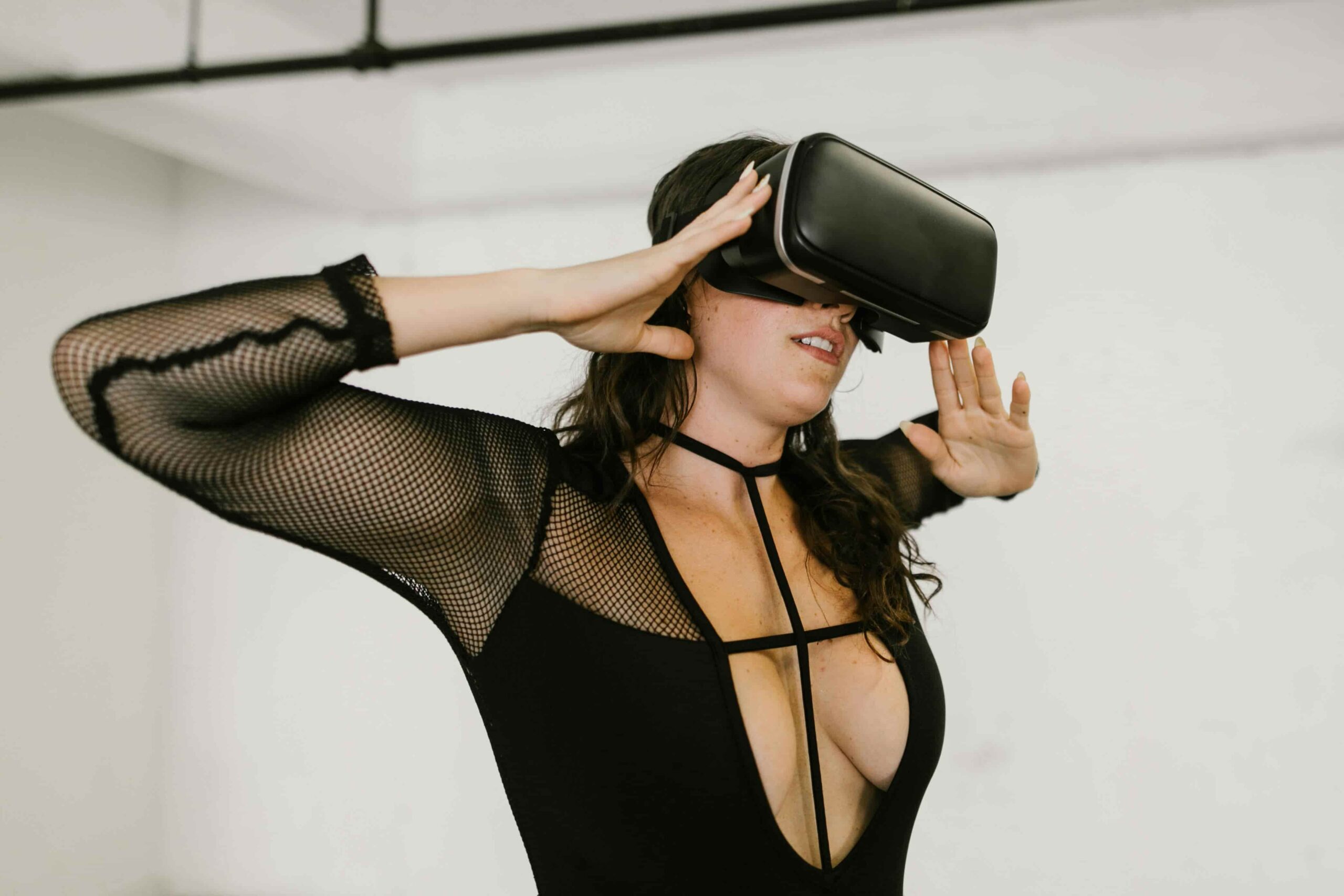
Augmented reality virtual fashion try-on technology on smartphone
AI in Sustainable Fashion Production
Beyond demand forecasting, AI is supporting sustainability in fashion production in several ways:
Material innovation: AI is accelerating the discovery of new sustainable materials. Machine learning models can simulate the properties of novel fiber combinations and predict performance outcomes, dramatically speeding up the material R&D process.
Quality control: Computer vision systems inspect finished garments for defects at much higher speed and accuracy than human inspection. Fewer defective products means less waste.
Pattern optimization (Nesting): AI-powered pattern cutting optimization software arranges pattern pieces on fabric to minimize waste. Advanced systems achieve fabric utilization rates of 85%+ versus industry averages of 75–80%.
Resale and circularity: AI powers the authentication systems that make luxury resale platforms viable. The RealReal uses AI image analysis as a first-pass authentication step for the millions of items processed annually.
AI in Fashion Marketing and Content
AI-Generated Content
Fashion brands are increasingly using AI tools to generate marketing copy, social media captions, email subject lines, and product descriptions. Tools like Jasper, Copy.ai, and brand-specific implementations dramatically accelerate content production.
AI Fashion Photography
AI-generated fashion imagery is beginning to appear in commercial contexts. Virtual models generated by AI — like those created on platforms such as Lalaland.ai or Bria — allow brands to show garments on diverse, customizable digital models without photoshoots. This reduces photography costs and allows rapid product visualization.
This technology is both exciting and controversial: there are legitimate concerns about its impact on fashion photographers and models, and about representation and authenticity.
AI-Powered Ad Targeting
Machine learning ad optimization on Meta, Google, and TikTok platforms allows fashion brands to target ads with extraordinary precision — reaching the exact consumers most likely to purchase specific products at the moment they’re most receptive.
How AI Is Changing Fashion Careers
AI is not eliminating fashion jobs, but it is transforming the skills required across the industry.
New career roles are emerging, including:
-
Fashion data analysts
-
AI fashion designers
-
3D fashion designers
-
Digital garment technologists
-
Fashion technology product managers
Traditional roles such as designers, merchandisers, and marketers increasingly require data literacy, digital tools, and familiarity with AI-assisted workflows.
Fashion education programs are rapidly adapting by introducing fashion technology, digital design, and AI-driven analytics into their curricula.
Challenges and Concerns Around AI in Fashion
Intellectual Property and Creative Credit
When an AI trained on thousands of designers’ work produces a design, who owns it? This question is actively being contested in courts and policy discussions globally.
Labor Displacement
If AI can generate design concepts, write copy, produce photography, and forecast trends — what happens to the human workers who previously performed these tasks? The industry’s relationship with labor is complex, and AI adds a new layer of complexity.
Diversity and Algorithmic Bias
AI systems trained on biased data produce biased outputs. Fashion AI trained predominantly on images of a narrow range of body types, skin tones, and cultural aesthetics perpetuates those biases at scale.
Over-reliance on Data
AI is excellent at recognizing and extrapolating from patterns in historical data. It is less good at predicting genuine discontinuities — the cultural shifts that create entirely new aesthetic movements. Human creativity and cultural sensitivity remain essential.
Key Statistics on AI in Fashion
Several industry reports highlight the accelerating adoption of AI across fashion.
Key data points include:
-
The global AI in fashion market is projected to exceed $4–6 billion by 2030.
-
Fashion e-commerce recommendation engines drive up to 35% of online purchases.
-
AI demand forecasting can improve inventory accuracy by 20–50%.
-
Virtual try-on technologies can reduce e-commerce returns by 10–30%.
Consultancies such as McKinsey estimate that AI adoption could add hundreds of billions of dollars in productivity gains to the global fashion industry.
The Future of AI in Fashion
The trajectory is clear: AI integration in fashion will deepen across every function. Key developments to watch:
-
- **AI-designed materials:** Fully AI-designed sustainable fibers, coatings, and finishes
- **Hyper-personalized fashion:** Garments designed to exact individual specifications, manufactured on demand
- **AI supply chain management:** End-to-end supply chain optimization from fiber to consumer
- **Generative fashion for virtual worlds:** AI-generated fashion for metaverse and gaming environments
- **Human-AI design collaboration as standard practice**
AI in Fashion FAQ
How is AI used in the fashion industry?
AI is used in fashion for design generation, trend forecasting, personalized shopping recommendations, demand forecasting, supply chain optimization, and automated marketing.
Can AI design clothes?
Yes. Generative AI tools can create garment concepts, prints, and color combinations based on text prompts. Designers typically use these outputs as inspiration or starting points.
Which brands use AI in fashion?
Major brands using AI include Zara, H&M, Nike, Stitch Fix, and Zalando. These companies use AI for demand forecasting, recommendation engines, and supply chain optimization.
Will AI replace fashion designers?
AI is unlikely to replace designers but will augment their capabilities by accelerating ideation, improving trend analysis, and automating repetitive tasks.
Is AI helping sustainable fashion?
Yes. AI improves demand forecasting, reduces overproduction, optimizes fabric cutting, and accelerates the discovery of sustainable materials.
Continue Reading on Fashionnovation.com:
- How Much Do CLO3D Designers Make?
- 3D Printing in Fashion — fashionnovation.com/3d-printing-in-fashion
- Virtual Fashion — fashionnovation.com/virtual-fashion-digital-clothing
- Fashion Tech Innovations — fashionnovation.com/fashion-technology-innovations
- Best Fashion Design Software in 2026: Top Tools Reviewed
You can write to us at fashionnovationfd@gmail.com
We read and publish your articles!

0 Comments