Table of Contents
- Introduction
- What is a Fashion Mood Board?
- Types of Fashion Mood Boards
- What to Include in a Fashion Mood Board
- Physical vs. Digital Mood Boards
- Step-by-Step: How to Create a Fashion Mood Board
- Best Tools for Digital Mood Boards
- Examples of Fashion Mood Boards
- Professional Tips for Creating Strong Mood Boards
- Common Mood Board Mistakes
- Fashion Mood Board FAQ
Introduction
Every great fashion collection begins with a story. Before a single sketch is drawn, before a fabric is sourced, before a pattern is made — there is a mood board.
A fashion mood board is a visual collage that captures the feeling, aesthetic direction, color palette, texture language, and cultural references of a collection or design concept.
Think of it as the emotional and visual DNA of a collection, expressed before the design work begins.
Mood boards are used by fashion designers, stylists, art directors, buyers, and creative directors for everything from designing a collection to pitching a campaign to decorating a showroom.
This guide walks you through exactly how to create one that is both beautiful and functionally useful.
What is a Fashion Mood Board?
A fashion mood board (also called an inspiration board or concept board) is a curated assemblage of visual references that define the aesthetic direction of a design project.
It typically includes:
• Images (photography, editorial, nature, architecture, art)
• Color swatches
• Fabric or texture samples
• Typography samples (if relevant to branding)
• Patterns and prints
• Garment references
• Words, quotes, or descriptive language
• Cultural or historical references
Mood boards serve as a creative anchor — a visual reference point that keeps a collection or project coherent as the design process proceeds.
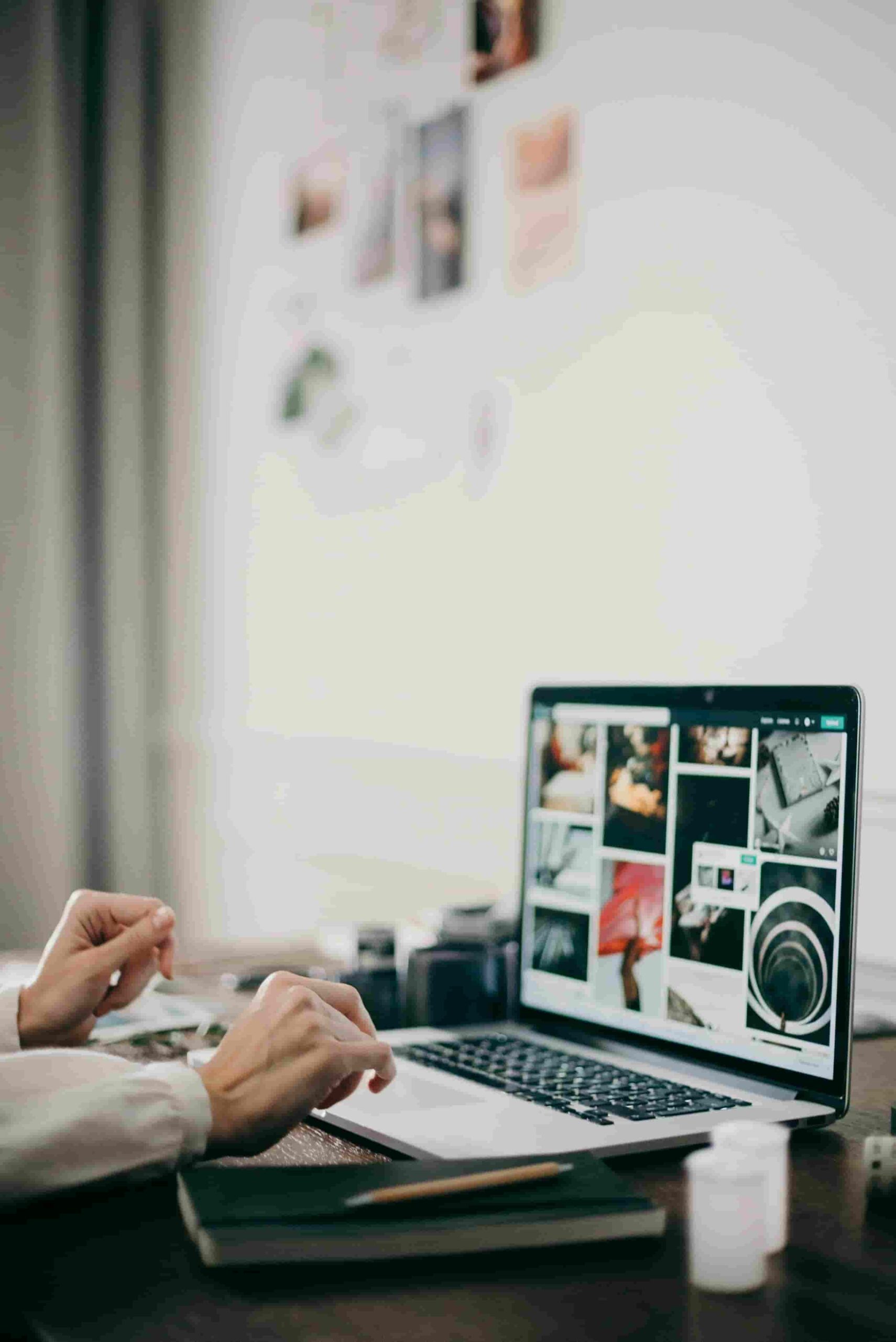
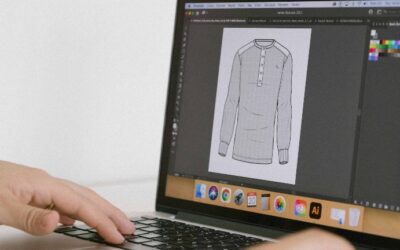
Digital fashion mood board on screen showing curated fashion inspiration
Types of Fashion Mood Boards
Collection Concept Board
Captures the overall mood, story, and aesthetic of an entire collection.
Color Palette Board
Focused specifically on color relationships.
Fabric and Texture Board
Includes fabric swatches and material references.
Customer Profile Board
Defines the target customer.
Campaign and Styling Board
Used for photo shoot planning and creative direction.
What to Include in a Fashion Mood Board
<h2 id=”what-to-include-mood-board”>What to Include in a Fashion Mood Board</h2>
Strong Hero Image
Every great mood board has one dominant image.
Color Story
Include 4–7 color swatches.
Fabric and Texture References
Textures communicate material mood.
Garment and Silhouette References
Runway or editorial images that suggest silhouettes.
Cultural and Lifestyle References
Architecture, art, nature, interiors, film stills.
Typography or Mood Words (Optional)
Words like:
Fluid
Sculptural
Undone
Precise
Physical vs. Digital Mood Boards
Physical Mood Boards
Advantages
• Tactile and immersive
• Excellent for presentations
• Natural editing discipline
Disadvantages
• Difficult to share remotely
• Time consuming
Digital Mood Boards
Advantages
• Easy to share
• Easy to edit
• Ideal for presentations
Disadvantages
• No physical texture
• Easy to overcrowd
Best practice: create both.
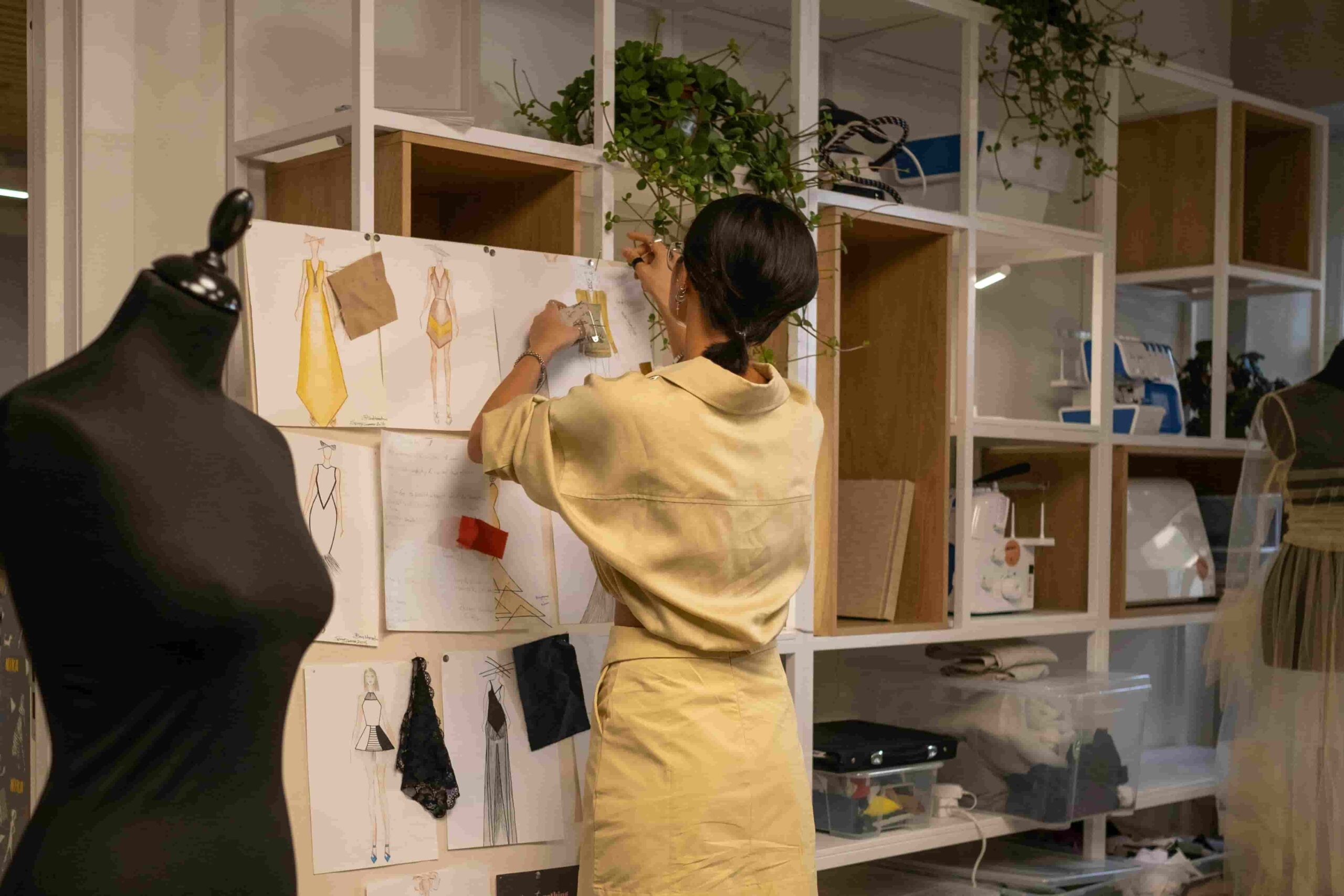
Physical design mood board pinned to wall with fabric swatches and color chips
Step-by-Step: How to Create a Fashion Mood Board
Step 1: Define Your Concept
Ask yourself:
• What story am I telling?
• What emotion should the viewer feel?
• What culture or environment inspires the concept?
• Who is the customer?
Write 3–5 sentences describing the concept.
Step 2: Gather References
Sources include:
Pinterest
Instagram
Runway archives
Museum collections
Film stills
Nature photography
Collect 40–60 images initially.
Step 3: Curate and Edit
Reduce your images to 10–15 strong references.
Remove images that:
• Feel generic
• Duplicate another image
• Break color harmony
Step 4: Establish Layout
Layout principles:
Hero image: 30–40% of board
Grouping of similar references
White space for breathing room
Color harmony across board
Step 5: Add Color Swatches
Add 4–7 colors that define the palette.
Step 6: Final Review
Ask:
Does the board immediately communicate the mood?
Is there a dominant visual direction?
Is the color palette coherent?
If yes — the board is complete.
Best Tools for Digital Mood Boards
Canva
Beginner-friendly drag-and-drop interface.
Excellent research tool.
Adobe Photoshop
Maximum creative control.
Milanote
Great for collaboration.
Moodboard App
Touch-optimized for tablets.
Examples of Fashion Mood Boards
Mood boards can vary dramatically depending on the design concept.
Common themes include:
Minimalist mood boards with neutral colors and architectural imagery.
Nature-inspired boards featuring organic textures, landscapes, and earthy palettes.
Avant-garde concept boards mixing art photography, abstract shapes, and experimental silhouettes.
Luxury mood boards referencing historical fashion, classical art, and couture runway imagery.
Studying professional fashion mood boards from designers and fashion schools can significantly improve your own board-building skills.
Professional Tips for Creating Strong Mood Boards
Professional designers often follow several unwritten rules when creating mood boards.
Start broad, then edit aggressively. Strong boards come from careful editing, not image collection.
Look beyond fashion. Architecture, film, sculpture, and nature often provide stronger inspiration than other designers’ work.
Maintain visual hierarchy. Your eye should land on one dominant element first.
Limit your palette. Too many colors dilute the concept.
Finally, remember that a mood board should evoke emotion immediately.
If someone can understand the feeling of your concept within three seconds, the board is successful.
Common Mood Board Mistakes
Overcrowding
No color cohesion
Only fashion references
Direct imitation of designers
No dominant image
Fashion Mood Board FAQ
What is the purpose of a fashion mood board?
A mood board communicates the visual direction and emotional tone of a design concept before garments are designed.
How many images should a mood board contain?
Most professional boards include 10–15 images.
Are digital mood boards better than physical ones?
Both have advantages. Digital boards are easier to share, while physical boards better communicate texture and materials.
Do fashion designers always use mood boards?
Yes. Mood boards are a standard tool used by designers, stylists, and creative directors during the concept development stage.
What software is best for digital mood boards?
Popular tools include Canva, Photoshop, Pinterest, and Milanote.
Continue Reading on Fashionnovation.com:
- The Ultimate Guide to Fashion Sketching for Beginners
- Types of Fabric: The Fashion Designer’s Complete Reference Guide
- Pattern Making 101: A Complete Beginner’s Guide to Pattern Making in Fashion
- Color Theory in Fashion — fashionnovation.com/color-theory-in-fashion
You can write to us at fashionnovationfd@gmail.com
We read and publish your articles!
0 Comments