
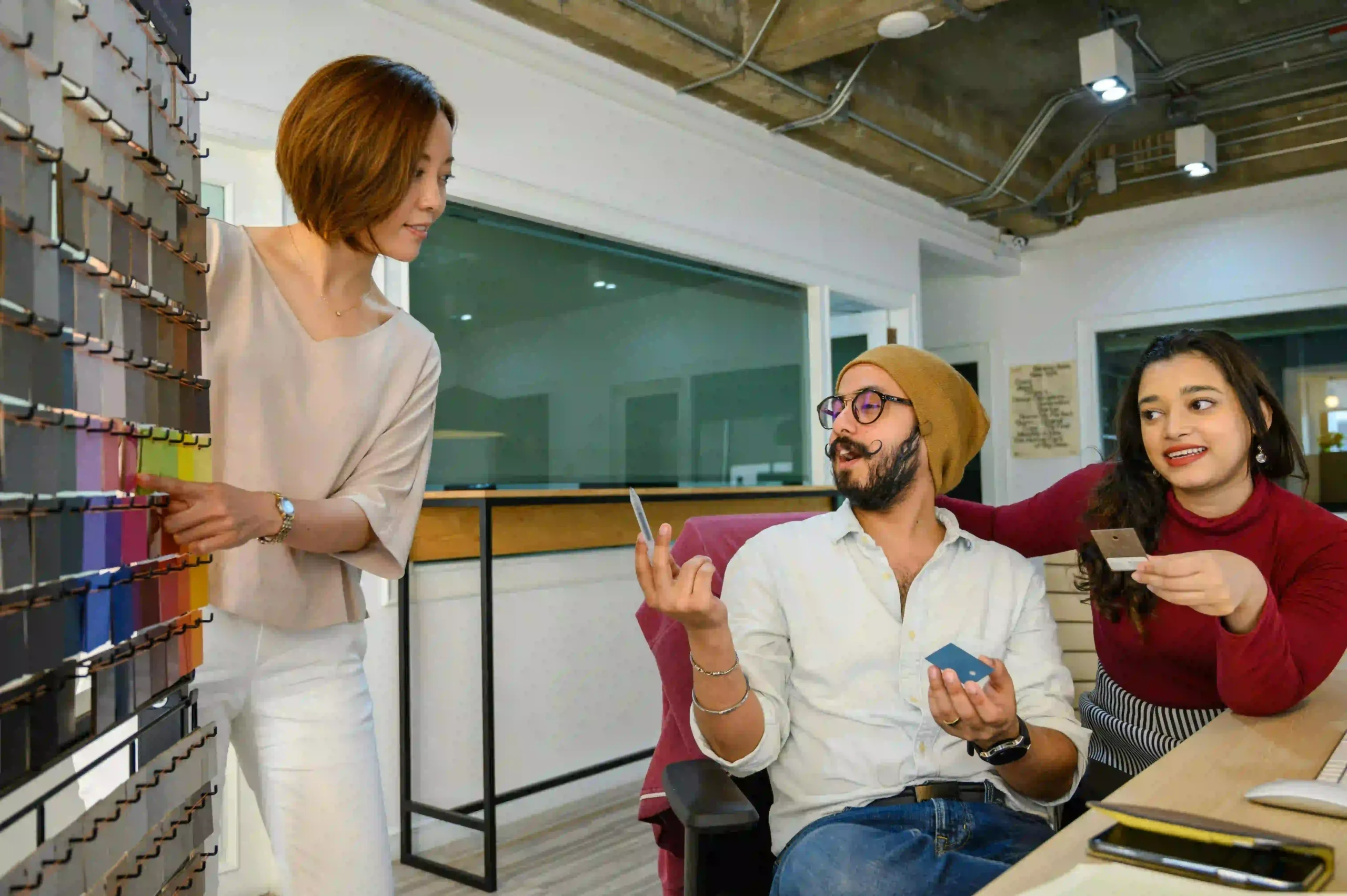

Fashion merchandiser analyzing sales data and product assortment in a retail office
Table of Contents
- What is Fashion Merchandising?
- Fashion Merchandising vs. Fashion Buying
- Types of Fashion Merchandising Roles (Updated 2026)
- Key Responsibilities of a Fashion Merchandiser
- The Skills a Fashion Merchandiser Needs + Must-Have Tools
- Education, Entry Paths & Step-by-Step 2026 Launch Guide
- Salary Overview 2026 (US • UK • India)
- Career Progression + Top Employers Hiring Now
- Pros & Cons of a Fashion Merchandising Career
- A Day in the Life + 2026 Trends (AI, Sustainability, Digital)
- Frequently Asked Questions (FAQ)
What is Fashion Merchandising?
Fashion merchandising sits at the critical intersection of fashion, business, and consumer behavior. Merchandisers are responsible for ensuring the right products are in the right place, at the right time, in the right quantities, at the right price — for the right customer.
In practice, this means analyzing sales data, forecasting consumer demand, planning assortments, setting pricing strategies, and collaborating with design, buying, and retail teams to maximize both sales performance and customer satisfaction. Fashion merchandising is the business brain behind the fashion product.
Fashion Merchandising vs. Fashion Buying
These two roles are closely related and sometimes confused:
• Fashion Buyer: Selects and purchases the specific products that a retailer will carry. Makes the “what to buy” decisions based on trend analysis, customer data, and brand strategy. • Fashion Merchandiser: Plans the commercial strategy around the product assortment — how much to buy, how to price it, how to distribute it across channels, how to manage inventory, and how to maximize sell-through.
At large retailers, buying and merchandising are separate departments working in close collaboration. At smaller brands or export houses (common in Dhaka/Bangladesh), one person may handle both functions. Added insight: Collection Merchandisers work pre-design with creative teams; Retail Merchandisers focus post-design on stock flow and regional performance.
Fashion buying and merchandising team meeting to review seasonal product range
Types of Fashion Merchandising Roles (Updated 2026)
• Retail Merchandiser: Works for a retailer — planning assortments, pricing, promotions, and inventory for stores/chains.
• Brand / Product Merchandiser: Works for a fashion brand — managing range across own stores, wholesale & e-commerce.
• Visual Merchandiser: Focused on physical & digital store displays and customer experience.
• Digital / E-commerce Merchandiser: Optimizes product pages, SEO, recommendations, and conversion on Shopify/Amazon.
New additions for 2026 authority:
• Planning Merchandiser: Heavy data forecasting & OTB.
• Wholesale Merchandiser: B2B deals and bulk allocation.
• Sustainable Merchandiser (fast-rising): Focus on ethical sourcing and circular economy metrics.
Key Responsibilities of a Fashion Merchandiser(Original list kept + additions) • Range planning, OTB, sales forecasting, pricing, inventory, performance analysis. Added: Supplier negotiation, markdown planning, competitor benchmarking, and AI-assisted demand sensing.
The Skills a Fashion Merchandiser Needs + Must-Have Tools 2026
• Analytical & quantitative (Excel master + Tableau/Power BI) • Commercial awareness • Fashion trend knowledge • Communication & negotiation • Forecasting intuition
New tools section (highly searched): Excel (advanced), PowerPoint, SAP/Oracle ERP, WGSN/Trend forecasting platforms, Tableau, ApparelMagic, Syrup Tech (AI inventory), Stylitics (visual AI).
Fashion visual merchandising store display with expertly arranged clothing
📷 IN-CONTENT PHOTO — Insert via WordPress Add Media at this position SAVE FILE AS: visual-merchandising-store-display.webp ALT TEXT: Fashion visual merchandising store display with expertly arranged clothing Search on Unsplash: visual merchandising store display fashion clothing accessories
Education and Entry + Step-by-Step 2026 Launch Guide
Relevant degrees: Fashion Merchandising (FIT, Parsons, LIM College, IDeA Worldwide, Dhaka universities), Business, Retail Management, Marketing.
Added comprehensive steps (to beat competitors):
- Get degree or diploma + learn Excel + basic fashion history.
- Build portfolio: 2–3 mock assortment plans, sales forecasts, mood boards (free Canva templates).
- Do internships/shop-floor experience (even 3 months at local retail counts).
- Apply Assistant roles + cold-email brands on LinkedIn.
- Graduate schemes: H&M, Zara, Marks & Spencer, Nike, PVH, Gap, local export houses in Bangladesh. Pro tip: Fashion design grads earn 25–30% more starting in merch roles.
Salary Overview 2026
| Role | US Salary | UK Salary | India / BD Export (LPA or USD) |
|---|---|---|---|
| Assistant / Junior | $38,000–$55,000 | £26,000–£37,000 | ₹4–8 LPA / $800–1,500 pm |
| Merchandiser | $55,000–$82,000 | £35,000–£52,000 | ₹8–15 LPA / $2,000–3,500 pm |
| Senior Merchandiser | $78,000–$110,000 | £48,000–£72,000 | ₹18–30 LPA |
| Head of Merchandising | $105,000–$145,000 | £70,000–£105,000 | ₹35–60 LPA |
| Director / VP | $145,000–$220,000+ | £110,000–£160,000+ | $5,000+ pm + expat benefits |
Bonuses 10–30% + travel allowance common. Data blended from BLS, Glassdoor, Payscale, ZipRecruiter March 2026 + India export house postings.
Career Progression
A typical fashion merchandising career path:
- **Allocator/Merchandising Assistant** (entry level) — distribution and data management
- **Assistant Merchandiser** — supporting a merchandiser with planning and analysis
- **Merchandiser** — own product category ownership
- **Senior Merchandiser** — larger category or multi-category ownership
- **Head of Merchandising** — leading a merchandising team
- **Director/VP of Merchandising** — senior leadership with full commercial responsibility
Fastest route = Excel + internship + internal move every 18–24 months. Top employers hiring merch/planning heavily in 2026: Zara, H&M, Nike, ASOS, Shein, PVH, Gap, local Bangladeshi export giants, Amazon Fashion.
Pros & Cons of a Fashion Merchandising Career
Pros: High earnings + bonuses, blend of creativity & analytics, travel to factories/shows, see your products on streets, rapid promotion (Head in 7–10 years possible), always in demand.
Cons: Season deadlines = stress, long hours during buying weeks, competitive, budget responsibility pressure, occasional weekend/travel demands.
A Day in the Life + 2026 Trends & Future Outlook
Typical day: Morning sales report review → Excel/ Tableau analysis → Team meeting on trends → Supplier calls → Afternoon assortment tweaks + markdown plan.
2026 hot trends: AI demand forecasting (reducing markdowns 40%+), sustainability metrics in every plan, hyper-personalized e-comm merchandising, virtual try-on data integration. Merchandising + Planning roles are among the TOP hiring categories right now.
Continue Reading on Fashionnovation.com
• How to Build a Fashion Portfolio: Tips for Students and Professionals
• Fashion Internships: How to Land Your Dream Fashion Internship
Frequently Asked Questions (FAQ)
Q1: What is the difference between a fashion buyer and merchandiser?
A: Buyer chooses WHAT to buy; Merchandiser decides HOW MUCH, at what price, and how to sell it profitably.
Q2: Do I need a fashion degree?
A: Preferred but not mandatory. Business, marketing or even Excel mastery + passion works — many succeed with economics/law backgrounds.
Q3: What is the average salary in 2026?
A: $55k–$82k USD mid-level; higher with bonuses in major cities or export roles.
Q4: Is fashion merchandising a good career in 2026?
A: Yes — one of the most in-demand and highest-growth business roles in fashion due to e-comm + AI boom.
Q5: How long to reach senior level?
A: 5–8 years with strong performance and data skills.
Q6: Best tools to learn first?
A: Advanced Excel + Tableau + WGSN trend reports.
Q7: Can I work remotely or from Bangladesh?
A: Yes — many export houses and digital merch roles are hybrid or fully remote now.
You can write to us at fashionnovationfd@gmail.com
We read and publish your articles!
0 Comments