Introduction
Breaking into fashion design is one of the most exciting — and competitive — career moves you can make. The global fashion industry is worth over $1.7 trillion, and behind every garment, every runway collection, and every retail shelf is a designer who started exactly where you are now: with a passion for fashion and a dream of turning that passion into a profession.
But how do you actually start? What skills do you need? Do you need an expensive degree? How do you build a portfolio with no experience? This guide answers every question aspiring fashion designers ask, in the right order, so you can move from dreaming about fashion to working in it.
1. What Does a Fashion Designer Actually Do?
Before investing time and money into this career, it’s worth understanding what fashion designers actually do on a daily basis — because the glamorous runway version and the reality are often quite different.
Fashion designers create clothing, accessories, and footwear. Their work spans the full product lifecycle: researching trends, sketching concepts, selecting fabrics, overseeing pattern making, directing sample production, and presenting collections to buyers, press, or retail partners.
Depending on the company size, a fashion designer might:
- Sketch dozens of designs per season
- Source fabrics and trims from suppliers
- Collaborate with patternmakers and seamstresses
- Attend trade shows and trend forecasting events
- Present designs in internal review meetings
- Manage a team of junior designers or assistants
At smaller brands, one designer may do all of the above. At large corporations like Zara or H&M, designers are specialists who focus on a narrow part of the process.
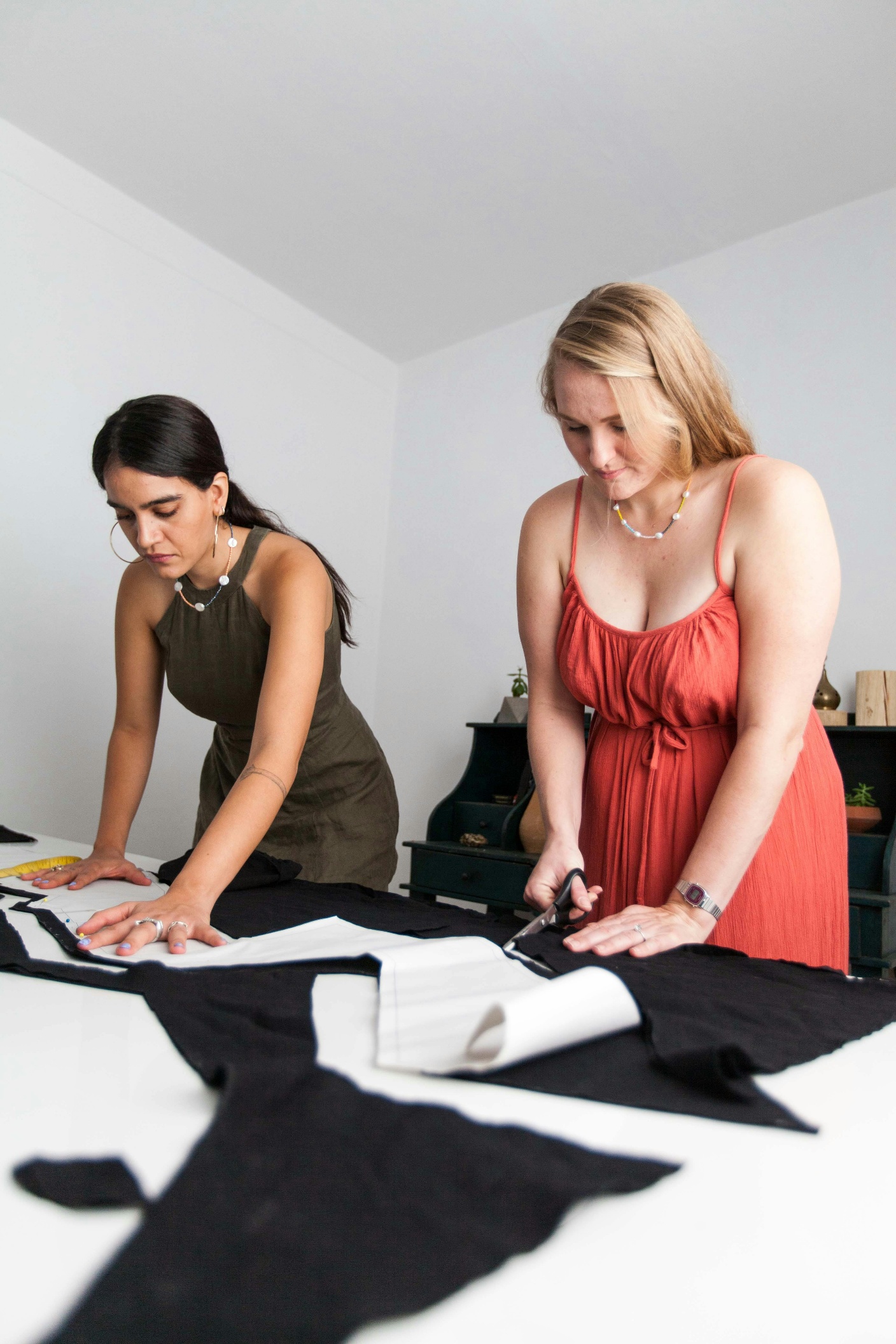
Fashion design students working with fabric and pattern at design school
2. Do You Need a Degree to Become a Fashion Designer?
The honest answer: a degree helps, but it isn’t mandatory. What matters is your portfolio, your skills, and your network.
The Case for a Fashion Design Degree
A formal degree from an institution like the Fashion Institute of Technology (FIT), Parsons School of Design, Central Saint Martins, or ESMOD gives you structured learning, access to professional equipment (industrial sewing machines, laser cutters, CAD labs), a peer network, industry mentors, and graduate show opportunities that get you in front of real employers.
Many top fashion houses still screen candidates by education pedigree for entry-level design roles.
The Case for Self-Teaching + Courses
Many successful designers are largely self-taught. The rise of platforms like Skillshare, Coursera, MasterClass, and YouTube has made fashion education accessible to anyone. Online certificates from reputable institutions like Polimoda or the London College of Fashion carry real weight.
If you’re budget-conscious or career-changing, a combination of online courses + personal projects + relentless portfolio building can absolutely lead to a successful career, especially in indie fashion, streetwear, or entrepreneurship.
The Hybrid Approach (Best of Both)
Consider a two-year associate degree or certificate program rather than a full four-year degree. You get the credential, the equipment access, and the mentorship at a fraction of the cost.
3. Essential Skills Every Aspiring Fashion Designer Needs
Regardless of your education path, these skills are non-negotiable if you want to work as a fashion designer.
Technical Skills
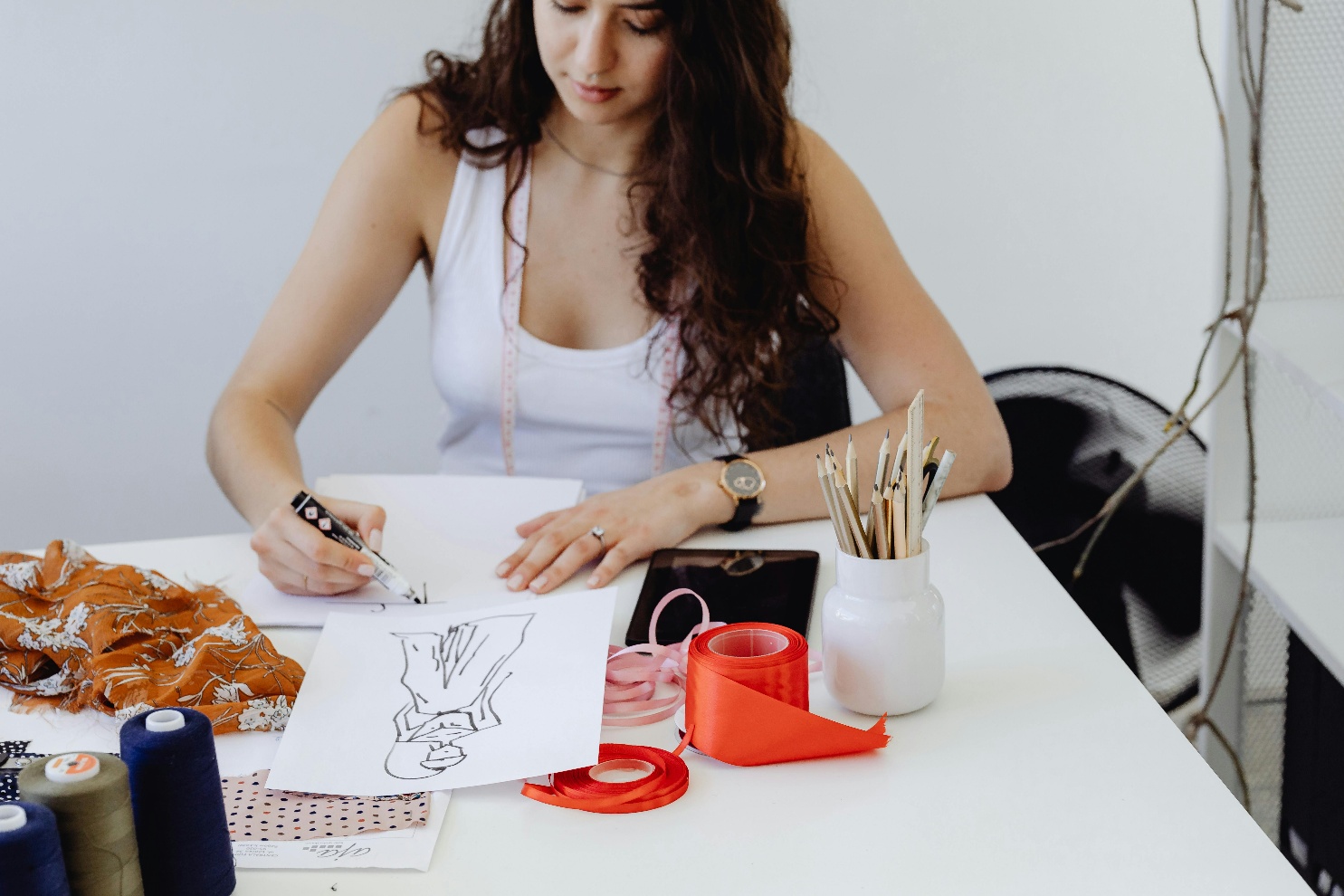
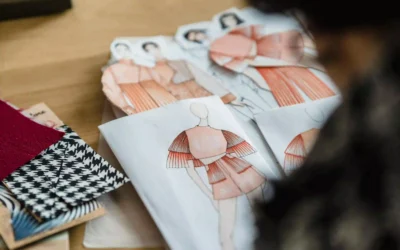
Sketching and Fashion Illustration: You need to be able to communicate your ideas visually. This doesn’t mean gallery-level art — it means clear, proportional fashion figures with recognizable garment details. Practice daily.
Pattern Making: Understanding how flat fabric becomes a three-dimensional garment is foundational. Learn both manual pattern drafting and software-based pattern making.
Sewing and Construction: Even if you never sew a stitch professionally, knowing how garments are constructed makes you a better designer. Take sewing classes early.
Draping: The art of arranging fabric on a dress form to create design shapes directly. Draping skills set great designers apart from good ones.
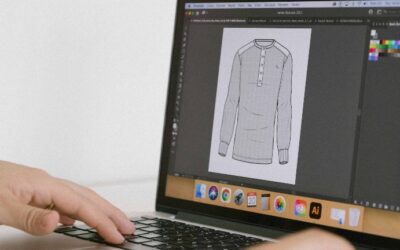
CAD / Design Software: Adobe Illustrator for technical flats, CLO 3D or Browzwear for 3D garment visualization, and Photoshop for presentation boards are the industry standard tools.
Creative and Soft Skills
Trend Awareness: Designers who can anticipate what consumers will want six to twelve months from now are invaluable. Follow fashion weeks, trend forecasting services, cultural movements, and street style.
Color Sensibility: Developing a strong instinct for color — how colors relate, how they communicate mood, how they work across seasons — is a learnable but critical skill.
Communication: You’ll pitch ideas to buyers, brief factories, and collaborate with merchandising teams. The ability to communicate your creative vision clearly is as important as the vision itself.
Resilience: Rejection is constant in fashion. Collections get cut, ideas get dismissed, applications go unanswered. Building resilience early saves your career.
4. How to Practice Fashion Design at Home
You don’t need a professional studio to begin learning fashion design. Many successful designers started by practicing at home with basic tools and inexpensive materials.
Begin with a simple sketchbook, pencils, and markers to practice fashion illustration daily. Observing clothing details—such as collars, seams, drapes, and fabric textures—will train your eye to notice how garments are constructed.
You can also practice by recreating existing garments. Take an old shirt or dress and try to sketch its pattern pieces, or alter it into a new design. This hands-on experimentation teaches you how fabric behaves and how design decisions affect the final garment.
Digital tools are also increasingly accessible. Programs like Adobe Illustrator allow designers to create professional technical sketches, while tools like CLO 3D let designers visualize garments virtually before producing physical samples.
Consistent practice—even for 30 minutes a day—can dramatically improve both your technical and creative skills.
5. Building Your Fashion Design Education
Recommended Learning Path for Beginners
Year 1: Foundations
- Learn fashion sketching (books: *Fashion Design Drawing Course* by Caroline Tatham; YouTube channels: Mina Hasan, Tehmina Hayat)
- Take beginner sewing classes (local classes or online via Craftsy)
- Study color theory and fabric fundamentals
- Start a fashion sketchbook — fill it daily
Year 2: Skills Development
- Learn pattern making (Winifred Aldrich’s *Metric Pattern Cutting* is the bible)
- Master Adobe Illustrator for technical flats
- Learn draping on a dress form
- Take a business/fashion industry overview course
Year 3: Specialization and Portfolio
- Choose your niche (womenswear, menswear, sportswear, accessories, etc.)
- Build 3–5 full collections for your portfolio
- Enter design competitions (LVMH Prize, CFDA competition, local competitions)
- Intern or assist a local designer
Top Resources
- **Books:** *The Fashion Designer’s Survival Guide* by Mary Gehlhar; *Patternmaking for Fashion Design* by Helen Armstrong
- **Online:** Central Saint Martins Short Courses, FIT online certificates, Skillshare fashion courses
- **Industry media:** Business of Fashion (BOF), WWD, Vogue Business — read daily
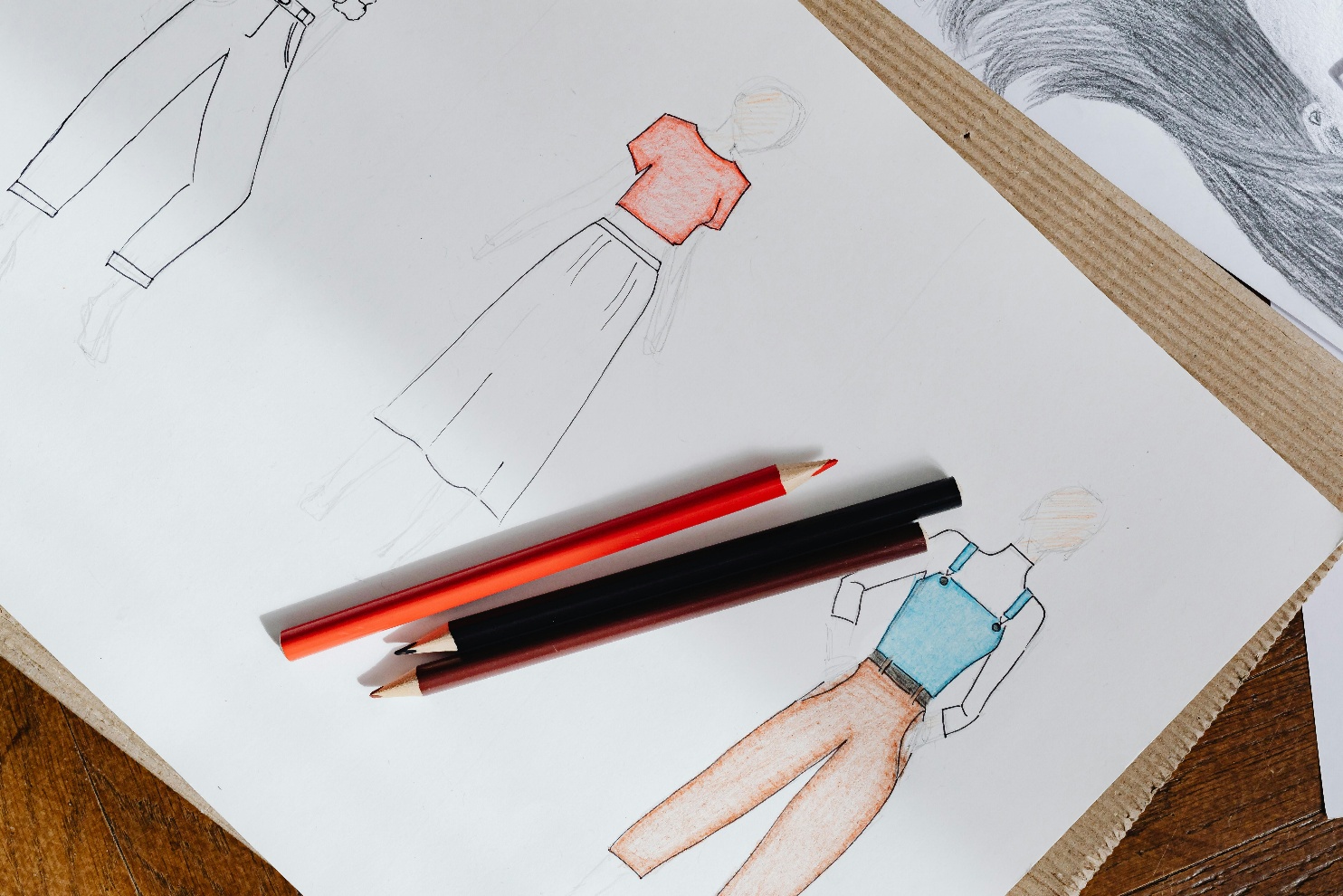
Fashion design portfolio with sketches markers and tools flat lay
6. Creating a Standout Fashion Portfolio
Your portfolio is your most important career tool. It replaces your resume in most fashion hiring contexts. A weak portfolio kills applications no matter how strong the rest of your credentials are.
What to Include in a Fashion Portfolio
- **5–8 fully developed collections** (each with research pages, sketches, fabric swatches, finished garments or detailed technical flats)
- **Fashion illustrations** showing your figure and rendering style
- **Technical flats** (Adobe Illustrator line drawings of garments)
- **Mood boards and concept boards** showing your research process
- **Fabric and trim samples** where possible
- **Any press coverage, competition awards, or published work**
Portfolio Format
- **Physical portfolio:** A professional book, A3 or A4 size, with a clean, cohesive layout. Used for in-person interviews.
- **Digital portfolio:** A website (Behance, your own site, or a PDF deck). This is what most employers see first.
- **Instagram/visual social media:** Many designers now get discovered through Instagram. Keep a professional-looking feed that showcases your design work.
Common Portfolio Mistakes
- Including too much student work without context
- Inconsistent aesthetic — your portfolio should have a clear point of view
- Missing technical flats — employers need to see you can communicate manufacturing specs
- No photos of finished garments — if you’ve made something, photograph it well
7. How to Get Your First Job in Fashion
Start with Internships
Fashion internships — paid or unpaid — are the most common entry point. Look for internships at:
- Local independent designers and boutiques
- Fashion brands in your city
- Costume departments for theater, TV, or film
- Fashion magazines and editorial teams
- Retail buying teams
Even an unpaid internship at a small local brand gives you real experience and portfolio pieces.
Freelance to Build Credibility
While applying for full-time roles, take freelance work: alterations, costume making, custom orders, or assisting at fashion shows. Freelance projects become portfolio pieces and references.
Network Relentlessly
- Attend fashion shows, pop-up markets, trade shows, and industry events
- Join fashion design associations in your region
- Connect with alumni from your school who work in fashion
- Follow and engage with designers on LinkedIn and Instagram
- Volunteer at fashion weeks — even in a supporting role, you meet the people who hire
Apply Strategically
Target companies that align with your aesthetic and values. A designer obsessed with sustainable fashion will be miserable at a fast fashion retailer. Research every company before applying. Customize your cover letter for each application.
8. Fashion Design Career Paths and Specializations
Fashion design is not a single job. Here are the main career paths:
Womenswear Designer — The most competitive and populated area. High creative demand, high competition.
Menswear Designer — Slightly less competitive than womenswear, with growing opportunities in streetwear and luxury.
Childrenswear Designer — Often overlooked but stable and rewarding. Requires understanding of safety regulations and developmental needs.
Sportswear / Activewear Designer — One of the fastest-growing sectors. Technical fabric knowledge is essential.
Accessories Designer — Handbags, shoes, jewelry, hats. Often requires specialized training in leather goods or footwear construction.
Costume Designer — Working in film, TV, theater, or music. Requires fashion knowledge plus historical research skills.
Textile Designer — Designing the fabrics themselves, not just the garments. Printmaking, weaving, and surface design skills required.
Fashion Entrepreneur — Building your own brand. Requires design skills plus business, marketing, and operations knowledge.
9. Is Fashion Design Still a Good Career in the Age of AI?
Artificial intelligence is increasingly influencing the fashion industry. AI tools can analyze trends, generate design concepts, and predict consumer preferences. However, creativity, cultural understanding, and emotional storytelling remain deeply human strengths.
Many fashion brands now combine AI-driven insights with human creativity. Designers still play the central role in shaping collections, defining brand identity, and translating cultural ideas into wearable designs.
Rather than replacing designers, technology is becoming another tool in the creative process—similar to how digital illustration replaced some traditional drawing methods.
Aspiring designers who learn both creative design skills and digital tools will likely have the strongest opportunities in the future fashion industry.
10. Salary Expectations for Fashion Designers in 2026
Salary varies widely by location, specialization, and employer type.
| Role | Entry Level | Mid-Level | Senior Level |
|——|————|———–|————–|
| Assistant Designer | $32,000–$45,000 | — | — |
| Fashion Designer | $45,000–$65,000 | $65,000–$90,000 | $90,000–$130,000+ |
| Senior Designer | — | — | $100,000–$200,000+ |
| Design Director | — | — | $150,000–$300,000+ |
| Fashion Entrepreneur | Variable | Variable | Unlimited |
11. Common Mistakes Aspiring Designers Make
- **Skipping the business side.** Design without business acumen leads to exploitation or failed brands.
- **Waiting until “ready” to show work.** There is no perfect time. Show your work now.
- **Only following high fashion.** Understanding mass market, fast fashion, and contemporary fashion is as important as knowing haute couture.
- **Neglecting construction knowledge.** Designers who can’t sew communicate poorly with manufacturers.
- **Building a generic portfolio.** Every portfolio should have a clear, recognizable point of view.
Frequently Asked Questions
Q: How long does it take to become a fashion designer?
Most designers enter their first professional role 2–4 years after beginning their education, whether formal or self-directed.
Q: Can I become a fashion designer without knowing how to sew?
You can, but it puts you at a disadvantage. Understanding construction makes you a significantly better designer and communicator with manufacturers.
Q: What software do fashion designers use?
Adobe Illustrator (technical flats), CLO 3D (3D visualization), Photoshop (presentations), and increasingly AI tools for trend research and ideation.
Q: Is fashion design a good career?
It’s a fulfilling career for those passionate about it, but it is competitive and often underpaid at entry level. The designers who succeed combine creativity with business awareness and extraordinary persistence.
Q: What should I specialize in?
Start broad, then specialize based on what excites you most and where you show the most natural aptitude. Most designers find their niche within their first two years of working.
Continue Reading on Fashionnovation.com:
- How to Become a Fashion Stylist: Complete Career Guide 2025
- The Ultimate Guide to Fashion Sketching for Beginners
- Types of Fabric: The Fashion Designer’s Complete Reference Guide
- A Discussion on the Pattern Making Process for a Selected Dress
- Color Psychology: Which Color Means What?
- Free and Paid Fashion Illustration Courses for you
- How Much Do Fashion Designers Make? Unveiling the Earnings of Creative Minds
- How Much Do CLO3D Designers Make?
- Fashionnovation Your Mentor Talks’ First Episode with Ms. Ummey Hani Barsha
You can write to us at fashionnovationfd@gmail.com
We read and publish your articles!

0 Comments