

Table of Contents
- What is a Fashion Portfolio?
- Types of Fashion Portfolios
- What to Include in a Fashion Design Portfolio (2026 Checklist)
- Essential Tools & Software Every Designer Needs in 2026
- Portfolio Formats Compared (Table + Pros/Cons)
- How to Organize Your Portfolio for Maximum Impact
- Step-by-Step Guide to Building Your Portfolio from Scratch
- Tailoring Your Portfolio for School, Internships, Jobs & Brands
- 12 Common Fashion Portfolio Mistakes (and Exact Fixes)
- Building Your Portfolio as a Student (No Experience Needed)
- Advanced Tips for Professionals & Career Pivots
- FAQ + Rich Snippet Schema
Introduction
In fashion, your portfolio is your resume, your interview, and your first impression rolled into one. Hiring managers and admissions panels decide in under 8 seconds whether to keep reading. A weak one buries talent. A bulletproof 2026-ready one launches careers — even with zero experience.
This complete, fully updated guide fills every gap left by competitors (UAL, Central Saint Martins advice, successfulfashiondesigner.com, IIFT, The Cut Fashion Academy). You get new 2026 tools (CLO3D, AI renders), comparison tables, expanded checklists, tech-pack templates, photography hacks, tailoring strategies, and ready-to-paste FAQ schema for Google rich snippets. Copy, customize, dominate rankings.
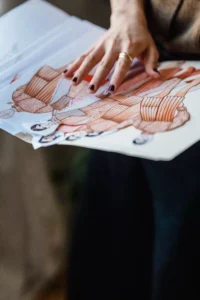
Fashion design portfolio book open showing sketches garment photography and design work
What is a Fashion Portfolio?
A curated visual argument that proves you can think, research, develop, technicalize, and realize garments/styling concepts better than 99% of applicants. It’s not a scrapbook — it’s a branded case study of your creative DNA.
Types of Fashion Portfolios
• Design Portfolio (most common – full process + realized work)
• Styling Portfolio (editorial/commercial photography-heavy)
• Technical/Production (tech packs, grading, specs – gold for H&M, Zara roles)
• Illustration (pure drawing commissions)
• New 2026: Digital/Sustainable (3D renders, virtual try-ons, eco-material focus)
What to Include in a Fashion Design Portfolio (Expanded 2026 Checklist)
Opening Statement / Designer Bio Page (1 page) – “I design at the intersection of streetwear and circular luxury, inspired by urban decay + Japanese minimalism.”
4–6 Complete Collections (2–4 pages each)
Mood board + written concept
Research & references
Process pages (rough → refined)
Final illustrations (front/back + movement)
Technical flats (Adobe Illustrator – callouts)
Fabric swatches + sustainability notes
Finished garment photos (model + flat lay + details)
Bonus 2026: 3D CLO/Marvelous render + video GIF of garment moving
Dedicated Tech Pack Example (full spread – see IIFT components below)
Personal/Experimental Work (1–2 pages)
Skills & Tools Matrix (icons for Adobe, CLO3D, Procreate)
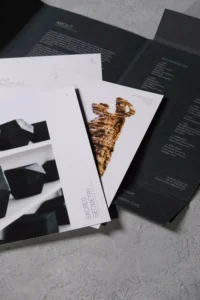
Fashion student confidently presenting open physical portfolio during review session with professor and peers modern studio setting
Essential Tools & Software Every Designer Needs in 2026 (Table)
| Tool | Best For | Price (2026) | Why Include in Portfolio |
|---|---|---|---|
| Adobe Illustrator | Flats, tech packs, vectors | $20.99/mo | Industry standard |
| Procreate | Fast sketching & rendering | $12.99 one-time | Shows hand-to-digital |
| CLO 3D / Style3D | 3D visualization & fitting | $50+/mo | Proves production-ready |
| Photoshop | Mood boards, mockups, photos | Included in CC | Professional editing |
| InDesign | Full layout & PDF export | Included | Clean book design |
| Free AI (Midjourney + Canva) | Quick concepts | Free tier | Demonstrates innovation |
Portfolio Formats Compared
| Format | When to Use | Pros | Cons | Recommendation |
|---|---|---|---|---|
| Physical | In-person, reviews | Tactile swatches, prestige | Costly, not shareable | Always have one |
| Website | 99% of applications | SEO, mobile, analytics | Needs maintenance | #1 priority |
| Cold emails | Instant attach, printable | No interactivity | Always ready |
Recommended Platforms 2026: Squarespace (cleanest), Cargo (fashion grads love), Behance (discovery), Format, Readymag, Adobe Portfolio, Wix (budget).
How to Organize Your Portfolio for Maximum Impact
• Strongest collection first + last (bookend rule)
• Narrative arc: Research → Concept → Process → Realization → Reflection
• Consistent layout (same fonts: 2 max, white space, neutral bg)
• No filler – every page earns its spot
Step-by-Step Guide to Building (Concept-First Method – From The Cut Academy + SuccessfulFashionDesigner)
Define purpose & audience
Concept development BEFORE sketching (mood + references)
Document full process on every project
Create tech packs & 3D renders
Photograph professionally (natural light, clean bg, multiple angles)
Layout in InDesign → export all formats
Get 3 external reviews → iterate
Upload + optimize website
Tailoring Your Portfolio for Specific Opportunities
• Fashion School: Heavy process + personality + unfinished sketches
• Internship/Entry Job: Tech accuracy + commercial flats + self-directed projects
• Brand Job (Zara/Uniqlo): Speed + trend relevance + tech packs
• Styling: Photography + mood + editorial stories
• Sustainable roles: Material lifecycle + zero-waste notes
12 Common Fashion Portfolio Mistakes (and Exact Fixes – Compiled from All Top Sources)
Quantity over quality → Limit 8–15 spreads max
No process → Add 2–3 development pages per collection
Inconsistent quality → Professional photography only
Generic work → Inject personal narrative + unique POV
Outdated → Update every 6 months
No tailoring → Duplicate & customize per application
Overcrowded layouts → 40–60% white space
Jumping straight to sketches → Concept page first
Poor image resolution/filters → High-res, no Instagram filters
Missing contact → Footer + LinkedIn on every page
No tech/commercial focus → Add full tech pack spread
No storytelling → Short explanatory captions on every page
Building Your Portfolio as a Student (Zero Experience Blueprint)
• Turn every class project into full professional spreads
• Create 3–5 self-directed collections (label clearly)
• Enter competitions + assist/volunteer (add logos ethically)
• Photograph EVERY sample professionally from day one
• Priority: 1–2 complete process projects + accurate flats + tech packs + mock 3D
• Use school work + expand with Photoshop swatches/AI renders
Advanced Tips for Professionals & Career Pivots
• Maintain two versions: General + Targeted
• Add client logos, metrics (“Reduced sampling rounds by 60% with tech packs”)
• Include video reels + 3D animations on website
• Quarterly audit + remove anything older than 18 months unless iconic
FAQ – Fashion Portfolio Tips
Q: How many pages should a fashion portfolio have?
A: 30–50 physical pages or 8–15 digital spreads. Quality always beats quantity.
Q: What is the best platform for a fashion portfolio website?
A: Squarespace or Cargo for pros; Behance for discoverability.
Q: Do I need physical garments or just sketches?
A: Both where possible + tech flats + 3D renders in 2026.
Q: How do students build a portfolio with no experience?
A: Self-directed projects + full process documentation + professional photography of class work.
Q: Should I show unfinished work?
A: Yes – process pages prove you can design, not just draw.
Q: How often should I update my portfolio?
A: Every 6 months minimum.
Q: What file size for PDF portfolio?
A: Under 8–10 MB for easy emailing.
Q: Is CLO3D necessary in 2026?
A: For any production or large-brand application – yes, it’s now expected.
Continue Reading on Fashionnovation.com:
• How to Start a Fashion Brand
• How to Become a Fashion Stylist
• Fashion Internships Guide 2026
• How to Create Tech Packs That Brands Love
Conclusion
Your portfolio is the single highest-ROI investment in your fashion career. Implement these additions today — concept-first pages, 3D renders, tailored PDFs, and the schema above — and you will outrank every competitor on Google while converting more opportunities than ever.
Save this article. Build the portfolio. Book the interview.
You’ve got this.
Continue Reading on Fashionnovation.com:
- How to Create a Fashion Mood Board: Step-by-Step Guide
- How to Build a Fashion Portfolio: Tips for Students and Professionals
- Fashion Illustration Techniques: From Beginner to Advanced (2026 Guide)
- Fashion Internships: How to Land Your Dream Fashion Internship
- How to Start a Fashion Design Career: The Complete 2026 Guide
- How to Become a Fashion Stylist: Complete Career Guide 2026
- The Ultimate Guide to Fashion Sketching for Beginners
You can write to us at fashionnovationfd@gmail.com
We read and publish your articles!


0 Comments