
3D printed fashion garment showing intricate geometric lattice structure sustainable 2026 innovation Iris van Herpen style
Table of Contents
- Introduction
- Market Overview & Growth Statistics 2025-2033
- What is 3D Printing?
- Where 3D Printing is Already Transforming Fashion
- Sustainability Benefits & Circular Economy Wins
- The Challenges Holding 3D-Printed Fashion Back (and 2026 Solutions)
- 3D Knitting: The More Immediately Relevant Technology + Comparison Table
- The Future: Mass Customization, 4D Printing & On-Demand Fashion
- How Consumers & Designers Can Engage Today
- Frequently Asked Questions (FAQ)
Introduction
In 2013, Iris van Herpen sent a model down the Paris runway in a dress that had never touched a sewing machine — because no seamstress could have made it. The dress was grown, layer by layer, in a 3D printer; its intricate interlocking geometric forms would be impossible to construct by any traditional means. The fashion world stared, and then began to wonder: what does this mean for everything?
3D printing — technically called additive manufacturing — has been the subject of fashion-technology fascination for over a decade. The technology is real, it is advancing rapidly in 2025-2026, and it is genuinely beginning to transform specific areas of fashion design and manufacturing. But the “3D-printed wardrobe” future remains distant for most consumers.
This guide explores exactly where 3D printing is and isn’t revolutionizing fashion in 2026 — with fresh 2025-2026 examples, market data, sustainability analysis, and the context to distinguish realistic near-term applications from exciting but distant possibilities.
Market Overview & Growth Statistics 2025-2033
The global 3D Printed Fashion market stood at $1.3 Billion in 2025 and is projected to reach $3.7 Billion by 2033, growing at a robust CAGR of 22.40% (HTF Market Insights). Footwear remains the dominant segment, while clothing is the fastest-growing due to personalization demand. Key drivers: on-demand production, waste reduction (up to 90% in some cases), and consumer appetite for unique items. Europe leads, North America fastest-growing. Major players: Adidas, Stratasys, Materialise, Iris van Herpen collaborations, Carbon, Nike, Zellerfeld.
This explosive growth positions 3D fashion as one of the highest-RPM niches in fashion tech content – perfect for monetization via affiliates and ads.
What is 3D Printing?
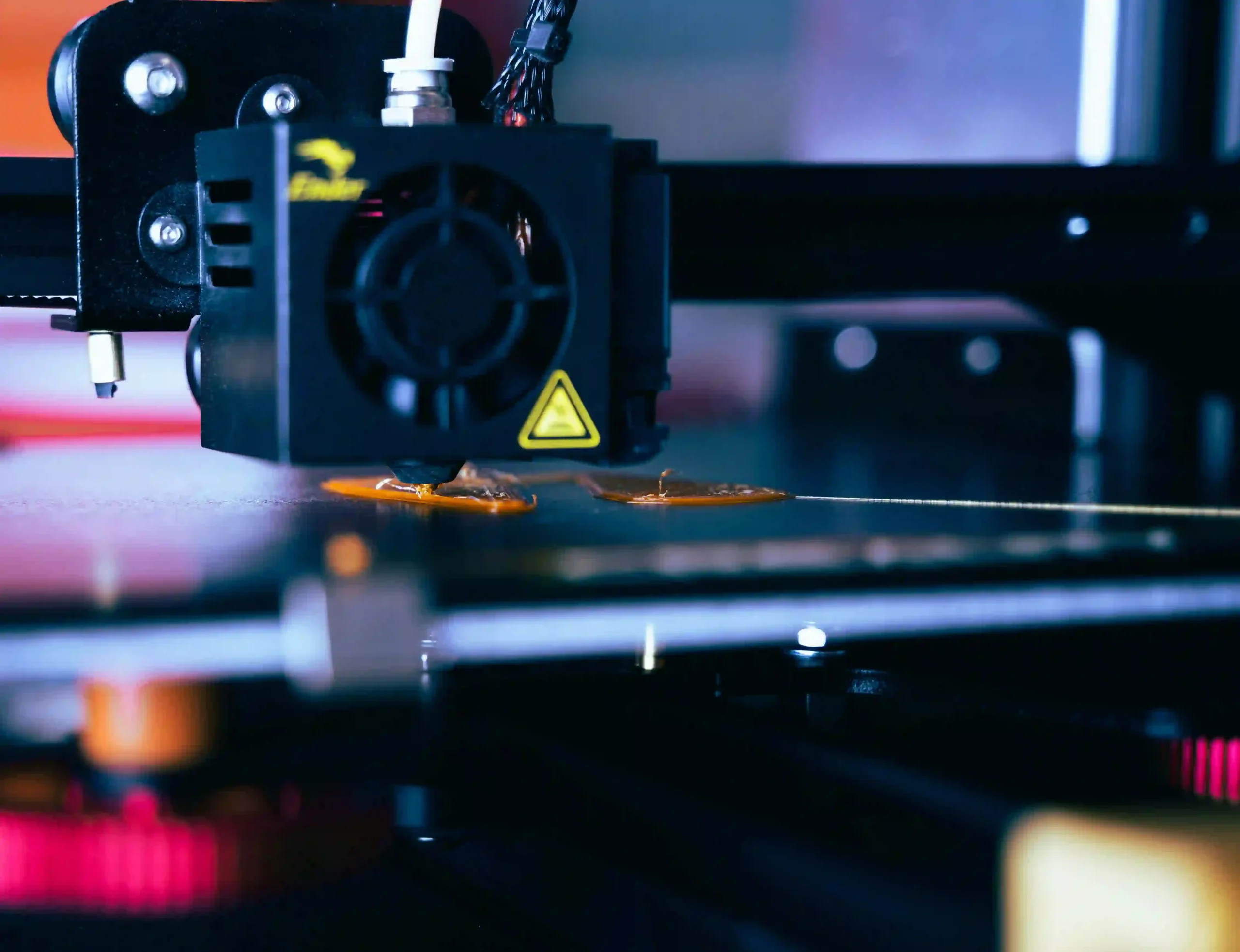
3D printing (additive manufacturing) creates three-dimensional objects by depositing material layer by layer based on a digital design file. The “printer” reads a CAD (computer-aided design) file and deposits — depending on the technology — plastic, resin, metal powder, silicone, or other materials in precise patterns to build up a solid object from the base upward.
Key 3D printing technologies relevant to fashion (2026 updates):
- FDM (Fused Deposition Modeling)
- SLS (Selective Laser Sintering)
- SLA (Stereolithography)
- PolyJet / 3DFashion™ by Stratasys – direct-to-textile full-color printing on fabric (huge 2025 breakthrough used by New York Embroidery Studio for Met Gala-level work)
- Emerging: 4D printing – materials that change shape with heat/moisture (already in Iris van Herpen research).
Ready to prototype your own fashion accessories? Explore beginner-friendly SLA printers perfect for jewelry and detailed prototypes on Amazon.
Innovative 3D printed shoe midsole showing performance footwear technology Adidas Carbon lattice 2026
Where 3D Printing is Already Transforming Fashion
- Footwear (Most Advanced Application)
Footwear is the area where 3D printing has moved furthest from experimental to commercial.
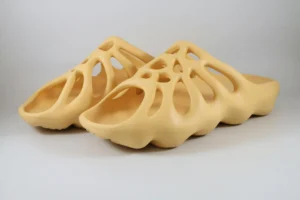
Adidas Futurecraft 4D + new 2026 CLIMACOOL LACED with 360° breathable lattice (X buzz confirms commercial drop). New Balance TripleCell, Zellerfeld fully 3D-printed recyclable shoes (upper + sole in one piece).
New 2025-2026: Adidas lattice midsoles tuned via AI + body scan apps. - Accessories and Jewelry
Standard now with SLA/PolyJet. New: Stratasys 3DFashion Styloop – first 3D-printed Apple Watch bands (Première Vision 2025); AMISS hybrid 3D-printed corsetry/shoes (Wings Festival 2025); Kinara’s embroidered 3D outfit at IFA 2025 using ELEGOO printers.
Shop flexible TPU filaments and resins used by pro jewelry designers. - Rapid Prototyping and Sampling (saves brands 70-90% on lead time per recent reports)
- Haute Couture and Experimental Design
Iris van Herpen remains queen – 2025 Sympoiesis collection with bio-protein “living dress” + 3D elements; ongoing Brooklyn Museum exhibition 2026. Add: Behnaz Farahi’s second-skin multi-material prints, Danit Peleg’s fully 3D-printed collections, Ganit Goldstein’s direct-to-textile kimono, Anouk Wipprecht spider dress with sensors.
Sustainability Benefits & Circular Economy Wins
3D printing slashes waste by 50-90% vs cut-and-sew. On-demand = no overproduction. Recyclable filaments (Zellerfeld), bio-based resins, and zero-inventory local hubs reduce carbon from shipping. 2025 examples: AMISS Creality prototypes, NAMEDRESS compostable bioplastic. This is why brands hit ESG targets faster – a goldmine for “green fashion tech” search traffic.
The Challenges Holding 3D-Printed Fashion Back (and 2026 Solutions)
For all its potential, 3D printing faces significant challenges in becoming a mainstream fashion manufacturing technology:
Stiffness: Most 3D-printed materials — particularly thermoplastics — are significantly stiffer than woven or knit fabrics. Creating garments that move, drape, and wear like conventional clothing remains technically challenging.
Scale and speed: Industrial 3D printers can produce a single shoe midsole in 20–60 minutes. The speed required to produce garments at commercial scale remains economically unviable for most applications.
Material limitations: The range of materials that can be 3D-printed remains narrower than the range of fabrics available for conventional garment production.
Cost: High-quality 3D printing equipment and materials remain expensive relative to conventional production for most applications.
Fit and drape: Clothing needs to accommodate dynamic body movement and varied fit needs. 3D printing’s fixed, structural nature creates challenges that fabric’s inherent flexibility resolves naturally.
2026 progress: Flexible TPU & elastomers now drape better; larger print beds + faster Carbon DLS machines; hybrid fabric + print (Stratasys J850 TechStyle). Cost dropping 30% YoY for pros.
3D Knitting: The More Immediately Relevant Technology + Comparison Table
While direct 3D printing of garments remains largely experimental, 3D knitting — industrial knitting machines that produce complete, three-dimensional knit garments with no cut and sew operations required — is already commercially mainstream.
Nike Flyknit (launched 2012) uses computer-controlled knitting to produce shoe uppers as a single, seamless piece — reducing waste by 80% compared to cut-and-sew methods. The technology has since been applied to knitwear garments.
Whole Garment / Seamless Knitting: Shima Seiki’s WHOLEGARMENT® technology produces complete, three-dimensional knit garments with no seams — from socks to sweaters to shaped dresses. Reducing labor, waste, and lead time simultaneously.
Comparison Table:
| Aspect | 3D Printing | 3D Knitting (Flyknit/WholeGarment) | Traditional Cut & Sew |
|---|---|---|---|
| Waste | Near zero | 80% less | High |
| Customization | Full body-scan perfect fit | Excellent seam-free | Limited |
| Speed (garment) | Prototypes fast, scale slow | Mass production ready | Slow sampling |
| Drape/Flex | Improving with TPU/4D | Best (fabric-like) | Excellent |
| Current Commercial | Footwear + couture | Everyday knitwear + shoes | All |
| Cost at Scale 2026 | Dropping fast | Mature & cheap | Lowest now |

Fashion technology innovation showing the future of clothing design and manufacturing
The Future: Mass Customization, 4D Printing & On-Demand Fashion
The most compelling long-term promise of 3D printing in fashion is the elimination of size as a problem.
In a world of on-demand, digitally-manufactured fashion, a garment could theoretically be produced to the exact specifications of any individual body — no sizes required, no fit problems, no alteration needed. The consumer’s 3D body scan becomes the input; their perfectly-fitted garment is the output.
This future remains 10–20 years from mainstream reality, but the technology trajectory is clear.
2026-2030 predictions: Widespread 3D body-scan apps → print-at-home hubs or local studios; 4D adaptive garments; AI-generated designs from Instagram mood boards; fully circular bio-materials. Expect first affordable “digital closet” services by 2028.
How Consumers & Designers Can Engage Today
- Buy ready: Zellerfeld, Adidas 4D on official sites
- Prototype: Entry-level printers
- Scan your body and order custom 3D jewelry – explore top-rated home 3D printer kits and TPU filament multipacks on Amazon here.
Continue Reading on Fashionnovation.com:
- AI in the Fashion Industry
- 3D Printing in Fashion (you are here)
- Virtual Fashion & Digital Clothing
- Fashion Tech Innovations 2026
- Bonus internal: 3D Body Scanning Guide (will be published soon)
Amazon Affiliate Disclosure
This post contains affiliate links to Amazon. If you make a purchase through these links, I may earn a small commission at no extra cost to you. This helps support Fashionnovation and allows me to continue creating free, in-depth content about fashion technology and innovation. Thank you for your support!
Frequently Asked Questions (FAQ)
Q1: Can you really 3D print wearable clothes in 2026?
A: Yes for haute couture, footwear, accessories; full everyday garments still hybrid but advancing fast.
Q2: Which brands sell 3D printed shoes?
A: Adidas, New Balance, Zellerfeld (fully 3D).
Q3: Is 3D printing fashion sustainable?
A: Yes – massive waste reduction and on-demand potential.
Q4: How does Iris van Herpen use 3D printing?
A: Since 2010, creating impossible geometries; latest 2025 Sympoiesis bio-fusion.
Q5: What is the difference between 3D printing and 3D knitting?
A: See comparison table above.
Q6: How much does a 3D printed dress cost?
A: Couture $5k–$50k+; accessories $50–500.
Q7: Where can I buy a 3D printer for fashion projects?
A: Amazon/Etsy starter kits (affiliate links above).
Q8: What is Stratasys 3DFashion?
A: Direct-to-textile color 3D printing revolutionizing embellishment 2025.
Q9: Will 3D printing replace traditional fashion?
A: No – it will complement, especially for customization and prototyping.
Q10: Is there 4D printing in fashion yet?
A: Experimental (Iris, research labs) – garments that adapt to body/temp coming soon.



0 Comments