
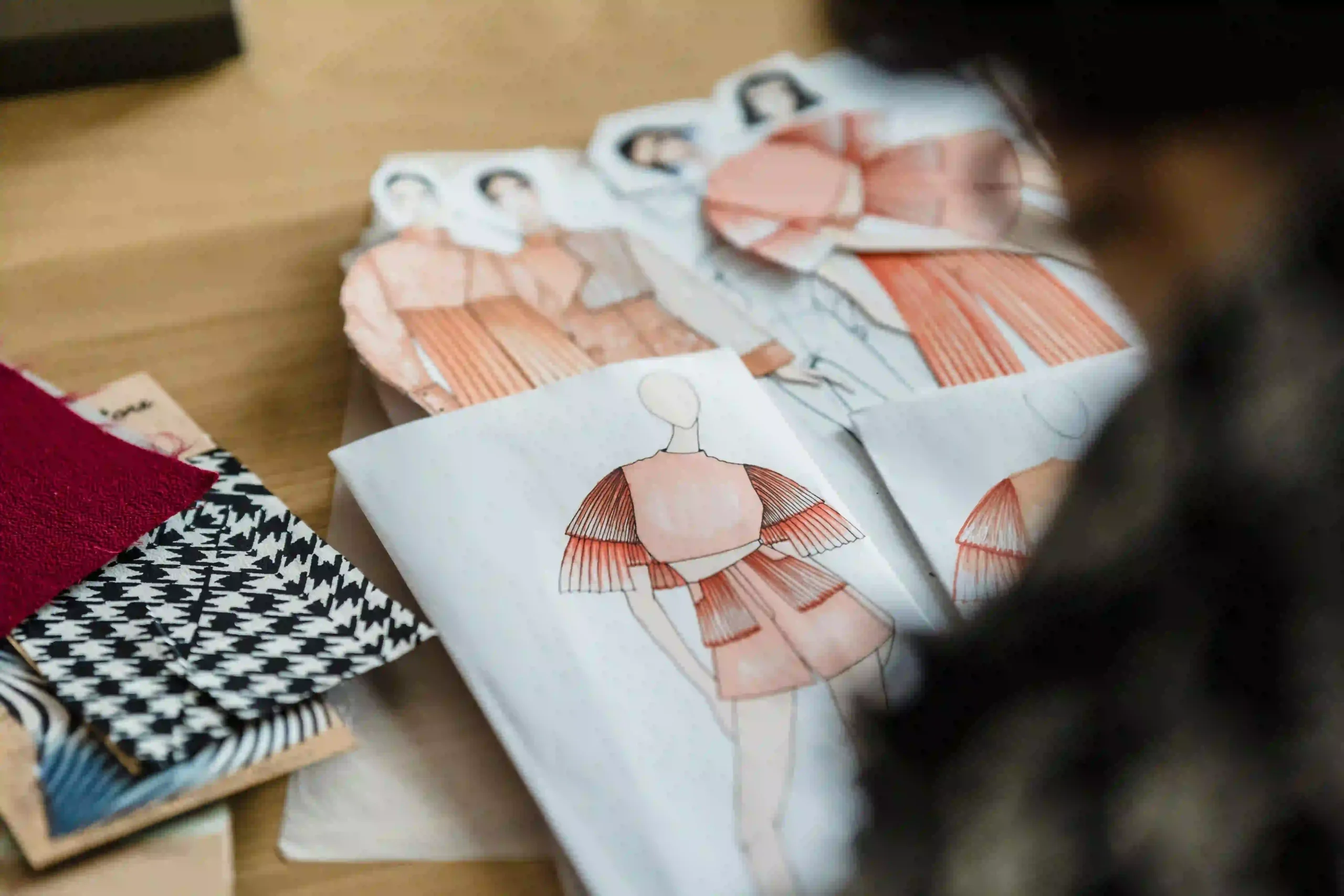
Fashion illustration artwork showing markers watercolor and mixed media on paper 2026 techniques
Amazon Affiliate Disclosure: As an Amazon Associate, I earn from qualifying purchases.
Table of Contents
- Introduction
- The Fashion Illustration Foundation
- Traditional Media Techniques
- Digital Fashion Illustration with Procreate (2026 Updates)
- Fabric Rendering Techniques: Advanced
- Developing Your Unique Illustration Style
- Traditional vs Digital Fashion Illustration Comparison Table
- 2026 Fashion Illustration Trends & Tips
- Frequently Asked Questions (FAQ)
Introduction
Fashion illustration is one of the most expressive art forms in existence — the meeting point of figure drawing, textile rendering, narrative communication, and pure aesthetic vision. At its best, a fashion illustration communicates not just what a garment looks like but how it makes the wearer feel, what world it inhabits, and what culture it speaks from.
This 2026 guide progresses from foundational technique through intermediate and advanced methods, covering traditional and digital media, with specific guidance on developing your own illustrative voice. In 2026, illustration is experiencing a strong comeback as brands seek authentic, human-touch work as an “anti-slop” strategy against overly polished AI imagery.
The Fashion Illustration Foundation
Before any technique, the foundation must be solid: a confident understanding of the fashion figure (croquis), proper proportions (usually 9–10 heads tall for runway looks), and the ability to draw a basic garment convincingly.
If you need to build this foundation, read our Fashion Sketching for Beginners Guide first, then return here for the advanced techniques.
Watercolor fashion illustration showing luminous fabric rendering and elegant figure
Traditional Media Techniques
Marker Rendering (Industry Standard)
Alcohol-based markers (Copic, Prismacolor) remain the industry-standard medium for hand-rendered fashion illustration. Their color layering, blending, and capacity for broad flat areas of color make them ideal for garment rendering.
The layering method: Start with the lightest tone. Build color in multiple light layers rather than one heavy application. The base layer establishes color; subsequent layers create depth and shadow.
The wet-on-wet technique: Apply a second marker stroke while the first is still wet to create smooth blends with no visible edges. This creates the seamless gradients essential for rendering satin, silk, and smooth leather.
Leaving highlights: Always leave white areas (the paper showing through) for your brightest highlights. Plan these from the first stroke — markers cannot be lightened once applied.
Layering with colored pencils: Adding colored pencils over dried marker adds texture detail — hatching for tweed, fine parallel lines for silk grain, dots for lace.
Key techniques: Start with lightest tones and build layers gradually. Use wet-on-wet for smooth gradients on satin and silk. Always plan and preserve white paper areas for highlights.
Ready to start marker rendering? Shop professional Copic Sketch markers and alcohol-based sets on Amazon.
Watercolor Fashion Illustration
Watercolor creates a luminous, romantic quality uniquely suited to fashion illustration. Its transparency and fluidity capture the delicacy of chiffon, the luminosity of silk, and the freshness of spring/summer collections particularly well.
Key watercolor techniques:
- Wet-on-wet: Apply wet paint to a wet surface. Creates soft, blurred edges perfect for background washes and atmospheric skin rendering.
- Wet-on-dry: Apply wet paint to dry paper. Creates hard, crisp edges — useful for defining garment lines and sharper shadows.
- Layered washes: Build up translucent layers, allowing each to dry before the next. Multiple thin layers create depth and richness.
- Salt texture: Sprinkling salt into wet watercolor creates organic, crystalline texture patterns — effective for rendering textured fabrics.
- Masking fluid: Applied before painting to preserve white areas (highlights on silk, white garment details). Peel off after the final layer.
Gouache
Gouache is opaque watercolor — denser, more matte, and capable of producing flat areas of color. The combination of watercolor (for translucent layers) and gouache (for opaque details and highlights) is one of the most powerful mixed media approaches in fashion illustration. Use a fine white gouache with a tiny brush to add final white highlights — the most effective way to create the sparkle on beading, the sheen on leather, or the crisp edge on a white collar.
Pencil and Ink Illustration
A strong pencil or ink fashion illustration — pure line work without color — can be among the most powerful and sophisticated approaches. Line quality is everything: Varying the weight of your line creates remarkable depth and three-dimensionality with no color.
Digital Fashion Illustration with Procreate (2026 Updates)
Procreate on iPad remains the dominant digital fashion illustration tool thanks to Apple Pencil sensitivity, vast brush library, and natural drawing feel.
Key Procreate techniques for fashion (2026):
- Custom brush creation: Build or import brushes that mimic traditional media — watercolor wash, marker bleed, textured pencil, or analog textures (scan real paper, ink splatters, or fabric for layers).
- Layer management: Use separate layers for underdrawing, flat color blocking, shadow layers (Multiply blending mode), highlight layers (Screen or Add), and final line work. This non-destructive workflow is essential.
- Blending modes: Multiply for shadows, Screen for highlights, Overlay for color adjustment.
- Reference image pinning and subtle animation: Add minimal motion loops (flickering light, fabric movement) for social media versions using Procreate’s animation assist or export to After Effects.
- Analog-digital hybrid: Scan traditional sketches or textures and integrate them digitally for that sought-after human warmth in 2026.
Looking for the best digital setup? Explore Procreate-compatible iPad bundles, Apple Pencil, and premium brush packs on Amazon.
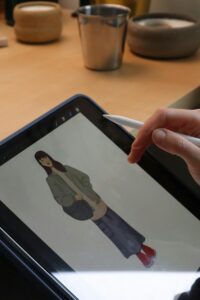
Digital fashion illustration on iPad using Procreate showing fashion figure 2026
Fabric Rendering Techniques: Advanced
The ability to render different fabrics convincingly is the most demanding technical skill in fashion illustration.
- Velvet: Extremely soft shadow gradation — velvet absorbs light deeply and has almost no specular highlight. Use deep, rich colors with fine pencil hatch for nap direction.
- Sequined and beaded fabric: Do not draw every sequin. Establish base color, then add irregular white gouache or digital highlights to suggest sparkle.
- Printed fabric: Establish garment shape first, then add simplified print that wraps around folds and contours (never flat).
- Leather: Near-total absence of drape lines. Strong concentrated specular highlights (usually white). Deep shadows in folds. Suggest reflected light sources.
Developing Your Unique Illustration Style
The goal is ultimately to find your own voice. The most distinctive and commercially successful fashion illustrators have unmistakable personal styles.
How to develop your style:
- Copy masters first (David Downton, Ruben Toledo, Bil Donaldson, Holly Nichols, Hayden Williams, etc.) to understand choices, not to imitate.
- Study non-fashion art: Egon Schiele’s elongated figures, Matisse’s color, Mucha’s decorative line, Klimt’s pattern.
- Volume and consistency: Fill sketchbooks daily. Style emerges from accumulated choices.
- Identify your instincts: Bold graphic simplification vs intricate detail? Gestural looseness vs precise line? Color expressiveness vs restrained tone?
In 2026, embrace imperfection — naive, messy, human-touch elements stand out against AI-generated perfection.
Traditional vs Digital Fashion Illustration Comparison Table
| Aspect | Traditional (Markers/Watercolor) | Digital (Procreate) |
|---|---|---|
| Texture & Authenticity | Superior natural feel and happy accidents | Excellent with custom brushes + scanned textures (hybrid trend) |
| Speed & Iteration | More contemplative | Extremely fast with layers and undo |
| Cost | Ongoing supplies | Higher upfront, low ongoing |
| 2026 Appeal | High demand for human warmth | Dominant for social + subtle animation |
2026 Fashion Illustration Trends & Tips
- Strong resurgence of hand-drawn, imperfect, naive styles as brands seek authenticity over AI polish.
- Hybrid analog-digital workflows (scan traditional work into Procreate).
- Subtle animation in static illustrations for Instagram/Reels.
- Printmaking influences and tactile textures.
- Live event fashion illustration remains popular for experiential marketing.
Stock up on essential supplies — Copic markers, watercolor sets, or Procreate brush packs.
While practicing is the best way to improve, a good reference book can make a huge difference. Here are my top recommendations for fashion illustration:
- Fashion Illustration: Inspiration and Technique by Anna Kiper – Perfect for learning how to draw dynamic poses, render fabrics, and add personality to your illustrations.
- Illustrating Fashion: Concept to Creation by Steven Stipelman – Excellent for understanding the full process from concept to finished artwork.
- The Encyclopedia of Fashion Illustration Techniques by Carol A. Nunnelly – A great visual resource for beginners exploring different styles and media.
Continue Reading on Fashionnovation.com:
- Fashion Sketching for Beginners
- Fashion Illustration Techniques (you are here)
- Types of Fabric: The Complete Guide
- Pattern Making 101
- Color Theory in Fashion
Frequently Asked Questions (FAQ)
Q1: What are the best fashion illustration techniques for beginners in 2026?
A: Start with basic croquis, simple marker layering or Procreate flat colors. Focus on line quality first.
Q2: Are Copic markers still recommended?
A: Yes, they remain the industry standard for smooth blending and professional results.
Q3: Is Procreate better than traditional media?
A: Procreate wins for speed and iteration; traditional offers unmatched organic texture. Many use hybrid workflows.
Q4: How do I render fabrics realistically?
A: Observe how light interacts with each material and simplify patterns to follow body contours.
Q5: How can I develop my own unique style?
A: Study masters, draw consistently, incorporate influences from fine art, and embrace what excites you most. Lean into human imperfection in 2026.

0 Comments