Amazon Affiliate Disclosure:This article contains affiliate links to Amazon. As an Amazon Associate, Fashionnovation earns from qualifying purchases at no extra cost to you. We only recommend products we believe will genuinely help our readers.
Collection of different handbag types including tote satchel crossbody and clutch
Introduction
A great handbag does everything a great piece of clothing does: it communicates personality, completes an outfit, and — when it’s truly excellent — becomes a piece you reach for daily for years. But unlike clothing, a great handbag also carries your life.
The handbag market is vast and sometimes bewildering, with names applied inconsistently and styles that blur into each other. This ultimate 2026 guide gives you a clear taxonomy of every major handbag type — what defines it, when to wear it, iconic and trending examples, plus expert additions like body type matching, care tips, and current trends — so you can build a bag wardrobe as intentional as your clothing wardrobe.
The Essential Handbag Vocabulary
Structured vs. unstructured: Structured bags hold their shape when empty (supported by internal framing, rigid sides, or heavy hardware). Unstructured bags slouch and collapse when empty — a major 2026 trend with slouchy totes and hobos dominating runways.
Top handle: Rigid or looped handles at the top of the bag, designed to be carried in the hand or over the forearm.
Shoulder strap: A longer strap designed to be carried over the shoulder.
Crossbody strap: A long adjustable strap worn diagonally across the body for hands-free security.
Chain strap: A metal chain (in gold, silver, or antiqued metal) replacing or supplementing a leather strap. Originated in Chanel’s 2.55 and exploding in popularity again in 2026 across brands like Valentino, Chloé, and Ferragamo.
Hardware: Metal elements — clasps, buckles, rings, chain links, feet, studs — that define a bag’s personality and signal quality.
Gusset: The side panel of a bag that creates depth. A bag with gussets holds more; look for bottom or all-side gussets in practical totes.
Additional key terms for 2026: East-West silhouette (elongated rectangular shape), slouchy/gathered construction, woven/open-weave textures, and belted details.
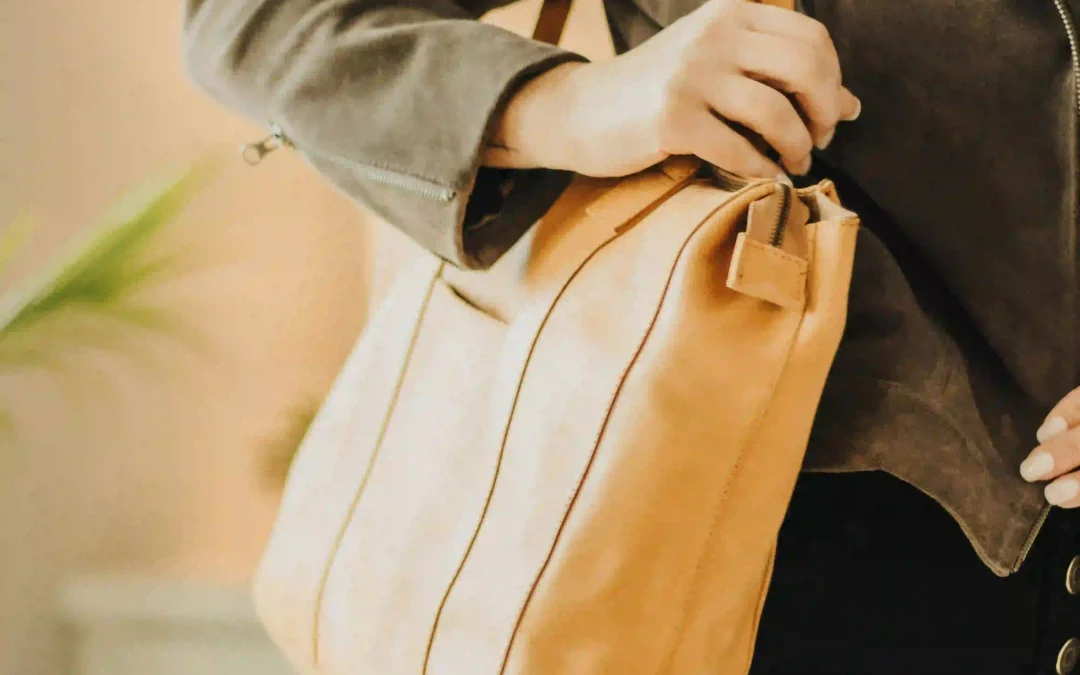
Quality leather tote bag for everyday use in camel color held by woman
The 18 Essential Handbag Types (Updated for 2026)
1. The Tote Bag
What it is: An open-top, rectangular bag with two parallel handles. The most practical and utilitarian bag shape.
Best for: Work, shopping, gym, travel, daily use. The “workhorse” bag — oversized structured or slouchy versions lead 2026 trends.
Sizing: Mini totes (cute but impractical) to massive carryalls. The sweet spot for daily use is approximately 35–40cm wide × 30cm tall. Towering totes are huge this season.
What it is: A small, handleless bag carried in the hand or under the arm. The only truly evening-exclusive bag category (though small clutches are worn casually).
Best for: Formal events, evenings, occasions requiring minimal bag.
Sub-styles:
Envelope clutch: Flat, horizontal, with an envelope-style flap closure.
Minaudière: Hard-framed, decorative, often metallic or embellished.
Box clutch: Small rigid box shape, often decorative.
What it is: A structured bag with a flat bottom, top handle, and typically a shoulder strap. Often doctor-bag inspired shape with a wide, flat base. Retro-inspired doctor bags are trending for FW 2025-2026.
What it is: A cylindrical or bucket-shaped bag with a drawstring or open top and a single shoulder strap. Originated with Louis Vuitton’s Noé (designed in 1932 to carry champagne bottles).
Best for: Casual days, spring/summer, creative environments. Woven and open-weave bucket styles are big in 2026.
Iconic examples:Louis Vuitton Noé, Mansur Gavriel bucket bag, Loewe Flamenco.
7. The Baguette
What it is: A small, narrow, elongated bag with a short strap, worn tucked under the arm like a French baguette. Made iconic by Fendi in 1997 and seeing nostalgic revivals.
Best for: Evening, semi-formal, fashion-forward casual.
What it is: A two-handled bag worn on the back. Distinguished from athletic backpacks by quality materials and fashion-forward design.
Best for: Daily commute, students, travel, casual.
Iconic examples: Louis Vuitton Palm Springs, Herschel, Dagne Dover (for professional settings).
11. The Top Handle Bag
What it is: A structured bag with rigid top handles, designed to be carried in the hand or over the wrist. The most “structured” and formal bag category. Sculptural top-handles are trending in 2026.
Best for: Work, formal events, smart occasions.
Iconic examples: Hermès Kelly, Lady Dior, Chanel Classic Flap, Celine Box, The Row Marlo.
12. The Bucket Tote
What it is: A hybrid of the tote and bucket bag — cylindrical or slightly tapered shape with two tote-style handles.
13. The Micro Bag
What it is: An extremely small version of virtually any bag style — sometimes too small to carry anything practical. Primarily a fashion statement, often layered over larger bags.
Best for: Evening, fashion events, styling over larger practical bag.
What it is: A large, open tote-style bag. Bigger than a standard tote. Often used as a market bag but elevated to fashion by quality materials and textures (straw, woven leather trending).
15. The Drawstring Bag
What it is: A pouch-shaped bag closed with a drawstring. Ranges from simple cotton pouches to sophisticated leather versions. Drawstring pouches are highlighted in 2026 trends.
What it is: A small pouch with a wrist strap — larger than a clutch, smaller than a crossbody.
Best for: Casual evenings, carrying phone/cards/keys.
17. The Weekender / Duffle
What it is: A large, cylindrical or rectangular bag for overnight and weekend trips. The luggage-adjacent bag category.
Iconic examples: Louis Vuitton Keepall, Filson Duffle, The Row soft margaux.
18. The Camera Bag
What it is: A boxy, compact bag with a simple flap or zip top and crossbody strap. Originally for camera equipment; now a fashion category.
Iconic examples: Celine C bag, Chloé Aby.
2026 Handbag Trends: What’s Hot Right Now
2026 emphasizes functionality with flair: towering/slouchy totes, east-west elongated shapes, chain-strap details, woven and rattan textures, bright colors (cobalt blue, butter yellow, jewel tones), soft slouchy silhouettes, belted bags, and nostalgic re-editions (think updated classics from Chanel, Dior, Chloé). Avoid overly dated motifs like sardine prints; embrace fruit-basket textures or refined ladylike details instead. Chain straps and open-weave styles offer fresh twists on timeless shapes.
How to Choose the Right Handbag for Your Body Type, Outfit & Occasion
Proportion is key: Match bag scale to your body — petite frames suit smaller/medium bags; taller or plus-size figures carry larger styles confidently. For inverted triangle (broad shoulders), opt for crossbodies or lower-slung bags to balance. Hourglass/curvy? Medium totes or structured shoulders that hit at the hip flatter best. Rectangle shapes shine with any style but benefit from adding volume via hobos or buckets.
Always consider outfit silhouette: Pair structured bags with tailored looks; slouchy unstructured with relaxed outfits. For occasions, totes/shoppers for day, crossbodies for travel, clutches/top-handles for evening.
The Core 3-Bag Wardrobe for 2026
If you could own only three bags:
A quality leather tote or structured shoulder bag — your daily workhorse (slouchy or towering versions excel now).
A versatile crossbody — for active days, travel, hands-free occasions (chain-strap options add edge).
A small clutch or evening top-handle bag — for formal occasions.
Every other bag is an addition to, not a replacement for, these three.
Handbag Care & Maintenance Tips to Make Them Last Years
Invest in quality and maintain it:
Leather: Wipe regularly with a soft microfiber cloth. Use leather conditioner sparingly. Avoid direct sunlight and water.
Suede/Nubuck: Brush with a suede brush or toothbrush to restore nap. Use suede-specific protector spray before first use. Erase light marks with a rubber eraser; avoid water.
Canvas/Nylon: Spot clean with mild soap and damp cloth.
General: Stuff bags with acid-free tissue when storing. Rotate use. Clean stains immediately. Professional cleaning for luxury pieces.
Proper care turns a good bag into a lifetime investment.
Frequently Asked Questions (FAQ)
What are the most essential handbag types every woman needs?
A quality tote or shoulder bag for daily use, a versatile crossbody for hands-free days, and a clutch or small evening bag for formal occasions form the perfect core wardrobe.
What handbag trends are big in 2026?
Slouchy and towering totes, east-west shapes, chain straps, woven/rattan textures, bright colors, and nostalgic re-editions of classics.
How do I choose a handbag for my body type?
Scale the bag to your frame (smaller for petite, larger for tall/curvy). Use crossbodies to balance broad shoulders and structured styles to add definition where needed.
What’s the difference between a tote and a shopper?
A shopper is essentially a larger, often more casual or market-style version of a tote, frequently made in durable or textured materials for everyday carrying.
How should I care for a suede handbag?
Protect with suede spray before use, brush regularly to maintain nap, and use a rubber eraser for marks. Keep away from water and store stuffed to hold shape.
Handbag Types Quick Comparison Table
Type
Structure
Best For
2026 Trend Level
Tote / Shopper
Structured or Slouchy
Daily/Work/Shopping
High (Towering & Slouchy)
Crossbody
Varies
Travel/Hands-Free
High (Chain Straps)
Clutch
Structured
Evening/Formal
Medium (Oversized variants)
Shoulder Bag (Hobo)
Unstructured
Casual Everyday
High (Slouchy)
Top Handle
Structured
Work/Formal
High (Sculptural)
Disclosure: This article contains affiliate links to Amazon. As an Amazon Associate, Fashionnovation earns from qualifying purchases at no extra cost to you. We only recommend products we believe will genuinely help our readers.
Fashion illustration is one of the most expressive art forms in existence — the meeting point of figure drawing, textile rendering, narrative communication, and pure aesthetic vision. At its best, a fashion illustration communicates not just what a garment looks like but how it makes the wearer feel, what world it inhabits, and what culture it speaks from.
This 2026 guide progresses from foundational technique through intermediate and advanced methods, covering traditional and digital media, with specific guidance on developing your own illustrative voice. In 2026, illustration is experiencing a strong comeback as brands seek authentic, human-touch work as an “anti-slop” strategy against overly polished AI imagery.
The Fashion Illustration Foundation
Before any technique, the foundation must be solid: a confident understanding of the fashion figure (croquis), proper proportions (usually 9–10 heads tall for runway looks), and the ability to draw a basic garment convincingly.
If you need to build this foundation, read our Fashion Sketching for Beginners Guide first, then return here for the advanced techniques.
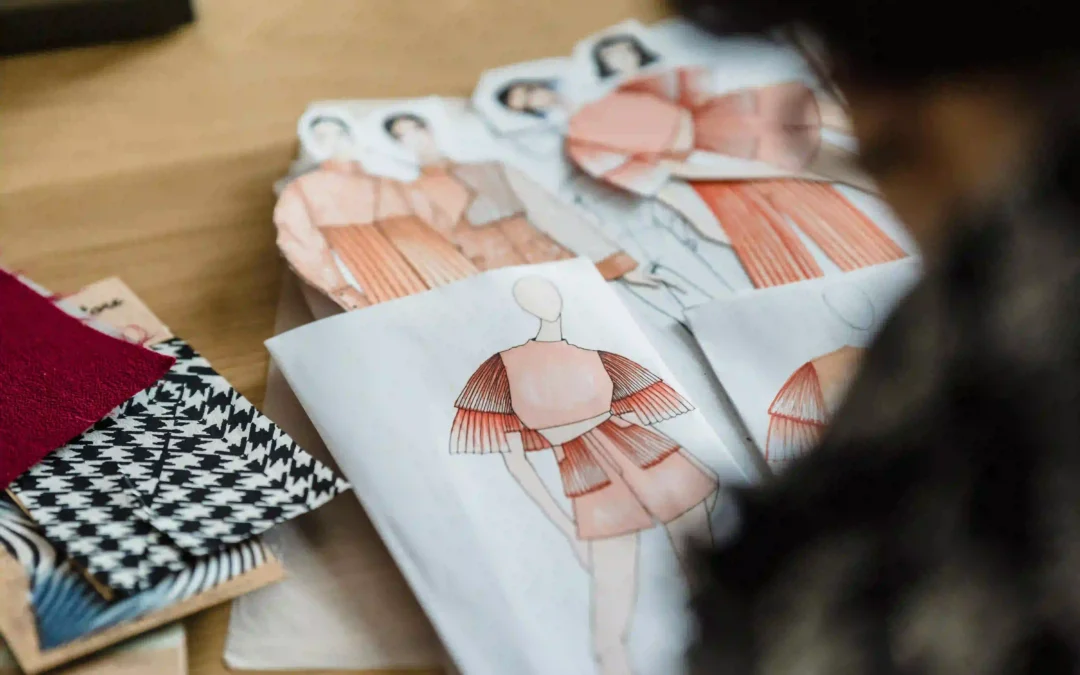
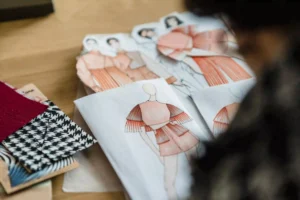
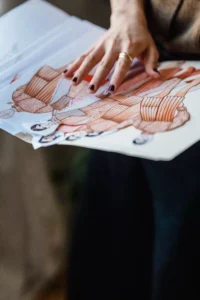
Watercolor fashion illustration showing luminous fabric rendering and elegant figure
Traditional Media Techniques
Marker Rendering (Industry Standard)
Alcohol-based markers (Copic, Prismacolor) remain the industry-standard medium for hand-rendered fashion illustration. Their color layering, blending, and capacity for broad flat areas of color make them ideal for garment rendering.
The layering method: Start with the lightest tone. Build color in multiple light layers rather than one heavy application. The base layer establishes color; subsequent layers create depth and shadow.
The wet-on-wet technique: Apply a second marker stroke while the first is still wet to create smooth blends with no visible edges. This creates the seamless gradients essential for rendering satin, silk, and smooth leather.
Leaving highlights: Always leave white areas (the paper showing through) for your brightest highlights. Plan these from the first stroke — markers cannot be lightened once applied.
Layering with colored pencils: Adding colored pencils over dried marker adds texture detail — hatching for tweed, fine parallel lines for silk grain, dots for lace.
Key techniques: Start with lightest tones and build layers gradually. Use wet-on-wet for smooth gradients on satin and silk. Always plan and preserve white paper areas for highlights.
Ready to start marker rendering? Shop professional Copic Sketch markers and alcohol-based sets on Amazon.
Watercolor Fashion Illustration
Watercolor creates a luminous, romantic quality uniquely suited to fashion illustration. Its transparency and fluidity capture the delicacy of chiffon, the luminosity of silk, and the freshness of spring/summer collections particularly well.
Key watercolor techniques:
Wet-on-wet: Apply wet paint to a wet surface. Creates soft, blurred edges perfect for background washes and atmospheric skin rendering.
Wet-on-dry: Apply wet paint to dry paper. Creates hard, crisp edges — useful for defining garment lines and sharper shadows.
Layered washes: Build up translucent layers, allowing each to dry before the next. Multiple thin layers create depth and richness.
Salt texture: Sprinkling salt into wet watercolor creates organic, crystalline texture patterns — effective for rendering textured fabrics.
Masking fluid: Applied before painting to preserve white areas (highlights on silk, white garment details). Peel off after the final layer.
Gouache
Gouache is opaque watercolor — denser, more matte, and capable of producing flat areas of color. The combination of watercolor (for translucent layers) and gouache (for opaque details and highlights) is one of the most powerful mixed media approaches in fashion illustration. Use a fine white gouache with a tiny brush to add final white highlights — the most effective way to create the sparkle on beading, the sheen on leather, or the crisp edge on a white collar.
Pencil and Ink Illustration
A strong pencil or ink fashion illustration — pure line work without color — can be among the most powerful and sophisticated approaches. Line quality is everything: Varying the weight of your line creates remarkable depth and three-dimensionality with no color.
Digital Fashion Illustration with Procreate (2026 Updates)
Procreate on iPad remains the dominant digital fashion illustration tool thanks to Apple Pencil sensitivity, vast brush library, and natural drawing feel.
Key Procreate techniques for fashion (2026):
Custom brush creation: Build or import brushes that mimic traditional media — watercolor wash, marker bleed, textured pencil, or analog textures (scan real paper, ink splatters, or fabric for layers).
Layer management: Use separate layers for underdrawing, flat color blocking, shadow layers (Multiply blending mode), highlight layers (Screen or Add), and final line work. This non-destructive workflow is essential.
Blending modes: Multiply for shadows, Screen for highlights, Overlay for color adjustment.
Reference image pinning and subtle animation: Add minimal motion loops (flickering light, fabric movement) for social media versions using Procreate’s animation assist or export to After Effects.
Analog-digital hybrid: Scan traditional sketches or textures and integrate them digitally for that sought-after human warmth in 2026.
Looking for the best digital setup? Explore Procreate-compatible iPad bundles, Apple Pencil, and premium brush packs on Amazon.
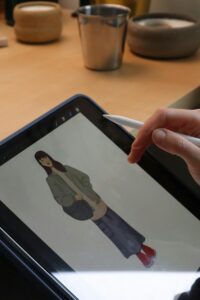
Digital fashion illustration on iPad using Procreate showing fashion figure 2026
Fabric Rendering Techniques: Advanced
The ability to render different fabrics convincingly is the most demanding technical skill in fashion illustration.
Velvet: Extremely soft shadow gradation — velvet absorbs light deeply and has almost no specular highlight. Use deep, rich colors with fine pencil hatch for nap direction.
Sequined and beaded fabric: Do not draw every sequin. Establish base color, then add irregular white gouache or digital highlights to suggest sparkle.
Printed fabric: Establish garment shape first, then add simplified print that wraps around folds and contours (never flat).
Leather: Near-total absence of drape lines. Strong concentrated specular highlights (usually white). Deep shadows in folds. Suggest reflected light sources.
Developing Your Unique Illustration Style
The goal is ultimately to find your own voice. The most distinctive and commercially successful fashion illustrators have unmistakable personal styles.
How to develop your style:
Copy masters first (David Downton, Ruben Toledo, Bil Donaldson, Holly Nichols, Hayden Williams, etc.) to understand choices, not to imitate.
Study non-fashion art: Egon Schiele’s elongated figures, Matisse’s color, Mucha’s decorative line, Klimt’s pattern.
Volume and consistency: Fill sketchbooks daily. Style emerges from accumulated choices.
Identify your instincts: Bold graphic simplification vs intricate detail? Gestural looseness vs precise line? Color expressiveness vs restrained tone?
In 2026, embrace imperfection — naive, messy, human-touch elements stand out against AI-generated perfection.
Traditional vs Digital Fashion Illustration Comparison Table
Aspect
Traditional (Markers/Watercolor)
Digital (Procreate)
Texture & Authenticity
Superior natural feel and happy accidents
Excellent with custom brushes + scanned textures (hybrid trend)
Speed & Iteration
More contemplative
Extremely fast with layers and undo
Cost
Ongoing supplies
Higher upfront, low ongoing
2026 Appeal
High demand for human warmth
Dominant for social + subtle animation
2026 Fashion Illustration Trends & Tips
Strong resurgence of hand-drawn, imperfect, naive styles as brands seek authenticity over AI polish.
Hybrid analog-digital workflows (scan traditional work into Procreate).
Subtle animation in static illustrations for Instagram/Reels.
Printmaking influences and tactile textures.
Live event fashion illustration remains popular for experiential marketing.
While practicing is the best way to improve, a good reference book can make a huge difference. Here are my top recommendations for fashion illustration:
Q1: What are the best fashion illustration techniques for beginners in 2026?
A: Start with basic croquis, simple marker layering or Procreate flat colors. Focus on line quality first.
Q2: Are Copic markers still recommended?
A: Yes, they remain the industry standard for smooth blending and professional results.
Q3: Is Procreate better than traditional media?
A: Procreate wins for speed and iteration; traditional offers unmatched organic texture. Many use hybrid workflows.
Q4: How do I render fabrics realistically?
A: Observe how light interacts with each material and simplify patterns to follow body contours.
Q5: How can I develop my own unique style?
A: Study masters, draw consistently, incorporate influences from fine art, and embrace what excites you most. Lean into human imperfection in 2026.
In 2013, Iris van Herpen sent a model down the Paris runway in a dress that had never touched a sewing machine — because no seamstress could have made it. The dress was grown, layer by layer, in a 3D printer; its intricate interlocking geometric forms would be impossible to construct by any traditional means. The fashion world stared, and then began to wonder: what does this mean for everything?
3D printing — technically called additive manufacturing — has been the subject of fashion-technology fascination for over a decade. The technology is real, it is advancing rapidly in 2025-2026, and it is genuinely beginning to transform specific areas of fashion design and manufacturing. But the “3D-printed wardrobe” future remains distant for most consumers.
This guide explores exactly where 3D printing is and isn’t revolutionizing fashion in 2026 — with fresh 2025-2026 examples, market data, sustainability analysis, and the context to distinguish realistic near-term applications from exciting but distant possibilities.
Market Overview & Growth Statistics 2025-2033
The global 3D Printed Fashion market stood at $1.3 Billion in 2025 and is projected to reach $3.7 Billion by 2033, growing at a robust CAGR of 22.40% (HTF Market Insights). Footwear remains the dominant segment, while clothing is the fastest-growing due to personalization demand. Key drivers: on-demand production, waste reduction (up to 90% in some cases), and consumer appetite for unique items. Europe leads, North America fastest-growing. Major players: Adidas, Stratasys, Materialise, Iris van Herpen collaborations, Carbon, Nike, Zellerfeld.
This explosive growth positions 3D fashion as one of the highest-RPM niches in fashion tech content – perfect for monetization via affiliates and ads.
What is 3D Printing?
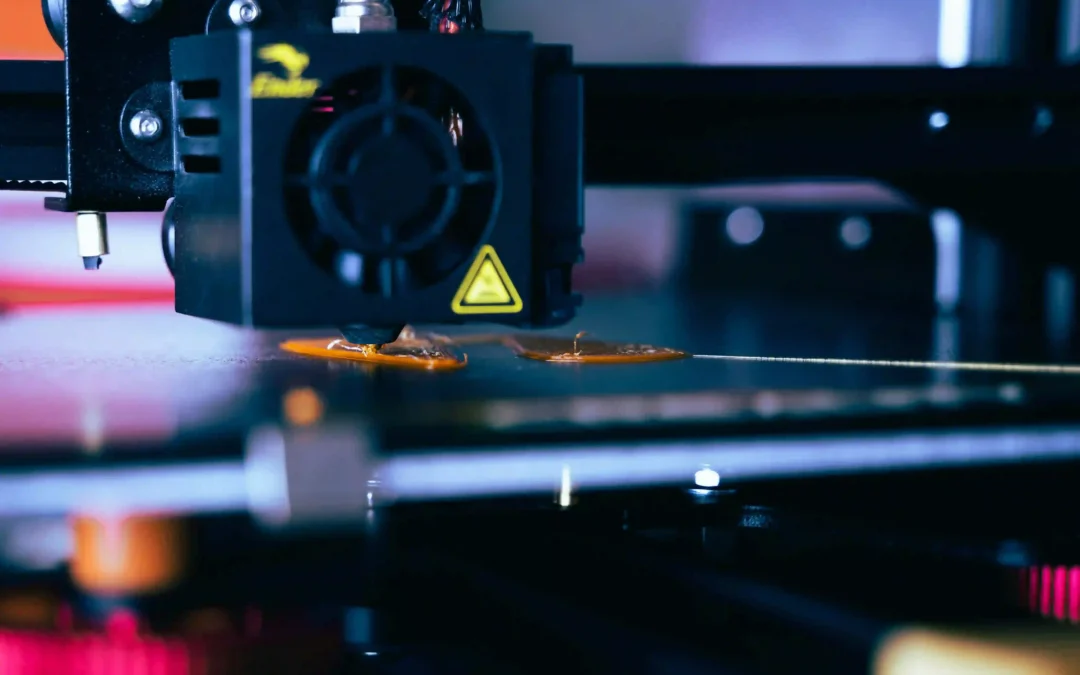
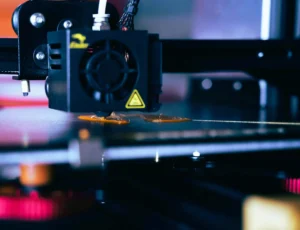
3D printing (additive manufacturing) creates three-dimensional objects by depositing material layer by layer based on a digital design file. The “printer” reads a CAD (computer-aided design) file and deposits — depending on the technology — plastic, resin, metal powder, silicone, or other materials in precise patterns to build up a solid object from the base upward.
Key 3D printing technologies relevant to fashion (2026 updates):
FDM (Fused Deposition Modeling)
SLS (Selective Laser Sintering)
SLA (Stereolithography)
PolyJet / 3DFashion™ by Stratasys – direct-to-textile full-color printing on fabric (huge 2025 breakthrough used by New York Embroidery Studio for Met Gala-level work)
Emerging: 4D printing – materials that change shape with heat/moisture (already in Iris van Herpen research).
Ready to prototype your own fashion accessories? Explore beginner-friendly SLA printers perfect for jewelry and detailed prototypes on Amazon.
Footwear (Most Advanced Application)
Footwear is the area where 3D printing has moved furthest from experimental to commercial.
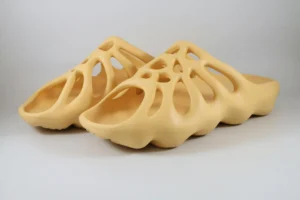
Adidas Futurecraft 4D + new 2026 CLIMACOOL LACED with 360° breathable lattice (X buzz confirms commercial drop). New Balance TripleCell, Zellerfeld fully 3D-printed recyclable shoes (upper + sole in one piece). New 2025-2026: Adidas lattice midsoles tuned via AI + body scan apps.
Accessories and Jewelry
Standard now with SLA/PolyJet. New: Stratasys 3DFashion Styloop – first 3D-printed Apple Watch bands (Première Vision 2025); AMISS hybrid 3D-printed corsetry/shoes (Wings Festival 2025); Kinara’s embroidered 3D outfit at IFA 2025 using ELEGOO printers.
Shop flexible TPU filaments and resins used by pro jewelry designers.
Rapid Prototyping and Sampling (saves brands 70-90% on lead time per recent reports)
Haute Couture and Experimental Design
Iris van Herpen remains queen – 2025 Sympoiesis collection with bio-protein “living dress” + 3D elements; ongoing Brooklyn Museum exhibition 2026. Add: Behnaz Farahi’s second-skin multi-material prints, Danit Peleg’s fully 3D-printed collections, Ganit Goldstein’s direct-to-textile kimono, Anouk Wipprecht spider dress with sensors.
Sustainability Benefits & Circular Economy Wins
3D printing slashes waste by 50-90% vs cut-and-sew. On-demand = no overproduction. Recyclable filaments (Zellerfeld), bio-based resins, and zero-inventory local hubs reduce carbon from shipping. 2025 examples: AMISS Creality prototypes, NAMEDRESS compostable bioplastic. This is why brands hit ESG targets faster – a goldmine for “green fashion tech” search traffic.
The Challenges Holding 3D-Printed Fashion Back (and 2026 Solutions)
For all its potential, 3D printing faces significant challenges in becoming a mainstream fashion manufacturing technology:
Stiffness: Most 3D-printed materials — particularly thermoplastics — are significantly stiffer than woven or knit fabrics. Creating garments that move, drape, and wear like conventional clothing remains technically challenging.
Scale and speed: Industrial 3D printers can produce a single shoe midsole in 20–60 minutes. The speed required to produce garments at commercial scale remains economically unviable for most applications.
Material limitations: The range of materials that can be 3D-printed remains narrower than the range of fabrics available for conventional garment production.
Cost: High-quality 3D printing equipment and materials remain expensive relative to conventional production for most applications.
Fit and drape: Clothing needs to accommodate dynamic body movement and varied fit needs. 3D printing’s fixed, structural nature creates challenges that fabric’s inherent flexibility resolves naturally.
3D Knitting: The More Immediately Relevant Technology + Comparison Table
While direct 3D printing of garments remains largely experimental, 3D knitting — industrial knitting machines that produce complete, three-dimensional knit garments with no cut and sew operations required — is already commercially mainstream.
Nike Flyknit (launched 2012) uses computer-controlled knitting to produce shoe uppers as a single, seamless piece — reducing waste by 80% compared to cut-and-sew methods. The technology has since been applied to knitwear garments.
Whole Garment / Seamless Knitting: Shima Seiki’s WHOLEGARMENT® technology produces complete, three-dimensional knit garments with no seams — from socks to sweaters to shaped dresses. Reducing labor, waste, and lead time simultaneously.
Comparison Table:
Aspect
3D Printing
3D Knitting (Flyknit/WholeGarment)
Traditional Cut & Sew
Waste
Near zero
80% less
High
Customization
Full body-scan perfect fit
Excellent seam-free
Limited
Speed (garment)
Prototypes fast, scale slow
Mass production ready
Slow sampling
Drape/Flex
Improving with TPU/4D
Best (fabric-like)
Excellent
Current Commercial
Footwear + couture
Everyday knitwear + shoes
All
Cost at Scale 2026
Dropping fast
Mature & cheap
Lowest now
Fashion technology innovation showing the future of clothing design and manufacturing
The Future: Mass Customization, 4D Printing & On-Demand Fashion
The most compelling long-term promise of 3D printing in fashion is the elimination of size as a problem.
In a world of on-demand, digitally-manufactured fashion, a garment could theoretically be produced to the exact specifications of any individual body — no sizes required, no fit problems, no alteration needed. The consumer’s 3D body scan becomes the input; their perfectly-fitted garment is the output.
This future remains 10–20 years from mainstream reality, but the technology trajectory is clear.
2026-2030 predictions: Widespread 3D body-scan apps → print-at-home hubs or local studios; 4D adaptive garments; AI-generated designs from Instagram mood boards; fully circular bio-materials. Expect first affordable “digital closet” services by 2028.
How Consumers & Designers Can Engage Today
Buy ready: Zellerfeld, Adidas 4D on official sites
Bonus internal: 3D Body Scanning Guide (will be published soon)
Amazon Affiliate Disclosure
This post contains affiliate links to Amazon. If you make a purchase through these links, I may earn a small commission at no extra cost to you. This helps support Fashionnovation and allows me to continue creating free, in-depth content about fashion technology and innovation. Thank you for your support!
Frequently Asked Questions (FAQ)
Q1: Can you really 3D print wearable clothes in 2026?
A: Yes for haute couture, footwear, accessories; full everyday garments still hybrid but advancing fast.
Q2: Which brands sell 3D printed shoes?
A: Adidas, New Balance, Zellerfeld (fully 3D).
Q3: Is 3D printing fashion sustainable?
A: Yes – massive waste reduction and on-demand potential.
Q4: How does Iris van Herpen use 3D printing?
A: Since 2010, creating impossible geometries; latest 2025 Sympoiesis bio-fusion.
Q5: What is the difference between 3D printing and 3D knitting?
A: See comparison table above.
Q6: How much does a 3D printed dress cost?
A: Couture $5k–$50k+; accessories $50–500.
Q7: Where can I buy a 3D printer for fashion projects?
A: Amazon/Etsy starter kits (affiliate links above).
Q8: What is Stratasys 3DFashion?
A: Direct-to-textile color 3D printing revolutionizing embellishment 2025.
Q9: Will 3D printing replace traditional fashion?
A: No – it will complement, especially for customization and prototyping.
Q10: Is there 4D printing in fashion yet?
A: Experimental (Iris, research labs) – garments that adapt to body/temp coming soon.
Fashion merchandising sits at the critical intersection of fashion, business, and consumer behavior. Merchandisers are responsible for ensuring the right products are in the right place, at the right time, in the right quantities, at the right price — for the right customer.
In practice, this means analyzing sales data, forecasting consumer demand, planning assortments, setting pricing strategies, and collaborating with design, buying, and retail teams to maximize both sales performance and customer satisfaction. Fashion merchandising is the business brain behind the fashion product.
Fashion Merchandising vs. Fashion Buying
These two roles are closely related and sometimes confused:
• Fashion Buyer: Selects and purchases the specific products that a retailer will carry. Makes the “what to buy” decisions based on trend analysis, customer data, and brand strategy. • Fashion Merchandiser: Plans the commercial strategy around the product assortment — how much to buy, how to price it, how to distribute it across channels, how to manage inventory, and how to maximize sell-through.
At large retailers, buying and merchandising are separate departments working in close collaboration. At smaller brands or export houses (common in Dhaka/Bangladesh), one person may handle both functions. Added insight: Collection Merchandisers work pre-design with creative teams; Retail Merchandisers focus post-design on stock flow and regional performance.
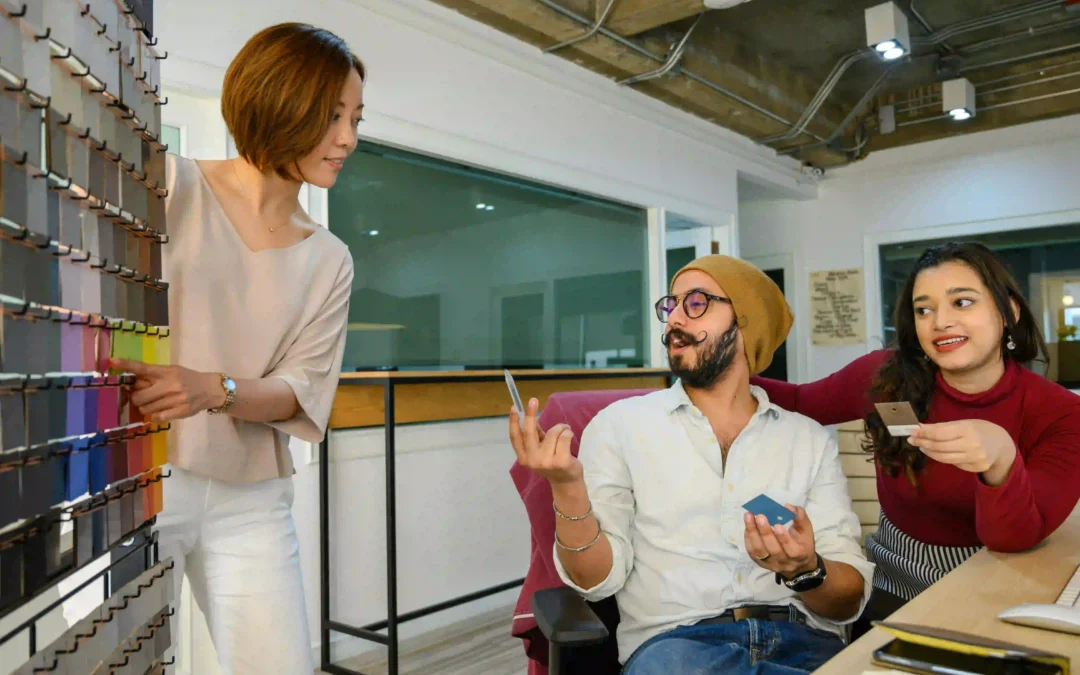
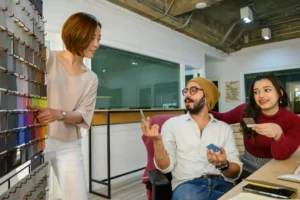
Fashion buying and merchandising team meeting to review seasonal product range
Types of Fashion Merchandising Roles (Updated 2026)
• Retail Merchandiser: Works for a retailer — planning assortments, pricing, promotions, and inventory for stores/chains.
• Brand / Product Merchandiser: Works for a fashion brand — managing range across own stores, wholesale & e-commerce.
• Visual Merchandiser: Focused on physical & digital store displays and customer experience.
• Digital / E-commerce Merchandiser: Optimizes product pages, SEO, recommendations, and conversion on Shopify/Amazon.
New additions for 2026 authority:
• Planning Merchandiser: Heavy data forecasting & OTB.
• Wholesale Merchandiser: B2B deals and bulk allocation.
• Sustainable Merchandiser (fast-rising): Focus on ethical sourcing and circular economy metrics.
Key Responsibilities of a Fashion Merchandiser(Original list kept + additions) • Range planning, OTB, sales forecasting, pricing, inventory, performance analysis. Added: Supplier negotiation, markdown planning, competitor benchmarking, and AI-assisted demand sensing.
The Skills a Fashion Merchandiser Needs + Must-Have Tools 2026
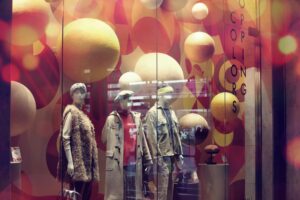
Fashion visual merchandising store display with expertly arranged clothing
📷 IN-CONTENT PHOTO — Insert via WordPress Add Media at this position SAVE FILE AS: visual-merchandising-store-display.webp ALT TEXT: Fashion visual merchandising store display with expertly arranged clothing Search on Unsplash: visual merchandising store display fashion clothing accessories
Education and Entry + Step-by-Step 2026 Launch Guide
Do internships/shop-floor experience (even 3 months at local retail counts).
Apply Assistant roles + cold-email brands on LinkedIn.
Graduate schemes: H&M, Zara, Marks & Spencer, Nike, PVH, Gap, local export houses in Bangladesh. Pro tip: Fashion design grads earn 25–30% more starting in merch roles.
Salary Overview 2026
Role
US Salary
UK Salary
India / BD Export (LPA or USD)
Assistant / Junior
$38,000–$55,000
£26,000–£37,000
₹4–8 LPA / $800–1,500 pm
Merchandiser
$55,000–$82,000
£35,000–£52,000
₹8–15 LPA / $2,000–3,500 pm
Senior Merchandiser
$78,000–$110,000
£48,000–£72,000
₹18–30 LPA
Head of Merchandising
$105,000–$145,000
£70,000–£105,000
₹35–60 LPA
Director / VP
$145,000–$220,000+
£110,000–£160,000+
$5,000+ pm + expat benefits
Bonuses 10–30% + travel allowance common. Data blended from BLS, Glassdoor, Payscale, ZipRecruiter March 2026 + India export house postings.
Career Progression
A typical fashion merchandising career path:
**Allocator/Merchandising Assistant** (entry level) — distribution and data management
**Assistant Merchandiser** — supporting a merchandiser with planning and analysis
**Merchandiser** — own product category ownership
**Senior Merchandiser** — larger category or multi-category ownership
**Head of Merchandising** — leading a merchandising team
**Director/VP of Merchandising** — senior leadership with full commercial responsibility
Fastest route = Excel + internship + internal move every 18–24 months. Top employers hiring merch/planning heavily in 2026: Zara, H&M, Nike, ASOS, Shein, PVH, Gap, local Bangladeshi export giants, Amazon Fashion.
Pros & Cons of a Fashion Merchandising Career
Pros: High earnings + bonuses, blend of creativity & analytics, travel to factories/shows, see your products on streets, rapid promotion (Head in 7–10 years possible), always in demand.
Cons: Season deadlines = stress, long hours during buying weeks, competitive, budget responsibility pressure, occasional weekend/travel demands.
2026 hot trends: AI demand forecasting (reducing markdowns 40%+), sustainability metrics in every plan, hyper-personalized e-comm merchandising, virtual try-on data integration. Merchandising + Planning roles are among the TOP hiring categories right now.
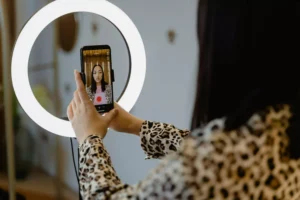
Fashion brand social media marketing strategy showing Instagram content on phone
Introduction
The fashion brand graveyard is full of beautiful collections and mediocre marketing.
In 2026, success in fashion is no longer just about design excellence — it is about distribution intelligence, storytelling authority, algorithm fluency, and community ownership.
Brands that win combine:
Emotional branding
Platform-native content
Data-driven optimization
Long-term audience building
This guide explains the most effective fashion marketing strategies today — from organic zero-budget growth to performance scaling.
Strategy 1: Build a Brand Identity Before Marketing
Marketing without identity creates noise, not demand.
Define:
Brand archetype
Tone of voice
Visual universe
Cultural positioning
Customer aspiration
Strong identity reduces acquisition cost because customers instantly understand who the brand is for.
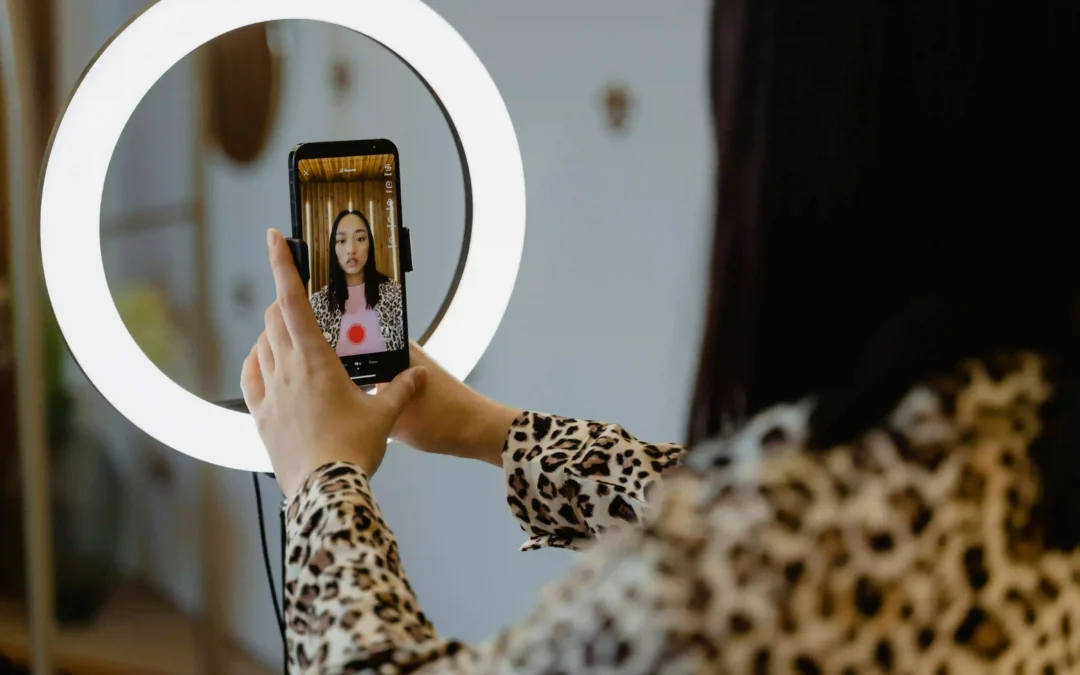
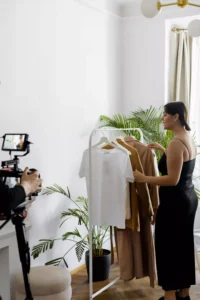
fashion influencer content creation social media photography
Strategy 2: Instagram & TikTok Platform Strategy
Instagram — Credibility Engine
Instagram is now a brand validation platform.
Best content:
Editorial lifestyle shoots
Designer storytelling
Customer reposts
Styling reels
Drop announcements
Posting cadence:
Feed: 4–6 per week
Stories: Daily
TikTok — Discovery Engine
TikTok remains the most powerful discovery tool for fashion.
Winning formats:
GRWM videos
Outfit transformations
Trend participation
Manufacturing BTS
Styling tutorials
Authenticity > Production quality.
Strategy 3: Influencer Marketing Evolution
Nano & micro creators deliver:
Higher trust
Lower cost
Better conversion
Best practice:
Long-term ambassador deals
Affiliate-linked partnerships
Exclusive capsule collaborations
Strategy 4: Email Marketing (Highest ROI Channel)
Email is the only owned marketing channel.
List growth tactics:
Style quiz
Lookbook PDF
Early access signup
Giveaway funnels
High-performing campaigns:
Collection launches
Styling education
VIP drops
Loyalty rewards
Fashion brand email newsletter marketing campaign on laptop screen