Every great fashion collection begins with a story. Before a single sketch is drawn, before a fabric is sourced, before a pattern is made — there is a mood board.
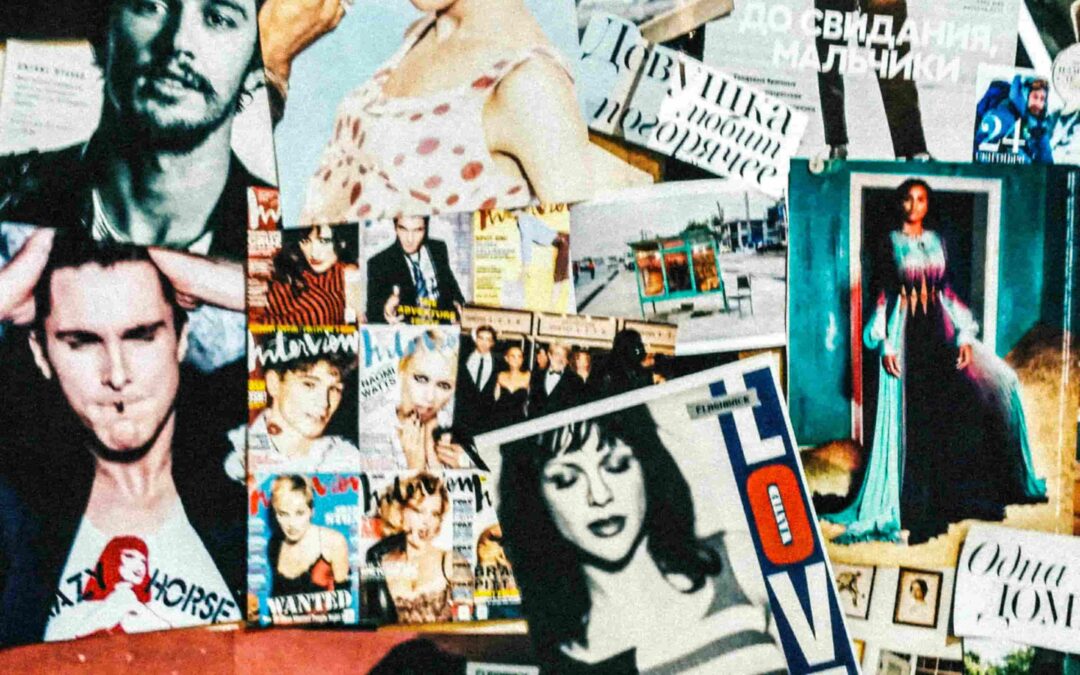
A fashion mood board is a visual collage that captures the feeling, aesthetic direction, color palette, texture language, and cultural references of a collection or design concept.
Think of it as the emotional and visual DNA of a collection, expressed before the design work begins.
Mood boards are used by fashion designers, stylists, art directors, buyers, and creative directors for everything from designing a collection to pitching a campaign to decorating a showroom.
This guide walks you through exactly how to create one that is both beautiful and functionally useful.
What is a Fashion Mood Board?
A fashion mood board (also called an inspiration board or concept board) is a curated assemblage of visual references that define the aesthetic direction of a design project.
It typically includes:
• Images (photography, editorial, nature, architecture, art)
• Color swatches
• Fabric or texture samples
• Typography samples (if relevant to branding)
• Patterns and prints
• Garment references
• Words, quotes, or descriptive language
• Cultural or historical references
Mood boards serve as a creative anchor — a visual reference point that keeps a collection or project coherent as the design process proceeds.
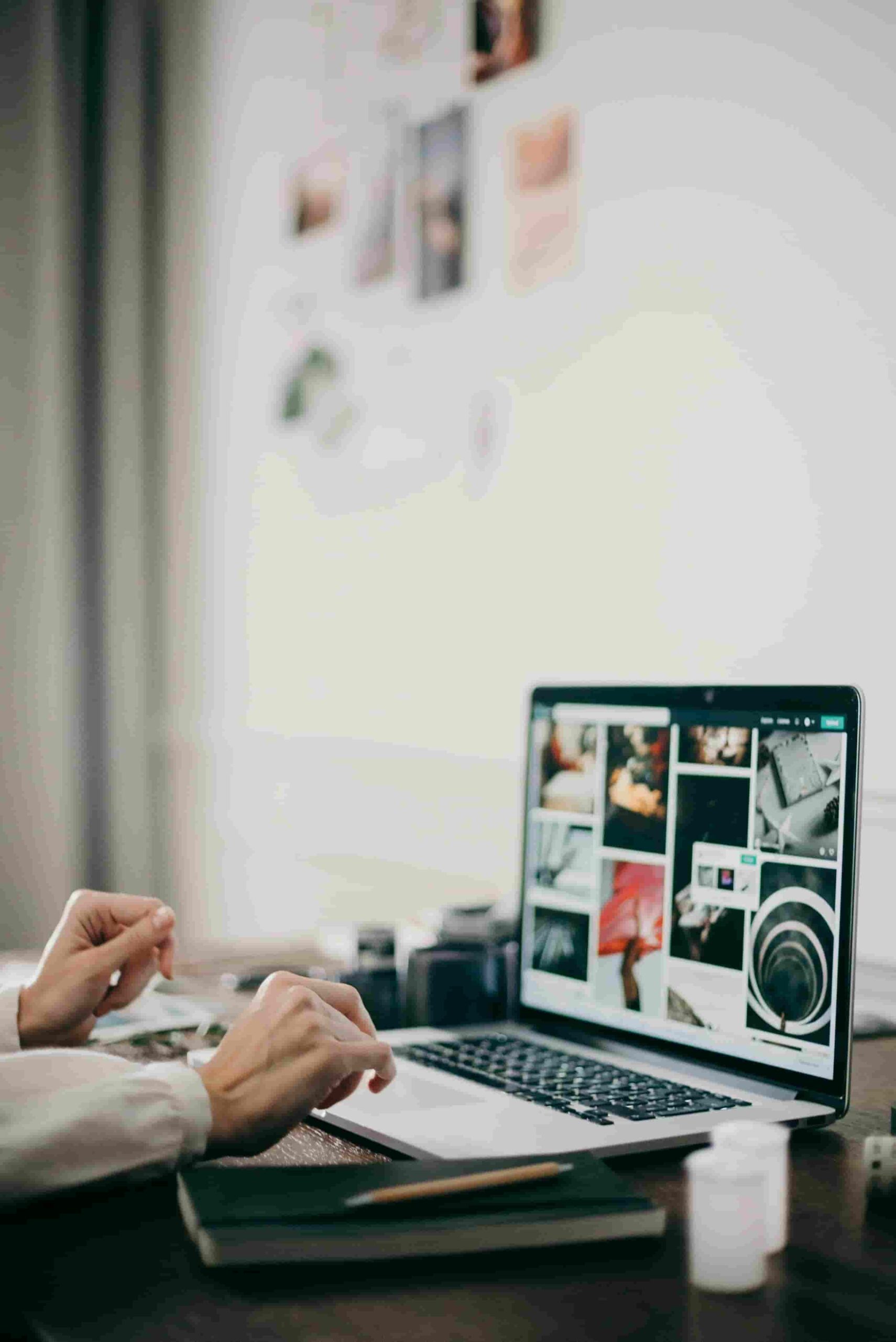
Digital fashion mood board on screen showing curated fashion inspiration
Types of Fashion Mood Boards
Collection Concept Board
Captures the overall mood, story, and aesthetic of an entire collection.
Color Palette Board
Focused specifically on color relationships.
Fabric and Texture Board
Includes fabric swatches and material references.
Customer Profile Board
Defines the target customer.
Campaign and Styling Board
Used for photo shoot planning and creative direction.
What to Include in a Fashion Mood Board
<h2 id=”what-to-include-mood-board”>What to Include in a Fashion Mood Board</h2>
Strong Hero Image
Every great mood board has one dominant image.
Color Story
Include 4–7 color swatches.
Fabric and Texture References
Textures communicate material mood.
Garment and Silhouette References
Runway or editorial images that suggest silhouettes.
Cultural and Lifestyle References
Architecture, art, nature, interiors, film stills.
Typography or Mood Words (Optional)
Words like:
Fluid
Sculptural
Undone
Precise
Physical vs. Digital Mood Boards
Physical Mood Boards
Advantages
• Tactile and immersive
• Excellent for presentations
• Natural editing discipline
Disadvantages
• Difficult to share remotely
• Time consuming
Digital Mood Boards
Advantages
• Easy to share
• Easy to edit
• Ideal for presentations
Disadvantages
• No physical texture
• Easy to overcrowd
Best practice: create both.
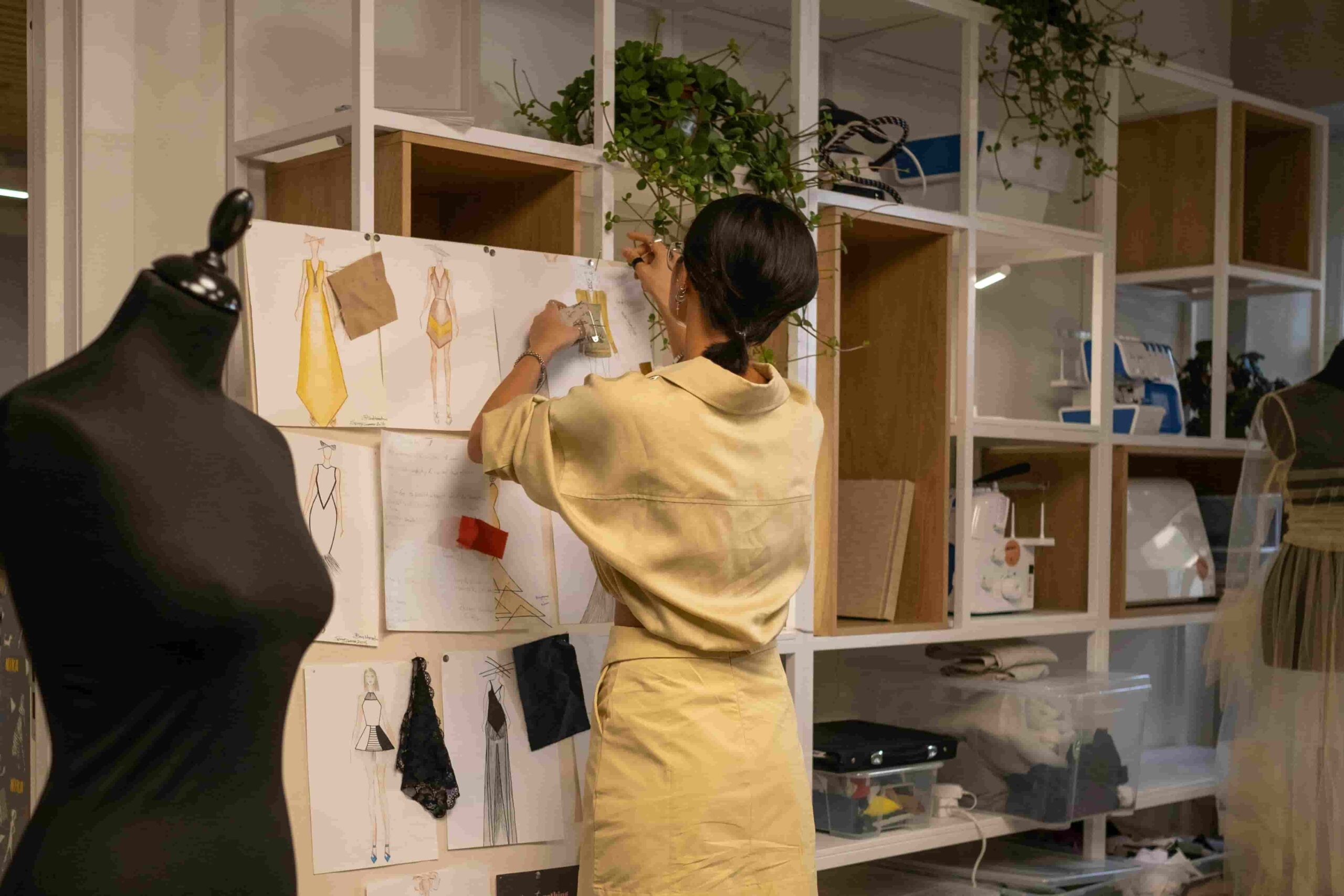
Physical design mood board pinned to wall with fabric swatches and color chips
Step-by-Step: How to Create a Fashion Mood Board
Step 1: Define Your Concept
Ask yourself:
• What story am I telling?
• What emotion should the viewer feel?
• What culture or environment inspires the concept?
• Who is the customer?
Write 3–5 sentences describing the concept.
Step 2: Gather References
Sources include:
Pinterest
Instagram
Runway archives
Museum collections
Film stills
Nature photography
Collect 40–60 images initially.
Step 3: Curate and Edit
Reduce your images to 10–15 strong references.
Remove images that:
• Feel generic
• Duplicate another image
• Break color harmony
Step 4: Establish Layout
Layout principles:
Hero image: 30–40% of board
Grouping of similar references
White space for breathing room
Color harmony across board
Step 5: Add Color Swatches
Add 4–7 colors that define the palette.
Step 6: Final Review
Ask:
Does the board immediately communicate the mood?
Is there a dominant visual direction?
Is the color palette coherent?
If yes — the board is complete.
Best Tools for Digital Mood Boards
Canva
Beginner-friendly drag-and-drop interface.
Pinterest
Excellent research tool.
Adobe Photoshop
Maximum creative control.
Milanote
Great for collaboration.
Moodboard App
Touch-optimized for tablets.
Examples of Fashion Mood Boards
Mood boards can vary dramatically depending on the design concept.
Common themes include:
Minimalist mood boards with neutral colors and architectural imagery.
Nature-inspired boards featuring organic textures, landscapes, and earthy palettes.
Avant-garde concept boards mixing art photography, abstract shapes, and experimental silhouettes.
The fashion internship is the industry’s standard entry point. Almost every professional working in fashion today started with an internship. It is how the industry filters for passion, resilience, and real-world competence — and it is how young fashion professionals build the portfolio pieces, references, and network connections that lead to employment.
This guide gives you everything you need: where to find fashion internship opportunities, how to prepare an application that stands out, what to expect once you’re there, and how to leverage the experience into a career.
Design Internship: Working with a design team on concept development, fabric sourcing, sketching, sample management, and production tracking. The most sought-after and competitive category.
Fashion PR Internship: Supporting media relations, event coordination, sample management for press loans, and influencer outreach. Excellent for building industry contacts.
Fashion Editorial Internship: At magazines, digital publications, or content studios. Supporting editors, organizing shoots, researching trends, writing captions and copy.
Fashion Styling Internship: Assisting stylists on editorial, commercial, or celebrity shoots. The standard entry into professional styling.
Buying and Merchandising Internship: Supporting retail buyers with market research, vendor management, trend analysis, and inventory planning.
Marketing and Social Media Internship: Content creation, social media management, campaign coordination for fashion brands.
Sustainability and CSR Internship: Growing category as brands build dedicated sustainability teams.
Are Fashion Internships Paid?
Fashion internships vary widely in compensation depending on the company, country, and legal regulations.
Historically, many internships in major fashion capitals such as New York, London, Paris, and Milan were unpaid. However, labor regulations and industry pressure have increasingly pushed brands to offer paid internships, stipends, or academic credit.
Large brands, retailers, and media organizations often offer:
Hourly pay
Monthly stipends
Travel or meal allowances
Academic credit through universities
Smaller fashion houses and independent designers may offer experience, mentorship, and portfolio exposure rather than direct payment.
When evaluating an internship opportunity, consider:
Skills you will gain
Industry exposure
Mentorship opportunities
Potential job prospects afterward
Fashion industry professional office and design workspace showing creative team
Where to Find Fashion Internship Opportunities
Direct Applications (Best Method)
The most effective approach is also the most effortful: research brands you genuinely want to work for and apply directly, whether or not they’ve advertised an opening.
A well-researched, well-written email to a brand’s HR team or hiring manager — with a strong portfolio link — can create an internship opportunity that didn’t formally exist. Small brands especially fill positions this way.
Research tip: Follow brands on LinkedIn. When employees post about team expansions or new seasons, that’s the moment to reach out.
Job Boards and Platforms
**LinkedIn:** The best platform for legitimate fashion industry listings
**Business of Fashion jobs board:** High-quality listings, global
**WWD Classifieds:** Industry-standard listings
**Stylecareers.com:** Fashion-focused US platform
**Graduate Fashion Week (UK):** Excellent resource for recent graduates
Networking Events and Fashion Weeks
Industry events — graduate shows, fashion week presentations, trade shows — are often where internships are filled through personal connections. Go to every industry event you can access and be genuinely curious about the work of the people you meet.
University Career Services
Fashion schools (Parsons, FIT, Central Saint Martins, RCA) have dedicated industry partnerships and placement services. Use every resource your institution provides.
When to Apply for Fashion Internships
Fashion internships are usually organized around seasonal fashion cycles.
Internship Season
Typical Application Period
Spring internships
October – December
Summer internships
January – March
Fall internships
May – July
Highly competitive brands may recruit three to six months in advance, so early preparation is essential.
Students should prepare their portfolio, CV, and cover letter well before the application window opens.
Building a Strong Application
What Fashion Employers Look For
Portfolio: For design and styling roles, a portfolio is the primary evaluation criterion. For other roles, it is often a secondary factor but should still reflect fashion sensibility.
Cultural fit: Do you understand and love the brand? A cover letter that demonstrates genuine familiarity with the brand — its aesthetic, its recent campaigns, its values — stands out dramatically from generic applications.
Professionalism and attention to detail: In an industry obsessed with presentation, how you present yourself in application materials directly signals how you’ll represent the brand.
Relevant skills: What specific skills do you bring? For editorial: writing, photography, research. For design: software proficiency (Illustrator, CLO 3D), sketching, pattern knowledge. For marketing: social media proficiency, content creation, analytics.
The Cover Letter
Fashion cover letters are read more carefully than in many industries. Avoid generic templates. Write specifically:
Why this brand specifically (not “fashion” generically)
What you bring that’s relevant to this specific role
One concrete example of relevant work or experience
Your genuine enthusiasm, expressed authentically (not effusively)
Length: 3–4 paragraphs. No longer. Editors and fashion directors read hundreds — brevity with substance wins.
Make it easy to view: a clean portfolio website with a clear URL. Not a Dropbox link requiring download. Not a password-protected page.
Ensure it loads quickly on mobile. Test it on a phone before submitting.
Send the portfolio link prominently in the email body — don’t make the reader work to find it.
Essential Skills for Fashion Interns
Successful fashion interns combine creative ability, organization, and strong work ethic.
Important skills include:
Adobe Illustrator and Photoshop
Digital fashion tools such as CLO 3D
Trend research and visual analysis
Garment handling and sample organization
Social media and digital marketing skills
Fashion writing and communication
Attention to detail and time management
Even for non-design roles, fashion awareness and strong aesthetic judgment are highly valued.
What to Expect During a Fashion Internship
The Reality
Fashion internships are known for hard work, limited glamour, and steep learning curves. The work typically includes a significant amount of administrative and physical tasks: logging samples, steaming garments, running errands, organizing showrooms, and data entry alongside the more exciting design or editorial work.
This is normal. Every person who has succeeded in fashion has spent time steaming garments at 7am. The tasks are not beneath you — they are the entry-level apprenticeship through which you earn trust, demonstrate attitude, and begin building relationships.
What distinguishes interns who get hired from those who don’t:
Proactive problem-solving (offering solutions, not just raising problems)
Genuine curiosity about every aspect of the business
Impeccable attention to detail
Being reliably on time, every time
Making the people around them look good
Ask Intelligent Questions
The learning value of an internship scales with the questions you ask. When you finish tasks, ask to observe meetings. Ask for context about why decisions are made. Ask for feedback on your work. Intellectual curiosity is noticed and appreciated.
Fashion industry networking event with young professionals connecting
Kazi Purba in a Networking event connecting with the Global Change Award winners arranged by H&M Foundation in Hurley, London, UK. Courtesy: H&M Foundation
Best Cities for Fashion Internships
Fashion internship opportunities are concentrated in the world’s major fashion capitals.
New York – Fashion publishing, retail headquarters, and design studios. London – Strong fashion education ecosystem and emerging designers. Paris – Luxury fashion houses and couture brands. Milan – Major fashion manufacturing and luxury brands. Los Angeles – Celebrity styling, costume design, and fashion media.
Students interested in global careers often seek internships in these cities to build international industry networks.
Turning Your Internship Into a Job
The best outcome of a fashion internship is a job offer — or at minimum, a strong reference and an expanded network.
Tell them you want to stay. Don’t assume your supervisor knows you’re interested in a full-time position. Tell them directly and professionally near the end of your internship.
Document your contributions. Keep a record of projects you contributed to, results you achieved, and skills you developed. This becomes your pitch for a permanent role.
Stay in touch after the internship ends. A brief email every 3–4 months maintaining the relationship — sharing something relevant to their work, congratulating on a collection launch — keeps you in their mind when a position opens.
Fashion Internship FAQ
How do you get a fashion internship?
You can secure a fashion internship by researching brands, preparing a strong portfolio or CV, networking at industry events, and applying through job boards or direct email applications.
Are fashion internships paid?
Some fashion internships are paid, particularly at large brands and retailers, while others may offer stipends or academic credit depending on the company and country.
What skills do fashion interns need?
Fashion interns benefit from skills such as design software proficiency, organization, fashion trend awareness, communication, and strong attention to detail.
How long do fashion internships last?
Most fashion internships last between three and six months depending on the company and the internship program.
Can a fashion internship lead to a job?
Yes. Many professionals in the fashion industry start their careers through internships that later lead to full-time employment or strong industry references.
Amazon Affiliate Disclosure: As an Amazon Associate, we earn from qualifying purchases. If you make a purchase through these links, we may earn a small commission at no extra cost to you. This helps support independent fashion contents.
Business casual sits between formal business dress (power suits, conservative professional dress) and smart casual (stylish but more personal). It is the dress code of most modern professional environments — tech companies, law firms on “casual Friday,” corporate offices with relaxed cultures, client meetings in creative industries.
For women, business casual has more flexibility than men’s equivalents — but with greater flexibility comes greater potential for misjudging the occasion.
This guide eliminates the guesswork.
Business Casual Core Principles for Women
Polished and professional: Business casual should read as intentional and considered. Nothing sloppy, wrinkled, or visibly worn.
Appropriately modest for a professional context: Not conservative necessarily, but appropriate. Body-conscious styles, very short hemlines, and very low necklines push beyond business casual.
Minimal and purposeful: Strong, simple outfits serve better than complex, trend-heavy ones in most professional environments.
Business casual office outfit ideas for women showing blazer trousers and flats
The Business Casual Wardrobe for Women
Tops
Yes: Blouses (silk, satin, quality cotton), fitted knits and fine-knit jumpers, well-fitted button-down shirts, simple printed tops in small or classic prints
No: Crop tops, sheer tops without liners, athletic or sports tops, very casual graphic tees, off-shoulder or strapless tops for office settings
Bottoms
Yes: Tailored trousers (wide-leg, straight, slim), pencil skirts, A-line midi skirts, well-cut dark jeans at some workplaces (know your workplace culture)
No: Mini skirts, ripped jeans, leggings as trousers (unless full-coverage ponte leggings styled carefully), casual shorts
Dresses
Yes: Wrap dresses, shirt dresses, sheath dresses at or below the knee, ponte or knit dresses
No: Very short bodycon dresses, casual sundresses, clubwear-adjacent dresses
Shoes
Yes: Heeled sandals or mules, loafers, ballet flats, ankle boots, simple pumps, clean leather sneakers (increasingly accepted in tech/creative)
Professional work wardrobe essentials for women showing quality investment pieces
Business Casual vs Smart Casual for Women
Business casual and smart casual are often confused, but they serve different purposes in professional and social settings. While both dress codes allow flexibility and personal style, business casual leans more professional, while smart casual is more relaxed and fashion-forward.
Business Casual
Designed primarily for professional environments
Includes tailored trousers, blouses, midi skirts, blazers, and professional dresses
Neutral colours and structured silhouettes are common
Footwear typically includes loafers, pumps, ankle boots, or flats
Often required in offices, corporate meetings, consulting, finance, and professional services
Smart Casual
A more relaxed dress code that blends casual and polished elements
May include stylish jeans, fashion-forward tops, statement shoes, and trend-driven pieces
Encourages personal expression and modern styling
Footwear can include sneakers, fashionable boots, or sandals
Common in social events, creative workplaces, dinners, and casual professional settings
Quick Comparison
Aspect
Business Casual
Smart Casual
Formality
Professional workplace standard
Relaxed but polished
Typical Tops
Blouses, shirts, knitwear
Stylish tops, relaxed shirts
Bottoms
Tailored trousers, pencil skirts
Jeans, skirts, tailored pants
Shoes
Loafers, pumps, flats
Sneakers, boots, stylish flats
Where It’s Worn
Offices, meetings, corporate environments
Creative workplaces, dinners, casual events
In simple terms, business casual focuses on professionalism and structure, while smart casual allows more creativity and relaxed styling. When in doubt for professional environments, it is usually safer to lean toward business casual.
Business Casual by Industry
Finance, law, consulting: Err more formal. Tailored trousers + blazer + quality heels. Save the jeans for Friday.
Tech and creative industries: More relaxed. Quality jeans, smart casual, expression of personal style within professional limits.
Media and fashion: Most expressive range. Fashion-forward pieces are often appropriate and appreciated.
Healthcare and education: Practical, comfortable, professional. Comfort and ease matter more than fashion-forwardness.
FAQ: Business Casual for Women
What does business casual mean for women?
Business casual for women refers to a professional dress code that balances formal office wear and relaxed everyday clothing. Typical outfits include tailored trousers, blouses, midi dresses, blazers, and professional shoes such as loafers or pumps.
Are jeans acceptable in business casual for women?
In some workplaces such as tech companies and creative industries, dark, well-fitted jeans may be acceptable as part of business casual attire. However, ripped or distressed jeans are generally considered inappropriate for professional environments.
What shoes are appropriate for business casual?
Appropriate business casual shoes for women include loafers, ballet flats, ankle boots, simple pumps, and low heels. In more relaxed workplaces, clean leather sneakers may also be acceptable.
Can women wear dresses in a business casual office?
Yes. Wrap dresses, shirt dresses, and sheath dresses that fall at or below the knee are considered excellent business casual options.
Is a blazer necessary for business casual?
A blazer is not strictly required but is one of the most versatile pieces in a business casual wardrobe. It instantly elevates simple outfits and helps create a more polished professional appearance.
Artificial intelligence is no longer a future prospect for the fashion industry — it is here, operational, and reshaping every dimension of how fashion is designed, produced, marketed, and consumed.
From generative AI tools that produce thousands of design concepts in minutes, to recommendation engines that have transformed e-commerce, to demand forecasting systems that are beginning to solve fashion’s chronic overproduction crisis — AI is not replacing creativity in fashion, but it is fundamentally augmenting and accelerating every part of the industry.
This guide maps the full landscape of AI in fashion: where it is being used, by whom, with what results, and what it means for designers, brands, and consumers.
AI in fashion is powered by a growing ecosystem of specialized tools used by designers, merchandisers, marketers, and supply chain managers.
Some of the most widely used AI tools in fashion include:
Design and visualization tools
Midjourney
DALL-E
Stable Diffusion
Refabric
Cala
Trend forecasting platforms
WGSN Instock
Trendalytics
Stylumia
Heuritech
3D fashion design tools
CLO3D
Browzwear
Style3D
AI marketing and content tools
Jasper AI
Copy.ai
ChatGPT
These tools are rapidly becoming part of the standard digital toolkit for fashion professionals, much like Adobe Illustrator and Photoshop did in earlier decades.
AI in Fashion Design and Ideation
Generative Design
Generative AI tools — including purpose-built fashion systems and general image generation platforms like Midjourney, DALL-E, and Stable Diffusion — are now widely used by fashion designers for rapid concept visualization.
A designer can input a text prompt describing a garment concept (“deconstructed blazer in cobalt blue with exaggerated lapels, SS25 aesthetic, technical fabric”) and receive dozens of visual concept variations in seconds. These images serve as ideation tools — mood board elements, client presentation visuals, and starting points for more detailed design development.
Fashion-specific AI design tools:
Refabric: Generates garment designs, colorways, and prints from text prompts. Built specifically for the fashion industry.
Cala: An integrated fashion design and production platform with AI-assisted design features.
YarnBuddy/Stitch Fix AI: AI-assisted knitwear and pattern design.
Important nuance: Generative AI for design raises significant intellectual property questions. AI models trained on existing designers’ work may produce outputs that inadvertently replicate specific designers’ styles. The legal and ethical framework around AI-generated fashion design is actively evolving.
AI-powered fashion trend forecasting dashboard showing data analytics
AI in Trend Forecasting
Traditional trend forecasting relied on human experts who attended fashion weeks, monitored cultural movements, and produced expensive, lengthy reports that were outdated by the time they were published.
AI-powered trend forecasting platforms analyze vast datasets in real time:
Social media posts and engagement (Instagram, TikTok, Pinterest)
Search data (Google Trends, Shopify search data)
Runway images
Street photography
Sales data from thousands of retailers
Cultural media (film, music, TV)
Leading AI trend forecasting platforms:
WGSN Instock: Real-time sell-through data analysis and trend tracking
Trendalytics: Social and search data trend analysis
Stylumia: Demand intelligence platform using AI to identify emerging trends
Heuritech: Computer vision AI that analyzes social media imagery for trend signals
These platforms can identify emerging trends 12–18 months before they reach mainstream awareness — providing brands with genuinely actionable lead time to design and produce relevant products.
Real-World Case Studies of AI in Fashion
Several major fashion brands are already deploying AI across design, supply chain, and retail operations.
Zara (Inditex) Uses AI and RFID technology to track real-time store inventory and customer demand. This allows the company to design, produce, and distribute new collections in as little as two to three weeks.
Stitch Fix Combines machine learning algorithms with human stylists to create highly personalized clothing recommendations for millions of customers.
H&M Group Uses AI demand forecasting models to optimize inventory allocation across thousands of stores globally.
Nike Uses AI-driven analytics to predict product demand and optimize manufacturing schedules.
These implementations demonstrate that AI in fashion is already operational at scale rather than experimental.
AI in Personalized Shopping
The transformation of e-commerce by AI recommendation systems is, arguably, the most commercially significant AI application in fashion to date.
Recommendation Engines
Platforms like Stitch Fix, ASOS, H&M, and Zalando use sophisticated machine learning recommendation systems that learn individual user preferences from browsing behavior, purchase history, style ratings, and demographic data to surface personally relevant product suggestions.
Stitch Fix’s entire business model is built on AI-human collaboration: algorithms select garments for each customer’s shipment, which human stylists then review and personalize. The company employs more than 100 data scientists specifically for its recommendation infrastructure.
Visual Search
AI visual search allows shoppers to upload or point their phone camera at any item — a garment seen on the street, on social media, or in a store window — and find similar items for purchase. Pinterest Lens, Google Lens, and dedicated fashion apps like Snap’s ShopMy all use computer vision to enable visual product discovery.
AI Virtual Try-On
Augmented reality virtual try-on technology — powered by computer vision and machine learning — allows shoppers to virtually “try” garments without physically wearing them.
Platforms including Snapchat, Instagram, and dedicated apps partner with brands to let consumers see how clothing and accessories will look on their own image. Reducing returns by improving purchase accuracy is a key business driver — fashion e-commerce returns run at 25–40%.
AI in Demand Forecasting and Inventory Management
Fashion’s chronic overproduction problem — an estimated 30% of all garments produced are never sold — is one of the industry’s most damaging environmental issues. AI-powered demand forecasting is beginning to address this at scale.
Machine learning models analyze historical sales data, weather patterns, social media trends, macro economic indicators, and competitor pricing to generate highly accurate demand forecasts. This allows brands to produce closer to actual demand — reducing overstock, reducing waste, and improving profitability simultaneously.
Brands leading in AI demand forecasting:
Zara’s parent company Inditex uses RFID data from its stores, combined with machine learning, to achieve one of the industry’s most responsive supply chains
Tommy Hilfiger partnered with IBM to use AI for design and trend analysis
PVH Corp (Calvin Klein, Tommy Hilfiger) has significant investment in AI demand planning
Augmented reality virtual fashion try-on technology on smartphone
AI in Sustainable Fashion Production
Beyond demand forecasting, AI is supporting sustainability in fashion production in several ways:
Material innovation: AI is accelerating the discovery of new sustainable materials. Machine learning models can simulate the properties of novel fiber combinations and predict performance outcomes, dramatically speeding up the material R&D process.
Quality control: Computer vision systems inspect finished garments for defects at much higher speed and accuracy than human inspection. Fewer defective products means less waste.
Pattern optimization (Nesting): AI-powered pattern cutting optimization software arranges pattern pieces on fabric to minimize waste. Advanced systems achieve fabric utilization rates of 85%+ versus industry averages of 75–80%.
Resale and circularity: AI powers the authentication systems that make luxury resale platforms viable. The RealReal uses AI image analysis as a first-pass authentication step for the millions of items processed annually.
Fashion brands are increasingly using AI tools to generate marketing copy, social media captions, email subject lines, and product descriptions. Tools like Jasper, Copy.ai, and brand-specific implementations dramatically accelerate content production.
AI Fashion Photography
AI-generated fashion imagery is beginning to appear in commercial contexts. Virtual models generated by AI — like those created on platforms such as Lalaland.ai or Bria — allow brands to show garments on diverse, customizable digital models without photoshoots. This reduces photography costs and allows rapid product visualization.
This technology is both exciting and controversial: there are legitimate concerns about its impact on fashion photographers and models, and about representation and authenticity.
AI-Powered Ad Targeting
Machine learning ad optimization on Meta, Google, and TikTok platforms allows fashion brands to target ads with extraordinary precision — reaching the exact consumers most likely to purchase specific products at the moment they’re most receptive.
How AI Is Changing Fashion Careers
AI is not eliminating fashion jobs, but it is transforming the skills required across the industry.
New career roles are emerging, including:
Fashion data analysts
AI fashion designers
3D fashion designers
Digital garment technologists
Fashion technology product managers
Traditional roles such as designers, merchandisers, and marketers increasingly require data literacy, digital tools, and familiarity with AI-assisted workflows.
Fashion education programs are rapidly adapting by introducing fashion technology, digital design, and AI-driven analytics into their curricula.
Challenges and Concerns Around AI in Fashion
Intellectual Property and Creative Credit
When an AI trained on thousands of designers’ work produces a design, who owns it? This question is actively being contested in courts and policy discussions globally.
Labor Displacement
If AI can generate design concepts, write copy, produce photography, and forecast trends — what happens to the human workers who previously performed these tasks? The industry’s relationship with labor is complex, and AI adds a new layer of complexity.
Diversity and Algorithmic Bias
AI systems trained on biased data produce biased outputs. Fashion AI trained predominantly on images of a narrow range of body types, skin tones, and cultural aesthetics perpetuates those biases at scale.
Over-reliance on Data
AI is excellent at recognizing and extrapolating from patterns in historical data. It is less good at predicting genuine discontinuities — the cultural shifts that create entirely new aesthetic movements. Human creativity and cultural sensitivity remain essential.
Key Statistics on AI in Fashion
Several industry reports highlight the accelerating adoption of AI across fashion.
Key data points include:
The global AI in fashion market is projected to exceed $4–6 billion by 2030.
Fashion e-commerce recommendation engines drive up to 35% of online purchases.
AI demand forecasting can improve inventory accuracy by 20–50%.
Virtual try-on technologies can reduce e-commerce returns by 10–30%.
Consultancies such as McKinsey estimate that AI adoption could add hundreds of billions of dollars in productivity gains to the global fashion industry.
The Future of AI in Fashion
The trajectory is clear: AI integration in fashion will deepen across every function. Key developments to watch:
**AI-designed materials:** Fully AI-designed sustainable fibers, coatings, and finishes
**Hyper-personalized fashion:** Garments designed to exact individual specifications, manufactured on demand
**AI supply chain management:** End-to-end supply chain optimization from fiber to consumer
**Generative fashion for virtual worlds:** AI-generated fashion for metaverse and gaming environments
**Human-AI design collaboration as standard practice**
AI in Fashion FAQ
How is AI used in the fashion industry?
AI is used in fashion for design generation, trend forecasting, personalized shopping recommendations, demand forecasting, supply chain optimization, and automated marketing.
Can AI design clothes?
Yes. Generative AI tools can create garment concepts, prints, and color combinations based on text prompts. Designers typically use these outputs as inspiration or starting points.
Which brands use AI in fashion?
Major brands using AI include Zara, H&M, Nike, Stitch Fix, and Zalando. These companies use AI for demand forecasting, recommendation engines, and supply chain optimization.
Will AI replace fashion designers?
AI is unlikely to replace designers but will augment their capabilities by accelerating ideation, improving trend analysis, and automating repetitive tasks.
Is AI helping sustainable fashion?
Yes. AI improves demand forecasting, reduces overproduction, optimizes fabric cutting, and accelerates the discovery of sustainable materials.
Amazon Affiliate Disclosure: As an Amazon Associate, we earn from qualifying purchases. If you make a purchase through these links, we may earn a small commission at no extra cost to you. This supports us in creating independent fashion contents like these.
Introduction
The fashion designer’s toolkit has expanded dramatically in the past decade. Where once a pencil, paper, and sewing machine were sufficient, today’s professional designers are expected to be fluent in a range of digital tools — from vector software for technical flats to 3D simulation platforms that can virtually fit a garment on a digital avatar before a single stitch is made.
This guide reviews every major fashion design software category, with honest assessments of the leading tools, who they’re best for, and what they cost.
Category 1: Technical Flat Drawing Software
Technical flats — also called “cads” — are the detailed, line-drawn specifications of garments used in production. They must be clean, accurate, and to scale.
Adobe Illustrator (Industry Standard)
Cost: $20.99/month (part of Adobe Creative Cloud)
Best for: All professional fashion designers
Adobe Illustrator is the undisputed industry standard for fashion technical flats. Its vector-based drawing tools create infinitely scalable, precisely drawn garments. Most fashion brands expect designers to be proficient in Illustrator.
Key advantages: Industry universal, massive resource library of fashion brushes and templates, integrates with Photoshop for presentations.
Learning curve: Moderate. Expect 3–6 months to reach proficiency.
Need a professional drawing tablet for Illustrator flats? Shop top-rated Wacom or XP-Pen tablets on Amazon
CorelDRAW
Cost: $249/year
Best for: Designers who want an Illustrator alternative
Similar vector drawing capabilities to Illustrator, with some users finding its interface more intuitive. Less common in industry settings but fully capable.
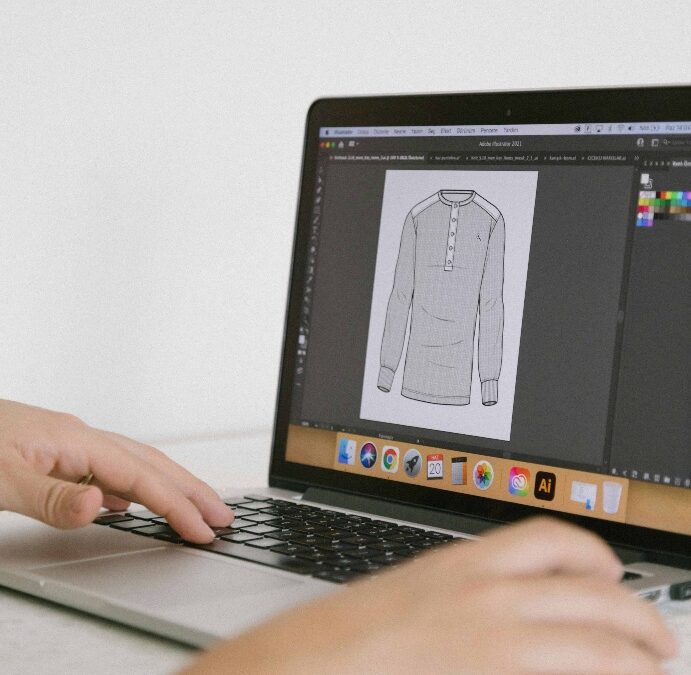
Adobe Illustrator technical fashion flat sketch on computer screen
Category 2: Fashion Illustration and Rendering Software
Procreate (iPad)
Cost: $12.99 one-time
Best for: Fashion illustrators; designers who sketch digitally
The most popular digital illustration tool for fashion designers. The natural drawing feel with Apple Pencil closely mimics traditional media. Thousands of fashion-specific brushes available for download. Used by professional fashion illustrators and designers globally.
Ready to start digital fashion sketching? Get the Apple iPad + Apple Pencil perfect for Procreate on Amazon.
Adobe Fresco
Cost: Free / $9.99 per month for premium
Best for: Designers already in the Adobe ecosystem
Excellent brush library including live oil and watercolor brushes that create organic, painterly fashion illustrations. Integrates directly with Photoshop.
SketchBook Pro
Cost: Free (Autodesk)
Best for: Beginners; fashion students on a budget
A surprisingly powerful free illustration tool. Clean interface, good brush selection. A solid starting point before investing in Procreate or Fresco.
Category 3: 3D Garment Design Software
3D fashion design is the most significant technology shift in fashion in a generation. These tools allow designers to visualize, fit, and adjust garments on digital avatars — dramatically reducing sample costs and lead times.
Best for: Professional designers and brands; fashion technology students
CLO 3D is the leading 3D fashion design platform. Import 2D patterns, assign fabrics from an extensive material library, and see garments simulate realistically on a digital avatar. The physics-based simulation shows exactly how fabric will drape, fold, and fit.
Used by brands including Calvin Klein, Tommy Hilfiger, Adidas, and hundreds of others. Increasingly essential for senior design roles.
Learning curve: Steep. Expect 6–12 months to reach production-level proficiency.
Browzwear
Cost: Enterprise pricing (contact for quote)
Best for: Large fashion brands and manufacturers
Browzwear (and its product VStitcher) is CLO 3D’s main competitor. Comparable 3D simulation capabilities, widely used in production environments and supply chains. Less accessible for independent designers due to pricing.
Marvelous Designer
Cost: $50/month
Best for: Costume designers, game and film industry, creative experimentation
Originally built for the game/film industry’s costume design needs, Marvelous Designer shares the same underlying engine as CLO 3D (they share founders) but has a different interface and community. Excellent for creative/sculptural garment exploration.
Category 4: Pattern Making Software (CAD)
Lectra Modaris
Cost: Enterprise licensing
Best for: Large manufacturers and production houses
The industry-standard pattern making CAD system used by major fashion brands and manufacturers worldwide. Powerful grading and marker-making capabilities. Primarily used in production contexts, not design studios.
Gerber AccuMark
Cost: Enterprise licensing
Best for: Large manufacturers
Gerber’s pattern CAD system is Lectra’s main competitor. Equally powerful for production-scale pattern work.
Wild Ginger Cameo / Pattern Master
Cost: $150–$300
Best for: Small designers and indie brands
More accessible pattern CAD software designed for small-scale designers. Can draft patterns from measurements and create graded size sets without enterprise-level investment.
Seamly2D (Free)
Cost: Free and open-source
Best for: Budget-conscious designers, students
An open-source pattern making application with a genuine community of fashion designers. Not at production software level but impressive for a free tool.
3D virtual garment visualization on screen showing digital fashion design
Category 5: Fashion Presentation and Mood Board Tools
Canva
Cost: Free / $12.99 per month (Pro)
Best for: Presentation boards, line sheets, lookbooks
Not a design tool per se, but essential for creating professional-looking fashion presentations. Excellent for line sheets, lookbooks, mood boards, and social media content.
PowerPoint / Keynote
Cost: Included with Microsoft/Apple
Best for: Collection presentations
Fashion presentations to buyers and press are often delivered as PowerPoint or Keynote decks. Basic but universal.
Adobe InDesign
Cost: $20.99/month
Best for: Professional lookbooks, editorial layouts, line sheets
The professional standard for editorial layout. Lookbooks and detailed line sheets benefit from InDesign’s precise typography and layout control.
Category 6: AI Fashion Design Tools (New in 2025)
AI has entered fashion design with tools that generate design concepts, predict trends, and assist with creative ideation.
Midjourney / DALL-E / Stable Diffusion
Text-to-image AI tools are increasingly used by designers for mood board creation, concept visualization, and design inspiration. Not production tools but powerful for ideation.
Cala
An all-in-one fashion business platform that uses AI to assist with design, sourcing, and production management. Built for emerging brands.
Refabric
An AI-powered fashion design tool specifically built for the industry. Generates design variations, colorways, and prints from text prompts.
Recommended Software Stack by Designer Stage
Fashion Student
Procreate (illustration and sketching)
Adobe Illustrator (technical flats — learn this first!)
Building your complete fashion design toolkit? Explore essential hardware like iPad Pro for Procreate/CLO, Wacom tablets, and powerful laptops on Amazon