The Met Gala (or Met Ball), formally known as the Costume Institution Gala or the Costume Institute Benefit, is an annual fundraising gala held for the benefit of the Metropolitan Museum of Art’s Costume Institution in New York City. It’s the biggest fundraising night in New York City, where designers, models, musicians and Hollywood actors all come on the red carpet to show off their costumes in aid of raising money for the event. Celebrities from various professional spheres, such as fashion, film, television, theatre, music, business, sports, social media and politics are invited to the Met Gala, organized by American fashion magazine “Vogue.
When the Met Gala is held?
The gala (gala means fest) is held annually on the first Monday of May. It marks opening of the Costume Institute’s annual fashion exhibit on the Upper East Side of Manhattan. Several of the attendees are depicted on the covers and pages of Vogue. Every year’s event celebrates the specific theme of that year’s Costume Institute exhibition that sets the tone for the formal attire of the night. Guests who were invited are expected to curate their fashion to match the theme of the exhibit, which is generally haute couture. American journalist Anna Wintour, the editor in chief of Vogue, has chaired or co-chaired the Met Gala since 1995.
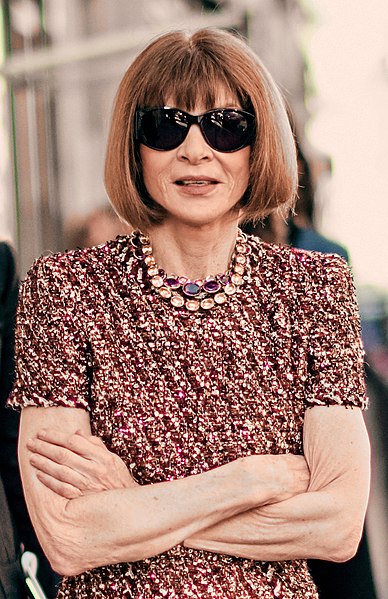
American journalist Anna Wintour, the editor in chief of Vogue, has chaired or co-chaired the Met Gala since 1995. Photo courtesy: Wikimedia Commons
.
The history of Met Gala
The Met Gala was established in 1948 by fashion Communicator Eleanor Lambert as a fundraiser for the newly supported Costume Institute to mark the opening of its annual exhibit.
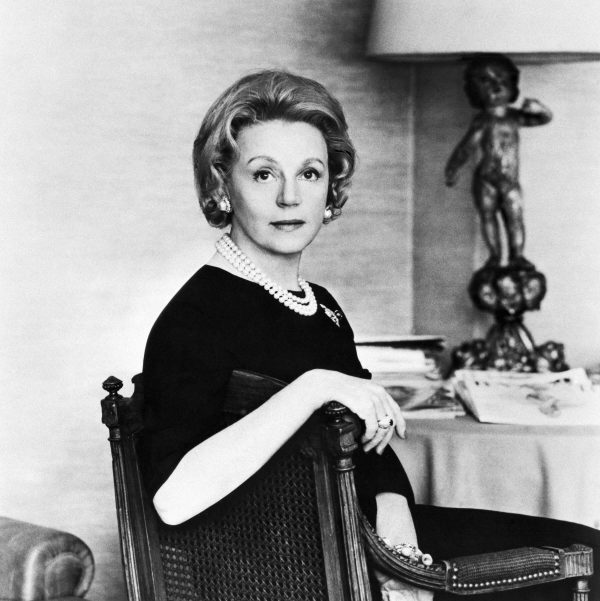
Eleanor Lambert Berkson (Birth: August 10, 1903, Death: October 7, 2003) was an American fashion publicist who was instrumental in the emergence of New York City as a major fashion capital. Photo courtesy: Time Magazine
The first gala was a dinner and tickets were just $50 each. Over the first few decades of its existence, the gala was merely one of many annual benefits held for New York charitable institutions.
Similarly, the attendees of the early gala were almost entirely member of New York high class member of the city’s fashion industry. From 1948 to 1971, the event was held at venues such as the Waldorf Astoria, Central Park and the Rainbow Room.
From 1948, the Met Gala was occurred consecutively each year, except the year 2000 and 2002.
Met Gala ticket price
Actually Met Gala is the social event of the year and the fashion world version of the Oscars.
If you want to get yourself there, it will cost over $30,000 for an individual ticket.In 1995, the tickets were just $1,000. For going free you have to be chosen by a designer who has a table and whose work will be featured at the event. If you are selected, you will be dressed by that designer, which they feel matches the theme, wearing their design, your ticket in.
What is the price of a table in Met Gala?
Let’s move on from individual tickets, there is the option of purchasing a table, which costs approximately $275,000 to $300,000.
However, many celebrities who attend this event don’t actually end up paying for their tickets and costumes for the Met Gala. Each celebrities outfit is usually bankrolled by major fashion houses, in exchange for exposure and the goodwill of attending a charitable event.
How to get invited in Met Gala?
1) Donate a huge amount of money
2) Be a celebrity
3) Work at Vogue
4) Perform at the Gala
5) Sponsor the Gala
2021 Met Gala:
Typically the gala is held annually on the first Monday in May, but due to COVID-19 pandemic, the soirée was cancelled last year, and postponed to the September, 2021, and the gala was held on 13th September, 2021, with live red carpet coverage starting at 5:30 p.m. EST, at the Metropolitan Museum of Art in New York.
In 2021, the gala actually presented a two part exhibit, the part one was: “A Lexicon of Fashion,” was held on September 18, 2021 and the part two was: “An Anthology of Fashion,” was held in 5th May, 2022 (actually held in 2nd May), and we called it 2022 Met Gala.
The event on 13th September was hosted by co-chairs Timothée Chalamet, Billie Eilish, Amanda Gorman, and Naomi Osaka, and honorary chairs Tom Ford, Adam Mosseri, and Anna Wintour. Due to COVID-19 pandemic guidelines, the celebrity-studded red carpet was a smaller affair than usual, with invites stipulating a dress code inspired by American Independence.
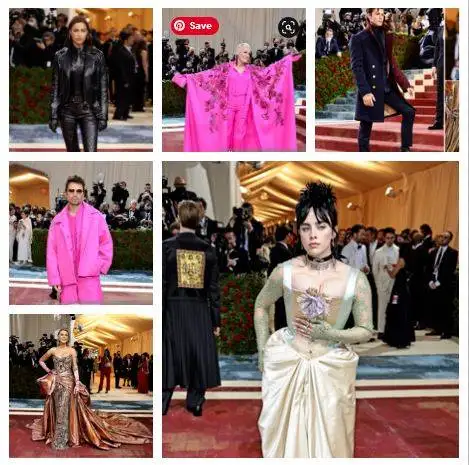
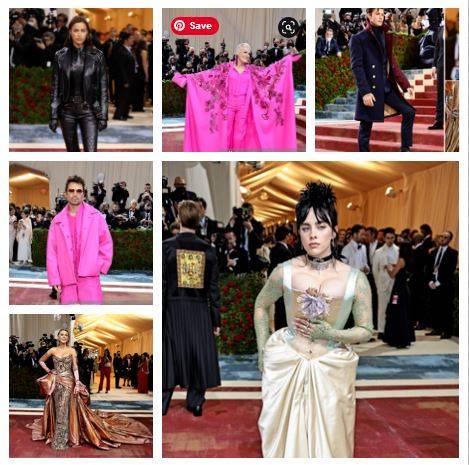
In Met Gala 2022, “Blake Lively, Billie Eilish, Sebastian Stan, Stormzy, Frederick Robertsson, Megan Thee Stallion, Glenn Close, Gigi Hadid, Irina Shayk, Olivia Rodrigo, Jordon Roth, Shawn Mendes, Evan Mock” were present. Image Source: https://tenpiecesofeight.com/
2022 Met Gala:
The 2020 Met gala was off because of the COVID-19 pandemic. The Gala resumed in 2021, however was held in September rather than in May that year. In 2022, the Met Gala returned to holding its traditional May ceremony, and it was held in 2nd May, 2022.
In 2022 Met Gala “Blake Lively, Billie Eilish, Sebastian Stan, Stormzy, Frederick Robertsson, Megan Thee Stallion, Glenn Close, Gigi Hadid, Irina Shayk, Olivia Rodrigo, Jordon Roth, Shawn Mendes, Evan Mock” were the winners.
To know the biggest fashion trends of 21st century, you can visit here! Moreover, if you want to know the future of fashion industry after Covid-19, you can click here!
A polo shirt is a very common attire that we see in our day to day life. But how many of us know the history of Polo shirt, the timeless iconic apparel? Well, Polo shirt’s history is rich and interesting, a must know for all the fashionistas for sure. So, let’s dive into this iconic shirt’s history and try to answer what is a polo shirt, why it is so called, who invented it, how it came to its present form and all the questions that are lurking in your inquisitive brain!
What is a Polo shirt?
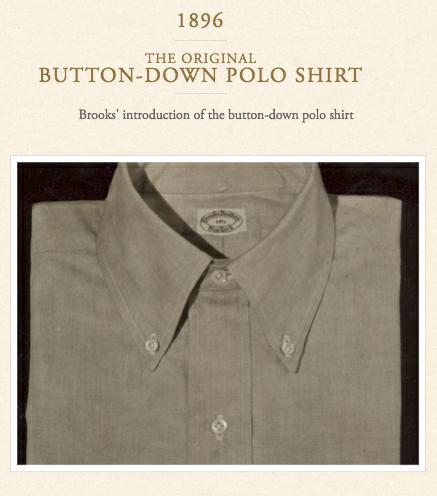
The original button-down Polo Shirt of 1896. Brooks’ introduction of the button-down polo shirt making the first entry in the history of Polo Shirt. Picture from colparr.com
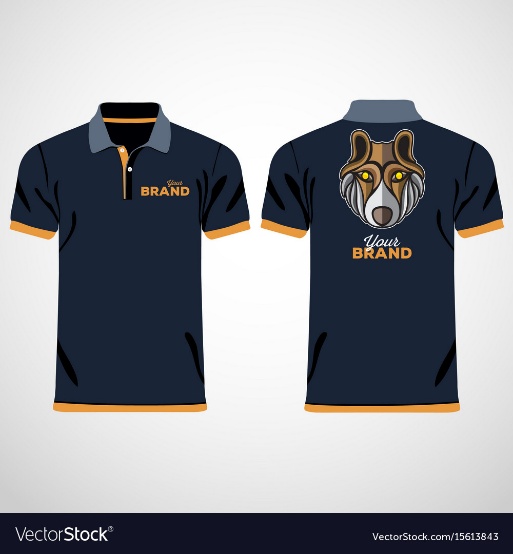
Polo shirt is a perfect combination between casual and formal. It is more formal than a t-shirt and casual than a shirt. Polo shirt has an even hem and can be worn untucked but for a dressier look, it can be tucked and worn with a belt. Polo shirt is slightly different from t-shirt and shirt. It has a standup collar with a button placket like a shirt. It is made by cotton like a t-shirt but its made only by knitted cotton.
Why is it called a Polo shirt?
There is always a question, why is it called polo shirt? Well, it is a fascinating story. In the late 19th century, polo was a famous game and players wore long sleeved shirt which caused them discomfort so they decided to make something which can help preventing their collar flip in wind during game and make them comfortable. In these persuit, British polo player made button-down collar shirt. at the end of 19th century Jhon E Brooks of US clothing company Brooks Brothers came to England on a European buying trip. After watching a game of polo he took a liking to the unbutton down collar of polo player shirt. Keeping the idea in his mind after going home, in 1896 the Brooks Brothers lunched their button-down dress shirt said to be most limited item in fashion history which is now known as polo shirt. It was said that polo shirt first invented in India then it gained worldwide momentum and cult status decades later in France through tennis.
Let’s take a look at the journey and history of Polo Shirt
Polo shirt in 1920 making the history of Polo Shirt.
In the 1920s, Lewis Lacey, a Canadian-born British polo player furthered the reach of the emerging ‘polo shirt’.
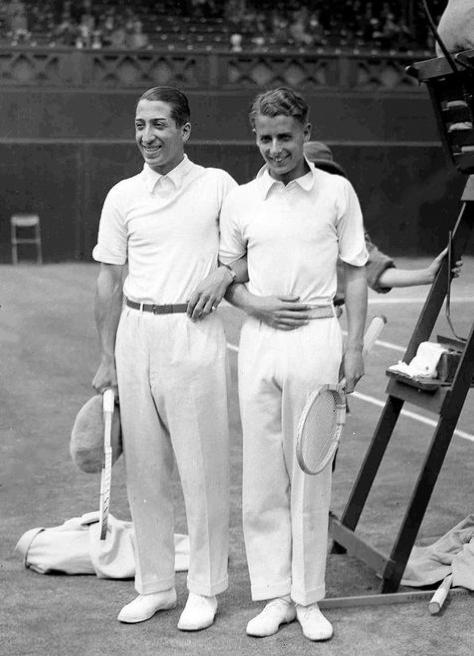
Jean Rene Lacoste, a French sportsman is known as a legend in tennis, he did a lot for the advanced development of the polo shirt. He improved his tennis attire in a similar manner in which the polo shirt had been enhanced, he developed a new-style shirt with short sleeves, an unstarched collar, a longer back and using pique cotton technology. For advertising and making people all over the world aware about the existence of polo shirt, he went on to wear this shirt in his winning 1926 US Open Championships, attracting many eyeballs. In the early 1930s, he started La Chemise Lacoste, a clothing brand with which he began to sell the famous crocodile logo-emblazoned shirts.
The polo shirt from Jean Rene Lacoste.
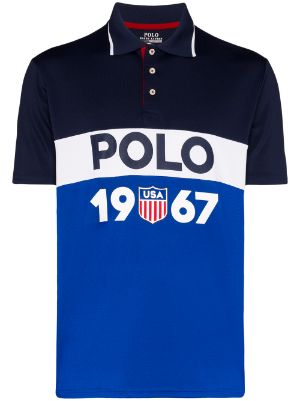
Ralph Lauren lunched polo shirt.
The Polo player logo of Ralph Lauren’s Polo.
Over forty years after Lacoste modelled his new-look shirt, in late 1960s Ralph Lauren launched a menswear line ‘Polo’, a name chosen to portray sophistication and timelessness. In the early 1970s, his signature ‘Polo Shirt’ became a prominent and conspicuous piece of the line, with the iconic, all time favourite polo player logo on the chest.
It was not designed specifically for polo players but was very similar to polo attire of the time and it assisted hugely to boost its popularity.
Ralph Lauren, the legendary American fashion designer, made a great contribution in the growth stage of polo shirt. He invented a new style of polo shirt which is known as the iconic style. It was called iconic because of its rib collar, three-button placket and moisture-wicking lisle fabric. When he was 28 years-old, he persuaded the Beau Brummell company’s president to let him start his own line. Because of his interests in sports, Lauren named his first full line of menswear “Polo” in 1968.
Now polo shirt is made according to the wish of the designer. Only the basic structure remains intact.
Modern polo shirt adding layers to the history of Polo Shirt. Courtesy: victorstoke.com
Novak Djokovic playing tennis wearing a polo shirt. Courtesy: eurosports.com
There is hardly found any apparel more classic, comfortable, and casual than a Polo shirt. Since they’re slightly more professional and modest-looking than a traditional T-shirt, Polo shirt is a popular choice for offices in warm climates where employees need to stay warm and look their best simultaneously. It is also very popular for sports. Tennis shirt, cricket jersey, golf shirt and many others. This timeless garment gives us a stylish look of a shirt as well as the comfort of a t-shirt.
Bangladesh National Cricket team wearing polo shirts. Courtesy: news.adpolve.com
As you read about The history of Polo shirt, you might be interested to read about Ralph Laruen’s Polo shirt- a definitive guide to the Polo shirt’s impact launched by Ralph Lauren-the brand itself!
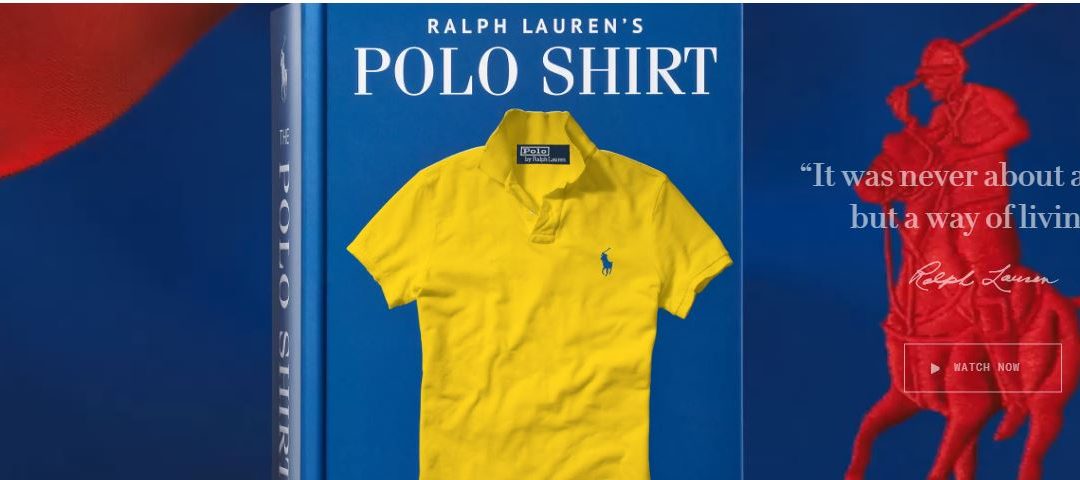
Ralph Lauren, the legendary US company, published a book called ‘Ralph Lauren’s Polo Shirt’ a colorful book containing the history, origins, and influence of one of fashion’s most iconic fashion items. Published in partnership with Rizzoli Books, the new book celebrates #ThePoloShirt’s timeless style.
Ralph Lauren, the founder of the brand says, “It was never about a shirt, but a way of living.”
‘Ralph Lauren’s Polo Shirt’ book covers the journey, revolutionary impact on different cultures and style for more than half a century.
To know more visit: https://www.ralphlauren.com/polo-shirt
Sustainable Scandinavia was created to bring awareness to the issues of the fashion industry but also to the solutions that already exist. And because the founders live in Denmark, they wanted to shine a light on the initiatives that exist there first. Hence, the name “Sustainable Scandinavia”.
Kazi Purba, the Founder and President of Fashionnovation contacted with Yulia Motrenko, a former cell biologist and a part of a research group at Harvard Medical School, who is currently following her passion for fashion through ‘Sustainable Scandinavia’. Kazi Purba tried to delve into the activities of this beautiful initiative of Yulia Motrenko and her team by asking the following questions.
Tell us something about you and your blog. Why is it called Sustainable Scandinavia?
Sustainable Scandinavia is not just a regular Instagram blog with beautiful pictures of stylish women and fancy clothes. Our goal is not to persuade you to buy more – it is the opposite. We want you to buy less, and thoughtfully choose every piece with the same care you would use to choose a company to invest in.
Sustainable Scandinavia was created to bring awareness to the issues of the fashion industry but also to the solutions that already exist. We believe that if people have the right information, they can make the right decisions – whether that is in producing or buying clothes. We want to share what we learn every day and give our followers well-researched but digestible information on different sustainability topics in fashion to inspire them to reconsider their habits in regard to fashion.
Then, we want to fight the idea that sustainable fashion is just “baggy cotton clothes of earthy colours”. We are convinced it is possible to be stylish, love fashion, and protect the planet. It is a whole beautiful world we want to explore together.
And because we live here in Denmark, we wanted to shine a light on the initiatives that exist here first. Hence, the name “Sustainable Scandinavia”.
So, if you’re interested in discovering new young and established brands and learning more about their unique stories and visions, come join us!
What’s the story behind your initiative? What motivated you to establish that?
I started my career as a cell biologist and for a long time, I was planning to work as a researcher in a scientific laboratory. When I finally achieved my goal and became a part of a research group at Harvard Medical School, I realised I did not enjoy it. I moved to Copenhagen and decided to follow my passion for fashion.
Team Sustainable Scandinavia. Photo courtesy: Yulia Motrenko.
Fashion was always a big part of my life but I was always too scared to pursue it as a career. But here in Copenhagen, I made two friends who share my passion for style and fashion. However, this is not the only thing that binds us – we share a hope for a better future for the fashion industry. And after spending a lot of time reading, talking and learning about sustainability in fashion, we just could not keep silent anymore. So we started Sustainable Scandinavia.
Greta Thunberg warned us – our home is on fire.
And while some people think that this is about protecting nature or preserving biodiversity for the sake of the planet – it is not. It is for the sake of our own future, the future of humanity on Earth. And if we want our nature to stay as diverse, beautiful, and good to us in a decade from now, we have to take action today.
Most people don’t think about the fact that just by excessively buying new clothes we are contributing to the world-scale disaster. And in order to realise why it happens like this, we need to think about fashion production and consumption. Think about everything – the process of growing crops, weaving yarns and fabrics, dyeing them, sewing clothes, packing them into tons of plastic, and transporting them using planes and trucks. There are so many elements in the fashion supply chain, so many processes lying behind every T-shirt and every pair of jeans we wear. And each of them leaves a footprint on the environment.
What is sustainability according to your viewpoint? Can we really assure a sustainable future of fashion?
Sustainability has become a big buzzword these days. And of course, there is no such thing as “100% sustainable”, production and consumption always have an impact on the earth, our society, and ourselves. But we can decide whether our impact should be positive or negative.
So for us, Sustainability in fashion is about making the decisions that have a positive impact and help redistribute value – giving back to the people that make the clothes we love and wear every day, and the planet that gives us the resources to make them. Because if we don’t, soon enough the earth and people will have nothing more to share.
In the end, the current fashion system leaves all of us feeling anxious, sad and powerless. The clothes we buy don’t look appealing and come out of a trend just after one season, reminding us that we’ve spent money for a very low value. It’s time to change that.
We need to understand that sustainability is not an option, it is the only way forward.
4. Do you have any plan to launch any sustainable product?
We are working hard now on releasing a multi-brand platform for Scandinavian sustainable fashion brands. It is our dream to gather small-scale brands that approach their production consciously and with care for the environment, and help them reach the right audience and grow.
At the same time, we want to take responsibility for educating people on matters of ethical fashion and convince them to choose local artisans and businesses over mass market stores.
The platform will allow guests to find brands according to their interest in sustainability and be sure that they are thoroughly examined by our team. Brands will be checked for ethical work conditions for their employees/in their supply chains, source of materials they use, logistics and biodegradability of final products.
And, as we believe that sustainable fashion is not only about unisex clothes in organic cotton (there are plenty of other fabrics!), we will ensure that customers have access to different styles and models. Apart from clothes, customers will also find accessories, bags, shoes and jewellery – all ethically made and with minimal harm to the planet.
We want it to become a perfect place for the sustainable fashionista to shop and we are putting a maximum of effort into making it real.
What are your future plans with your platform?
In the future, we plan to scale up and expand to other social media platforms – Tiktok, Facebook, Youtube. We want to promote sustainable fashion in many different ways and visual storytelling has a big place in our mission.
We are going to create even more exciting content, including interviews with CEOs of brands, educational materials on certificates and fabrics, fresh news on the sustainable side of fashion and much more.
Our aim is to create a community of like-minded people who can change the future of the fashion industry together. And we are calling you to become a member of this community right now ❤️
You can also read: https://www.fashionnovation.com/lili-a-sustainable-brand-for-upcycled-jewelry/
As you’re interested in sustainable fashion, you might be interested to read another of our premium and trending article on Fast fashion vs slow fashion: A case study. You will get a lot of valuable perspective here: https://www.fashionnovation.com/a-case-study-on-fast-fashion-vs-slow-fashion/
Mari Michel, an elegant sustainable brand, founded in 2020 by Mari Michelson has a unique story to tell the world. Guided by the sense of beauty embedded in natural materials and with a mindset aimed towards sustainability, this brand uses silk from second hand mens ties and turn them into Fair Hair Ties. Today Kazi Purba, the Founder of Fashionnovation, takes the pride to introduce you with one of the most unique brands that we have covered till now! Let’s hear from Mari Michelson’s journey towards sustianability with her brand.
Ms. Mari Michel, you have a very unique story. Please tell us something about yourself.
I was born in the 90s in a small country of a million people in Northern Europe, just a few years after the independence from the Soviet Union. The resources at the time, in Estonia, were scarce – priority was on importing the necessities. The clothes were very basic and there was not much of a choice. If you wanted something special, you had to make it yourself. That scarcity sparked creativity and showed an abundance of materials, which I took advantage of by upcycling them to one-of-a-kind garment pieces.
Mari Michelson with her OHOV cap made of silk collected from second hand men’s ties. Photo courtesy: Mari Michelson.
In our countryside house, we had a cabinet full of old Burda magazines from a grandmother, that I had never met. These were filled with silhouettes and colour combinations, that looked vintage and out of the ordinary. I would trace some of these silhouettes into my fashion folder and exaggerate the form and some of the features in order to play around and make my own designs out of it. It was through books and magazines that I discovered a lady, that perhaps, has influenced my understanding of fashion the most – Vivienne Westwood, of course. For me, I could relate to the rebelliousness, outrageous ideas, inventiveness, and diverging from the norm, that she so much represented.
At 16 and inspired, I moved to England alone to study Fashion Design. It was there, that I saw the mass production side of the business for the first time and became disillusioned about the sustainability factor in the garment business. I started feeling like it was not a place I wanted to contribute to. So I went on to leave fashion behind and enter a new career in business and software.
In 2020, things changed. With pandemic allowing more time to revaluate what I really want to do in this world, I made the decision, to really go for my dream – but this time, on my own terms. I decided not to become a fashion designer, where trends change with every season, but sustainable apparel and accessories designer, where quality matters and not quantity.
What is the story behind your brand?
Mari Michel was born at the end of 2020 in the Netherlands, but the ideas for it had been accumulating for a lifetime.
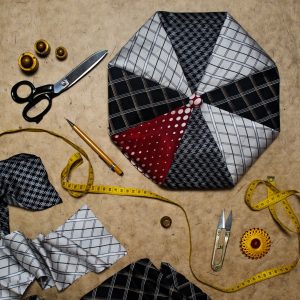
The first product grew out of an idea of using men’s silk ties as a material to create expressive hair accessories. These accessories are called Fair Hair Ties.
The metaphor for Fair Hair Ties comes from my own personal experience – I came out of the office where I worked as a software engineer, to follow my passion of designing sustainable apparel & accessories that give people a tool to express themselves.
The office environment is very standard, white and concrete, empty of expression – traditionally not a place one would feel free to show one’s true self. We have gradually been moving out of the cooperate style in the business environment, when I look around, I can rarely spot a man wearing a suit and tie for work. Our societal understanding has been changing a lot, especially in the past two pandemic years.
I find it very important, that no matter the environment, you should always be able to express yourself. For me that goes very deep into the core – to my scientific high school, I used to sport a Little Prince costume with a briefcase in hand, where Jimi Hendrix’s face was painted on.
Mari Michel’s signature accessories made of silk from ties. Photo courtesy: Mari Michelson.
Clothing & accessories is a great way of expressing yourself. Often even therapeutic, because what you put out can sometimes help you to gain confidence inside. Mari Michel is all about giving tools for self-expression! That’s why we even use the phrase ’Express Yourself’ as our slogan.
What motivated you to establish that?
I feel very strongly about already produced high-quality materials that are constantly being discarded in the world of consumerism, f.e. silk, fur, linen, leather. Natural materials that take a lot of resources to produce, but when produced, have a very short lifespan because the item they have been produced into goes out of fashion.
The first material that I chose for my current designs, is silk. I chose silk because I love it. There simply is no other material with comparable beauty & health benefits. I feel it is my mission to design tools for people to express themselves, that are not just aesthetically pleasing, but also sustainable and healthy.
What’s your product range?
At this point, we are focused on silk from men’s ties.
We make Fair Hair Ties, which are both hair accessories and bracelets in three different designs with unlimited colours and patterns, each one unique.
Mari Michel’s signature Ohov cap made of silk from ties. Photo courtesy: Mari Michelson.
Our most recent product is the Ohov cap – a hat made fully from silk fabric. Each cap is unique. The pattern and colour combination make each a true statement piece.
Mari Michel’s signature Ohov cap made of silk from ties. Photo courtesy: Mari Michelson.
The design of the Ohov cap is paying homage to the original baker boy cap. Baker boy cap origins go all the way to the 16th century, where Queen Elizabeth I of England sought to stimulate the Irish and English wool trade, by passing an act obliging males over six years of age (except for nobility and persons of degree) to wear caps of wool. This law further established the cap as a staple of Irish/English working-class clothing culture.
By making it from silk, which is a premium fabric, and making it a colourful unisex statement piece, we are contradicting the idea of its origins.
We also offer a style guidance service, where I help people to find their authentic style in one-on-one sessions.
What special do you offer to your customers through your brand?
All the materials that we use, have been transformed from one item to another, but the story stays, the feeling remains, the soul is still in the object.
These items have a sense of character.
Wearing it is special.
You really buy a piece that is just for you.
Every customer is special, and they get their special item.
And I never make anything that is standard. I am always looking for something new, a twist on things. I look for inspiration for the future from the past. Having something old, that has been stitched into the fabric of our culture, is something we have relied on, it is comfortable and gives a certain emotion to people. What I like to do, is to take a part of it and transform it into a new concept.
Does your brand care about environment and sustainability? How are you promoting sustainability with your works?
Before I went to study fashion, I never questioned myself about making sustainable choices. I was lucky to be brought up in a family that had a reasonably sustainable lifestyle and in a culture, where feeling being part of nature was immensely integrated into society. I thought that everybody takes care of nature as it would be of their own family member. When I went abroad for the first time and got to have a closer observation of the global fashion industry, I saw that sustainability in fashion is far from ‘of course’. The leverage was on profit.
I think profit should never be leading to anything we do as people.
The real energy behind projects comes from mission and passion.
Mari Michel’s signature accessory made of silk from ties. Photo courtesy: Mari Michelson.
Our mission at Mari Michel is to make expressive accessories and apparel with sustainability as an underlying value in everything we do. We re-use high-quality natural materials, that have a long lifespan. Every item we produce is unique, which is one of the most sustainable ways of production. There is no surplus of materials or products that go to waste. Our production is based in Europe, we offer our products at fair prices and hold transparency as a key value in communication.
What are your future plans with your brand?
Expanding on our current concept and adding more products from sustainable silk. Even more so, we want to move onto new materials – there are a lot of other discarded materials, that we have been developing ideas about.
We are curious about modern materials that are fully compostable and are open to collaborations in this area.
Mari Michel’s signature accessory made of silk from ties. Photo courtesy: Mari Michelson.
The next phase is going from accessories to apparel collections.
It is important for us to interact with the community, which is why are making stories that are relevant in today’s fashion industry and will be continuously giving out new topics to discuss with a humorous undertone.
The goal is to keep creative juices flowing and not to be overly fixated on predicting the future, rather let our values and passion drive us.
You can read more about how Mari Michel addresses sustainability here:
If you want to read about another wonderful woman named Rebecca who’s working for her fashion brand RebeccaRowe.ca to make women feel confident, in this link.