Amazon Affiliate Disclosure: As an Amazon Associate, we earn from qualifying purchases. If you make a purchase through these links, we may earn a small commission at no extra cost to you. This supports us in creating independent fashion contents like these.
Introduction
In a world of infinite fashion choices and constant trend cycles, the capsule wardrobe is a radical, liberating idea: own fewer pieces, wear every single one, and look effortlessly put-together every day.
The term “capsule wardrobe” was coined by London boutique owner Susie Faux in the 1970s and popularized by designer Donna Karan’s “Seven Easy Pieces” collection in 1985. The concept is simple — a carefully chosen collection of timeless, high-quality, versatile pieces that work together in multiple combinations, eliminating the “nothing to wear” problem entirely.
This guide gives you exactly 30 capsule wardrobe essentials — the specific pieces that form the foundation of a wardrobe that works across all four seasons, for every occasion from boardroom to beach.
The Capsule Wardrobe Philosophy
Before the list, understand the principles that make a capsule wardrobe work:
Versatility over variety. Each piece should work with at least 5 other pieces in the wardrobe.
Quality over quantity. Fewer, better-made pieces outlast and outperform larger quantities of cheap items.
Classic over trendy. Capsule pieces are chosen for longevity — they shouldn’t look dated in 5 years.
Color cohesion. Limit your capsule to a palette of 3–4 neutral base colors and 1–2 accent colors so everything coordinates.
Fit is non-negotiable. Perfectly fitted basics look expensive. Ill-fitting basics look sloppy regardless of price.
The Color Foundation: How to Choose Your Capsule Palette
Most successful capsule wardrobes are built on:
**2–3 neutral bases:** Typically from (navy, black, white, camel, grey, cream, tan)
**1 accent neutral:** One softer neutral like blush, sage, or burgundy
**1 optional pop color:** One brighter hue that energizes the neutral base
A classic palette example: Navy + white + camel + burgundy accent
A modern palette example: Cream + chocolate brown + black + sage green
The 30 Essential Capsule Wardrobe Pieces
TOPS (8 Pieces)
1. Classic White Button-Down Shirt
The ultimate versatile top. Wear over denim, tucked into trousers, under a blazer, or casually half-tucked. Invest in one excellent quality version — cotton poplin or Oxford cloth is ideal.
2. White/Cream Fitted T-Shirt (x2)
The building block of casual dressing. Choose a high-quality cotton or pima cotton version in your most flattering neckline (crew or V-neck). Own two — you’ll wear them constantly.
3. Neutral Striped Breton Top
The navy-and-white Breton stripe is one of fashion’s most enduring classics. Pairs with literally everything. Choose a slim, clean-cut version in fine cotton.
4. Silk or Satin Blouse
Your elevated casual option. A blouse in cream, ivory, or a soft neutral elevates any outfit from jeans to trousers to skirts. Choose a simple cut — draped collar or classic button-down.
5. Fine Knit Turtleneck
In your primary neutral color (black, cream, or grey). Works under blazers, under slip dresses, with trousers, with midi skirts. The turtleneck makes everything feel considered.
6. Quality Cashmere or Merino Sweater
One quality knit in a classic silhouette — crew neck or V-neck — in a neutral color. Real cashmere or merino wool is worth the investment for longevity and wear frequency.
7. Striped or Printed Tee
One graphic element in an otherwise neutral wardrobe provides personality. A simple stripe, a subtle print, or a clean logo tee. Keep it simple.
8. Tank/Camisole (x2)
Layering pieces in cream and black. Under sheer blouses, under blazers, under open shirts. Often overlooked but worn constantly.
BOTTOMS (7 Pieces)
9. Dark Wash Straight-Leg Jeans
The most versatile trouser you’ll own. Dark wash makes them dressy enough for almost any occasion. Straight leg is the most universally flattering and most timeless silhouette.
10. Tailored Trousers
In black, grey, camel, or navy. Wide-leg or straight cut. Instantly elevates any look. The right tailored trouser makes a simple tee look intentional and chic.
11. White or Cream Wide-Leg Trousers
For warmer seasons. Incredibly versatile and perennially fashionable. Pairs with a simple tee or a tucked blouse.
12. A-Line or Straight Midi Skirt
A midi skirt (hitting below the knee) in a neutral — black, camel, or cream. The most versatile skirt length and silhouette.
13. Denim Shorts (or Tailored Shorts for Men)
For summer. Simple, well-cut, knee-length or slightly above.
14. Black Trousers / Leggings
A second pair of black trousers OR high-quality black leggings (the kind that pass as trousers). You will wear this more than almost any other item.
15. Smart Casual Chino or Relaxed Trouser
In a mid-tone neutral — khaki, stone, or warm grey. The casual trouser for weekend wear.
DRESSES (3 Pieces)
16. Shirt Dress / Day Dress
A simple, flattering day dress in a neutral print or solid color. The one-piece outfit for effortless days. Choose a versatile fabric like a cotton blend or chambray.
Every capsule wardrobe needs one. The LBD works for dinner, events, gallery openings, date nights, work parties. Choose a timeless cut — not overly trendy.
18. Slip Dress or Midi Dress
Your elevated, season-spanning piece. Layer over a turtleneck in winter, wear solo in summer.
OUTERWEAR (5 Pieces)
19. Tailored Blazer
In black or camel/tan. The single most transformative piece in any wardrobe. Thrown over jeans and a tee, it creates an instant outfit. Worn over a dress, it elevates occasion wear to professional polish.
20. Classic Trench Coat
Camel or navy. Timeless for over a century. Works in spring, fall, and mild winter. One of fashion’s few truly permanent classics.
21. Casual Denim Jacket
The informal layer. Works over everything from summer dresses to weekend tees. Choose a clean, simple cut.
22. Winter Coat
Your most important winter investment. Choose a clean silhouette — camel, black, or grey — in a quality wool blend. This is the most visible piece you own in winter; invest accordingly.
23. Down Jacket or Quilted Vest
The practical warm layer for extreme cold. Choose a neutral color that works over the rest of your wardrobe.
SHOES (5 Pieces)
24. White Sneakers
White leather or canvas sneakers are the universal casual shoe. Clean, fresh, timeless. Keep them clean.
25. Classic Loafers or Ballet Flats
Your flat day shoe for work and casual wear. Black or tan leather. The most versatile flat shoe in the capsule.
26. Simple Heels or Block-Heel Boots
One pair of heels (stiletto, block, or kitten) for evenings and dressier occasions.
27. Ankle Boots
The most versatile boot. Works with trousers, skirts, dresses, jeans. In black or tan leather.
28. Sandals (Summer)
Simple, flat or low-heeled sandals in a neutral — black, tan, or metallic. A well-made sandal lasts decades.
ACCESSORIES (2 Pieces)
29. Structured Leather Handbag
One quality bag in a neutral — black, tan, or cognac — that works for both day and evening. A good leather bag outlasts fast-fashion garments by a factor of ten.
The accessory that does ten jobs. Worn as a neckerchief, as a hair accessory, as a handbag charm, as a belt, as a top (for the daring). In a print or color that works with your palette.
How to Build Your Capsule Over Time
You don’t need to buy all 30 pieces at once. Build your capsule strategically:
Phase 1 (First): White tee, dark jeans, tailored trousers, white button-down, blazer, white sneakers, ankle boots, leather bag. These 8 pieces alone give you dozens of outfits.
Phase 2: Add the LBD, the trench coat, the silk blouse, the cashmere knit, the winter coat, the loafers.
Phase 3: Complete with the remaining seasonal and occasion-specific pieces.
Annual review: Each year, assess what you’ve worn. Remove anything worn fewer than 10 times. Replace worn-out pieces with quality upgrades.
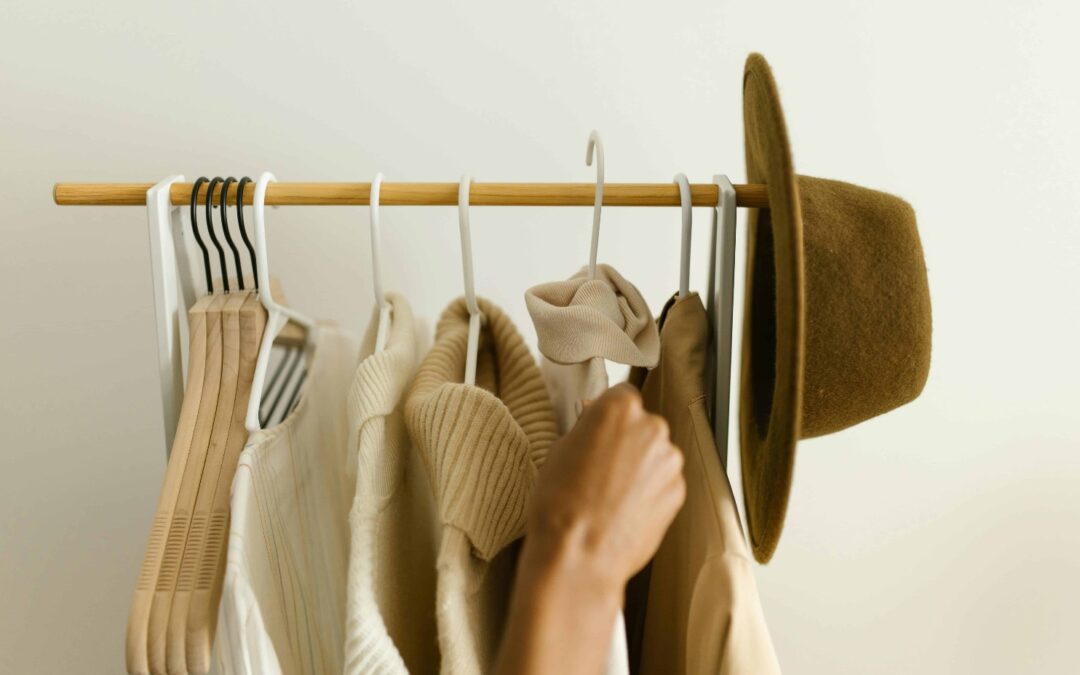
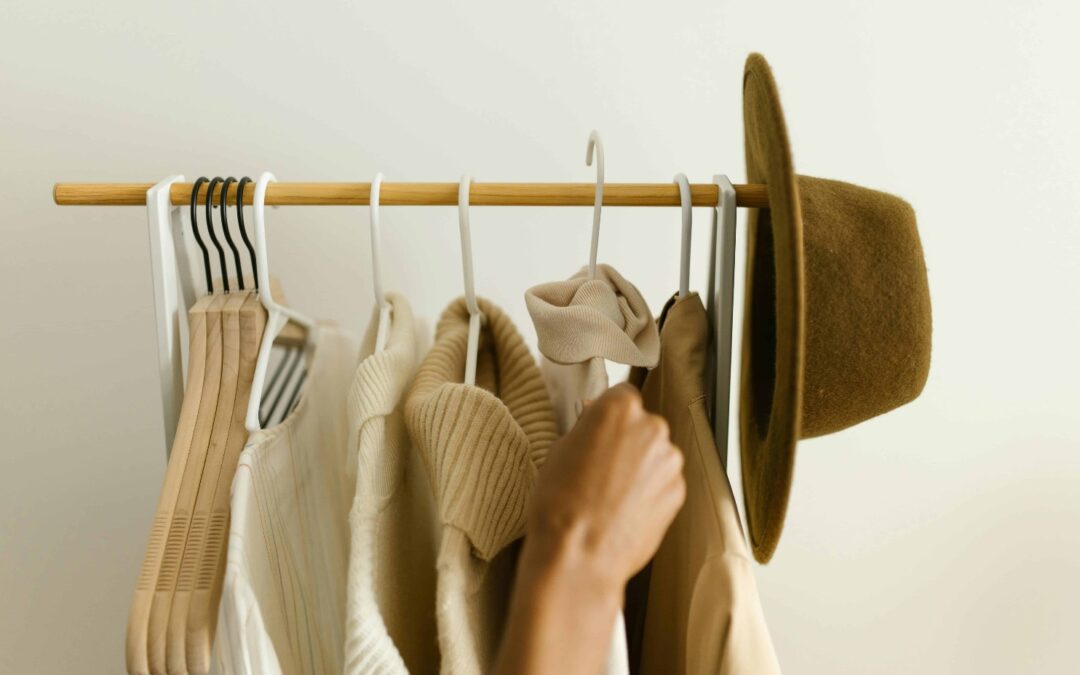
Minimalist wardrobe showing multiple outfit combinations from fewer quality pieces
Budget Guide: How Much to Spend Per Category
Women’s Wardrobe Price Guide by Quality Level (2026)
This table shows realistic price ranges for key wardrobe staples across three quality tiers — Budget, Mid-Range, and Investment pieces.
The fashion industry is the second-largest consumer of water and is responsible for approximately 10% of annual global carbon emissions — more than international aviation and shipping combined. A single cotton t-shirt requires roughly 2,700 liters of water to produce. Every second, the equivalent of a garbage truck of textiles is dumped in landfill or burned.
These are uncomfortable numbers. But awareness of them has sparked one of the most significant movements in fashion’s history: the sustainable fashion movement.
If you’ve encountered terms like “sustainable fashion,” “ethical clothing,” “slow fashion,” or “circular fashion” and wondered what they actually mean — or how you can genuinely participate — this guide is your starting point.
What is Sustainable Fashion?
Sustainable fashion is an approach to designing, producing, distributing, and consuming clothing that minimizes environmental damage, reduces waste, and ensures fair treatment of workers throughout the supply chain.
It operates on two interconnected dimensions:
Environmental sustainability: Reducing the fashion industry’s impact on the planet. This includes using eco-friendly materials, reducing water and chemical use in production, minimizing waste, reducing carbon emissions, and designing for longevity and recyclability.
Social sustainability (Ethical fashion): Ensuring that every person involved in making your clothes — from cotton pickers to garment workers — earns a fair wage, works in safe conditions, and is treated with dignity.
True sustainable fashion requires both. A brand that uses organic cotton but pays its workers poverty wages is not fully sustainable. A brand that pays fair wages but ships garments globally in non-recyclable packaging is only partly sustainable.
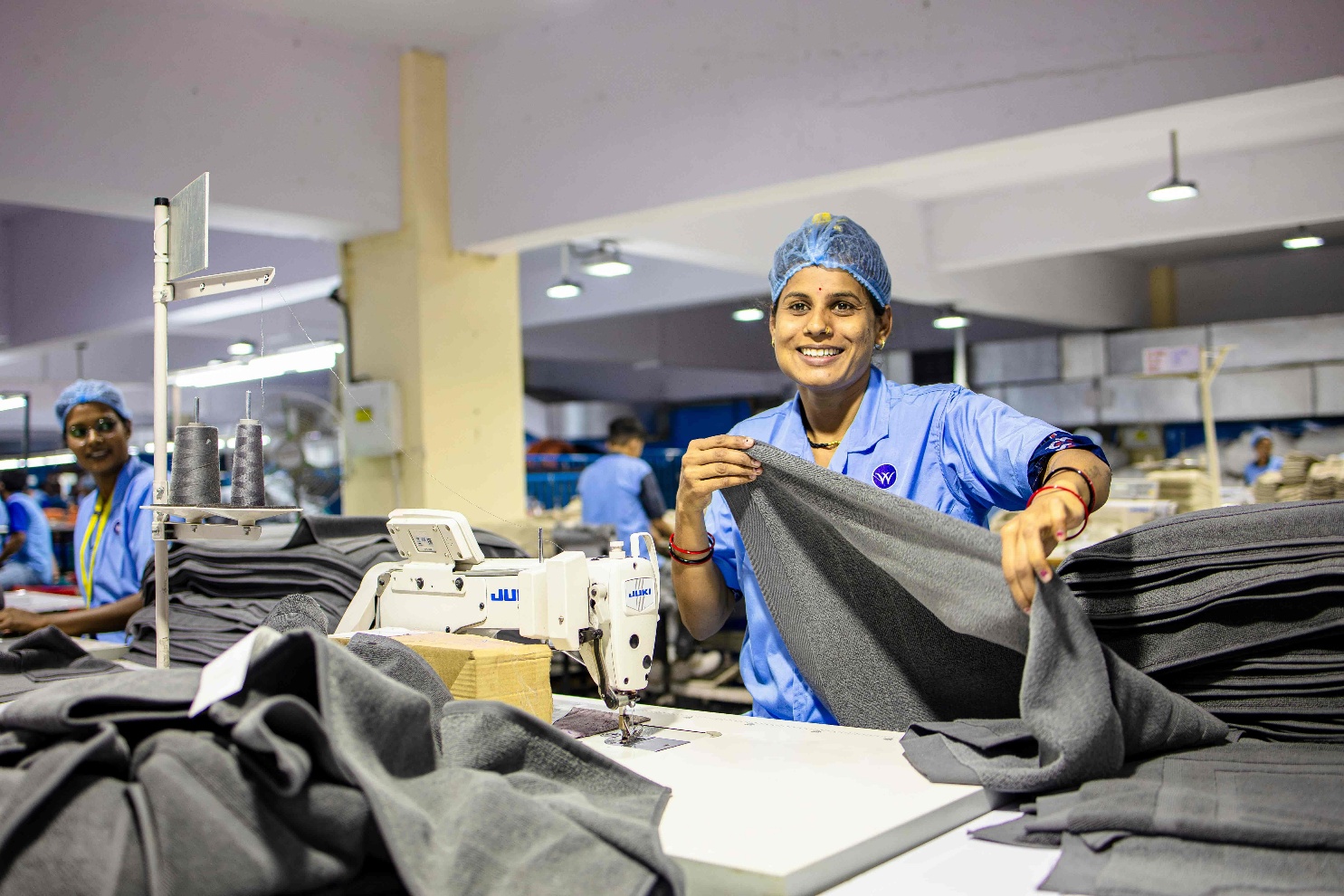
Ethical fashion production showing fair trade garment workers in safe conditions
Why Does Fashion Have a Sustainability Problem?
The modern fashion industry’s sustainability crisis has a single root cause: the rise of fast fashion.
Fast fashion — pioneered by brands like Zara, H&M, and Shein — transformed fashion from a twice-yearly seasonal activity into a constant cycle of micro-trends, producing 50–100 “micro-seasons” per year (versus the traditional two: spring/summer and fall/winter).
Fast fashion makes clothes cheap and abundant. The hidden cost: clothes are made as cheaply as possible (often with synthetic petrochemical fibers, in factories that pollute local waterways, by workers paid below living wages) and are designed to be worn a few times and discarded.
The result:
The average consumer buys 60% more clothing than 15 years ago
Clothing is kept half as long as it was 15 years ago
The US alone sends approximately 11.3 million tons of textile waste to landfill annually
85% of donated clothing eventually ends up in landfill or incineration
The antithesis of fast fashion. Slow fashion advocates for buying less but better — investing in high-quality, ethically made pieces that last. The slow fashion philosophy prioritizes craftsmanship, durability, and conscious consumption.
Circular Fashion
A fashion model designed to eliminate waste by keeping garments in use for as long as possible. Circular fashion includes design for longevity, repair, resale, rental, and recycling programs. A garment never “ends up” in landfill in a truly circular system — it is repaired, resold, remade, or recycled into new fiber.
Ethical Fashion
Focuses specifically on the human rights dimension of fashion — fair wages, safe working conditions, no child labor, no forced labor. Ethical certifications include Fair Trade, B Corp, and SA8000.
Conscious Fashion
A broad term describing fashion choices made with awareness of environmental and social impact. Being a “conscious consumer” means making informed choices about what you buy and from whom.
Greenwashing
When a brand makes misleading environmental claims without substantive sustainable practices behind them. Common greenwashing tactics: calling a collection “conscious” when it represents 1% of production; using vague terms like “eco-friendly” without certification; launching a single sustainable product while the rest of the line remains unchanged.
Upcycling
Transforming discarded or waste material into new, higher-quality garments. Brands and individuals who repurpose vintage fabrics, deadstock, or old garments into new pieces.
Deadstock
Excess fabric or unsold inventory from manufacturers that would otherwise be wasted. Many sustainable brands source deadstock fabrics to create new collections without generating new textile production.
Organic Cotton
Cotton grown without synthetic pesticides, herbicides, or GMO seeds, certified by GOTS (Global Organic Textile Standard). Uses significantly less water and fewer chemicals than conventional cotton.
Tencel / Lyocell
A fiber made from wood cellulose (usually eucalyptus) in a closed-loop process that recycles 99% of the water and solvents used. One of the most sustainable fabrics available.
Recycled Polyester (rPET)
Polyester made from recycled materials — most commonly plastic bottles. Reduces dependence on virgin petroleum and gives plastic waste a second life. Still sheds microplastics when washed.
The Sustainable Fashion Certifications to Know
When shopping sustainably, certifications provide third-party verification of brand claims.
GOTS (Global Organic Textile Standard): The gold standard for organic textile certification. Covers the entire production chain from fiber to finished garment. Requires both environmental and social criteria.
Fair Trade Certified: Guarantees farmers and workers receive fair prices and wages, safe working conditions, and community development premiums.
B Corporation: A certification for businesses that meet high standards of social and environmental performance, accountability, and transparency. Not fashion-specific but applicable.
Bluesign: Certifies that textile manufacturing meets high standards for chemical safety, resource efficiency, and worker safety.
OEKO-TEX Standard 100: Tests for harmful substances in finished textiles. Products certified under this standard are safe for human use but does not certify production practices.
Cradle to Cradle: A design and production standard for circular, regenerative products.
Sustainable fashion certifications including GOTS and fair trade labels on clothing
Most Sustainable Fabrics Ranked
Very Sustainable
Linen
Hemp
Tencel / Lyocell
Moderately Sustainable
Organic cotton
Recycled wool
Deadstock fabrics
Less Sustainable
Conventional cotton
Virgin polyester
Acrylic
How to Build a More Sustainable Wardrobe
Step 1: Shop Less
The single most powerful sustainable fashion action is consuming less. The most sustainable garment is the one that already exists. Before buying anything new, ask: Do I already own something that serves this purpose?
Step 2: Choose Quality Over Quantity
Invest in well-made pieces that last years, not months. A $120 well-constructed linen dress worn 50 times has a lower per-wear cost — and environmental footprint — than a $30 fast-fashion version worn 5 times.
Step 3: Buy Secondhand
Thrift stores, vintage shops, resale platforms (Depop, ThredUp, The RealReal, Vestiaire Collective) give existing garments a second life. The most sustainable garment is one that doesn’t require new production at all.
Step 4: Rent for Special Occasions
For formal events, weddings, or parties — occasions that require specific garments worn once or rarely — consider renting rather than buying. Rental platforms like Rent the Runway, By Rotation, and HURR circulate garments among multiple users.
Step 5: Choose Sustainable Fabrics
When buying new, choose natural, renewable, or recycled fibers: organic cotton, linen, hemp, Tencel/Lyocell, Piñatex (pineapple leather), recycled wool, or recycled polyester over virgin synthetic fabrics.
Step 6: Research Brands
Look for transparent brands that publish their supply chain information, hold certifications, and commit to ongoing improvement. The Good On You app rates fashion brands on environmental, labor, and animal criteria.
Step 7: Care for Your Clothes
Proper care dramatically extends garment life. Wash at lower temperatures (30°C washes clean most garments while using 40% less energy than 40°C). Air dry when possible. Follow care labels. Repair rather than discard.
Step 8: Donate, Sell, Swap
When a garment no longer serves you, give it a second life. Donate to genuine charity shops (not textile recycling that ends up in landfill). Sell on resale platforms. Swap with friends. Repurpose fabric for home use.
How to Spot Greenwashing
Look for warning signs:
vague words like “eco-friendly”
tiny sustainable capsule collections
no transparency reports
lack of certification
Always check brand disclosures and supply chain data.
The Future of Sustainable Fashion
Key industry shifts include:
digital product passports
circular legislation
resale market growth
regenerative agriculture fibers
AI demand forecasting
The Limits of Individual Action
It’s important to acknowledge: sustainable fashion is not only a consumer responsibility. The systemic issues of the fashion industry require systemic change — regulation, corporate accountability, and industry-wide transformation.
Brands and governments must do more. Extended Producer Responsibility legislation (making brands responsible for their products’ end-of-life) is growing globally. The EU’s Sustainable Textile Strategy is among the most ambitious policy responses to date.
Individual choices matter — collective consumer pressure shapes markets — but the heaviest burden must fall on the industry, not the individual.
There is a moment in every fashion designer’s journey when understanding how a garment is constructed transforms everything else. That moment often arrives with pattern making.
A pattern is the blueprint of a garment — a flat, paper template for every piece of fabric that will be cut and sewn together to create a finished garment. Pattern making is the bridge between a sketch and a sewn garment, and it is one of the most intellectually satisfying skills in all of fashion.
This guide introduces the fundamentals of pattern making: what it is, the tools you need, the vocabulary you must know, the two main methods (flat pattern drafting and draping), and how to take your first steps toward creating your own patterns from scratch.
What is Pattern Making?
Pattern making is the craft of creating templates — called “patterns” — that represent each piece of a garment in flat, two-dimensional form. These patterns are used to cut fabric accurately so that when sewn together, the pieces form a three-dimensional garment that fits the intended body.
Patterns communicate every detail of a garment’s construction: the shape of every piece, the placement of darts, the location of notches, the grain line direction, and the seam allowances. A complete set of patterns for even a simple dress might include a front bodice, back bodice, front skirt, back skirt, collar, sleeve, waistband, pocket — each as a separate pattern piece.
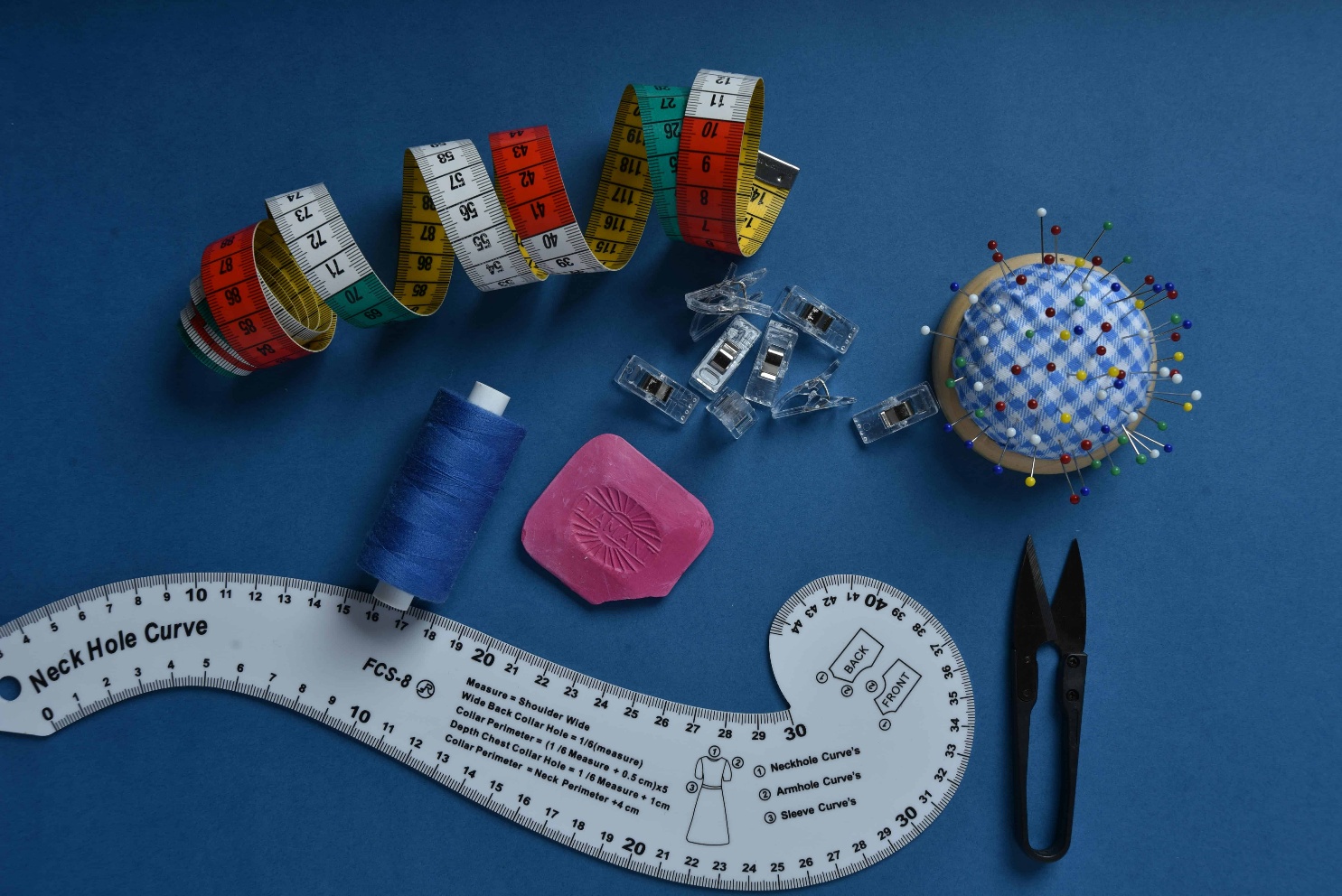
Sewing pattern pieces flat lay with rulers scissors and tailors chalk
Pattern Making Vocabulary You Need to Know
Before you begin, master this essential vocabulary:
Seam Allowance: The extra fabric added beyond the seamline to allow for stitching. Standard seam allowance in the US is 5/8 inch (1.5cm). Always confirm seam allowance before cutting.
Grain Line: An arrow drawn on pattern pieces indicating the direction the pattern should be placed on fabric, parallel to the selvage (woven edge) of the fabric. Proper grain alignment determines how the garment hangs and moves.
Dart: A folded and stitched tuck in fabric used to shape flat fabric around three-dimensional body curves (bust, waist, hips). Darts are fundamental to fitted garments.
Notch: A small V-shaped or rectangular cut into the seam allowance used to match pattern pieces accurately when sewing.
Ease: Extra room built into a pattern beyond the exact body measurement. “Wearing ease” allows comfortable movement. “Design ease” creates specific silhouette effects (a loose, boxy shape, for example).
Selvage: The finished woven edges running lengthwise along a bolt of fabric. Pattern grain lines are always parallel to the selvage.
Bias: The 45-degree diagonal direction across fabric. Bias-cut patterns create garments with natural stretch and flow.
Block / Sloper: A basic, fitted pattern template (without design details or seam allowances) used as the starting point for creating new garment patterns.
The Two Main Methods of Pattern Making
Method 1: Flat Pattern Drafting
Flat pattern drafting is the process of drawing pattern pieces on paper using measurements, rulers, and mathematical calculations. Starting from a set of body measurements, you draft a basic block, then manipulate it to create the desired design.
Advantages: Precise, consistent, reproducible. Ideal for structured garments and production environments.
Disadvantages: Requires understanding of geometry and math. Less intuitive for beginners. More difficult for complex, sculptural designs.
Method 2: Draping (Toile/Muslin Method)
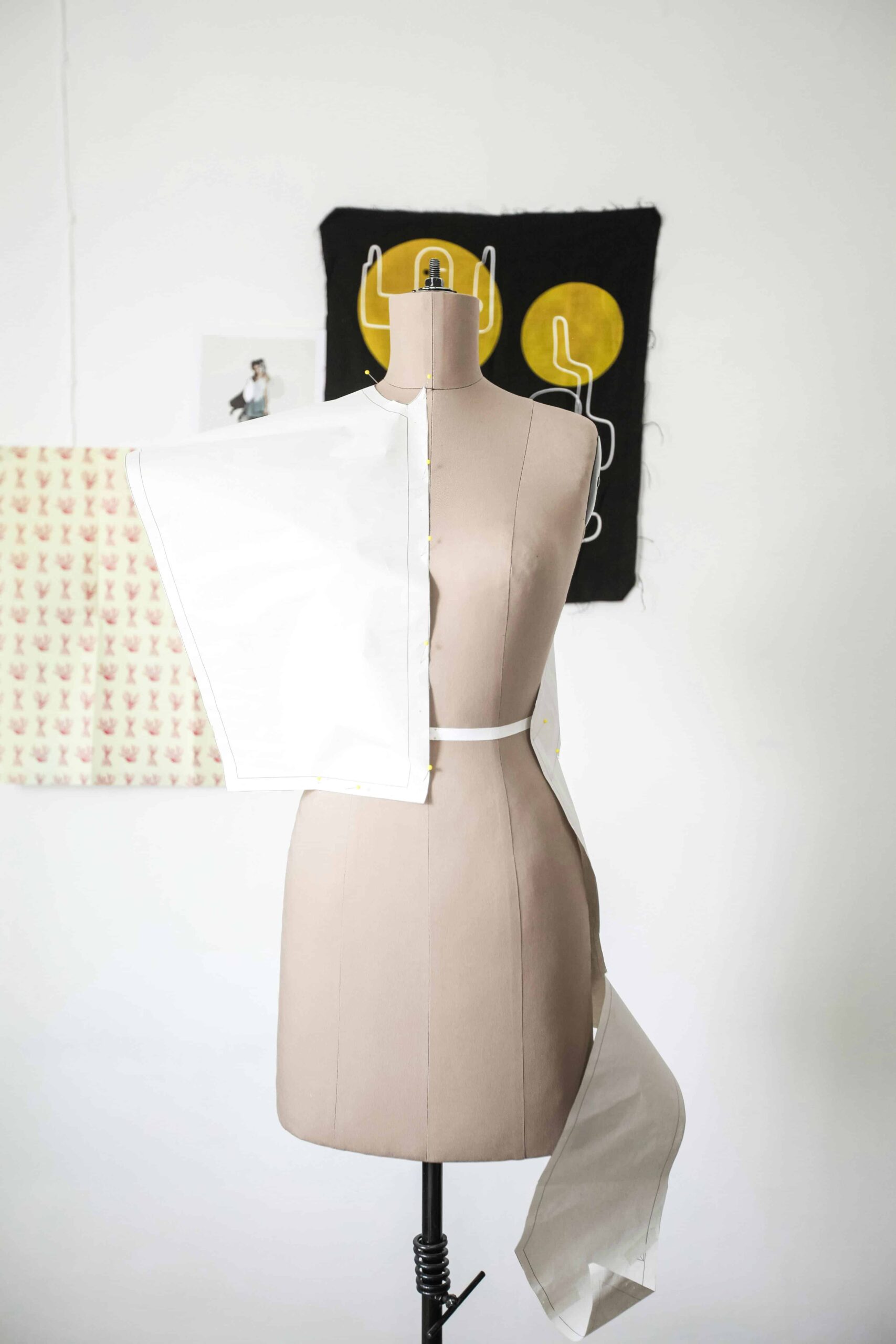
Draping involves pinning fabric (usually muslin or calico) directly onto a dress form, shaping it to create the desired silhouette, and then transferring the draped shapes onto paper to create a pattern.
Advantages: Highly intuitive. Excellent for fluid, complex shapes. Sees the design in three dimensions from the start.
Disadvantages: Requires a dress form. Less precise for production purposes. Takes more fabric.
Most professional designers use both methods — flat drafting for structured, tailored pieces; draping for complex or fluid designs.
Tools and Supplies for Pattern Making
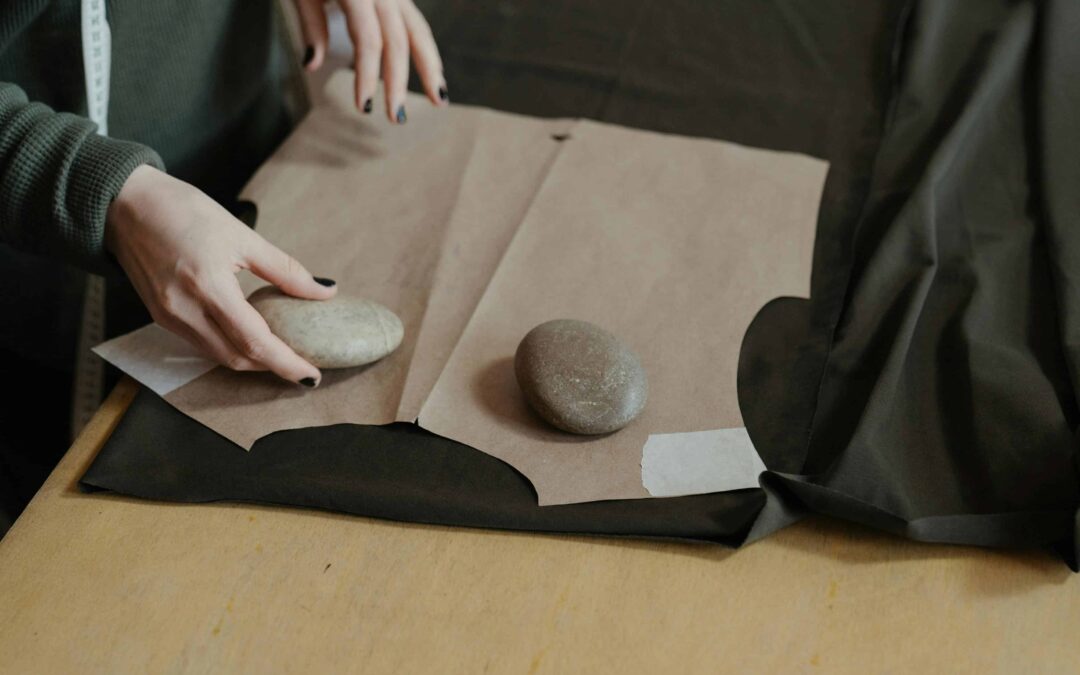
Pattern paper: Large sheets of brown Kraft paper, pattern dot paper (dotted grid for accuracy), or a pattern roll for drafting.
Rulers:
L-square ruler (for right angles and long straight lines)
French curves (set of curved templates for drawing bodice curves, armholes, necklines)
Hip curve / curved ruler (for drawing hip and skirt curves)
Clear gridded ruler (for seam allowances and parallel lines)
Marking tools: Pencils (always use pencil for patterns — erasable), marking chalk for fabric, tracing wheel for transferring patterns to fabric.
Pattern notcher: A small punch that creates clean notches in pattern pieces.
Pattern weights: Heavy metal weights to hold pattern pieces flat on fabric while cutting (an alternative to pins).
Tape measure: For taking body measurements and checking curved distances on patterns.
Dress form: Essential for draping; also invaluable for fitting flat-drafted patterns. Invest in a quality adjustable dress form matched to your most common size.
White dress form with fabric being draped and pinned for pattern development
Understanding Body Measurements
Accurate body measurements are the foundation of well-fitting patterns. These are the standard measurements used in pattern making:
| Measurement | Where to Measure |
|————-|—————–|
| Bust | Fullest part of the bust, level with nipples |
| Waist | Natural waist — narrowest part of the torso |
| Hips | Fullest part of the hips, approx. 8–9 inches below waist |
| Back length | Neck base (center back) to natural waist |
| Shoulder width | Across the back from shoulder point to shoulder point |
| Sleeve length | Shoulder point to wrist |
| Inseam | Crotch to floor (for trousers) |
| Neck | Base of neck circumference |
Always measure over appropriate undergarments. Take each measurement twice to verify accuracy.
How to Draft a Basic Bodice Block (Step-by-Step)
The bodice block is the foundation of virtually all upper-body garment patterns. Here is a simplified drafting sequence:
You Will Need
Body measurements (bust, waist, back length, shoulder width)
Large pattern paper
L-square ruler, French curves, pencil
Step 1: Establish the Back Center Line
Draw a vertical line on the left side of your paper. This is the center back line.
Step 2: Mark Horizontal Lines
From the top of your center back line, mark these horizontal levels:
**0:** Neck/shoulder (top)
**Back length:** Natural waist level
**¼ bust measurement + 1″ ease:** Bust level (measure down from shoulder)
**½ way between top and bust level:** Armhole depth (approximate)
Step 3: Draw the Back Width
At each horizontal level, measure out from the center back line:
**At shoulder:** ½ back width measurement
**At bust:** ¼ bust measurement + ½” ease
**At waist:** ¼ waist measurement + ½” ease
Step 4: Shape the Side Seam
Connect the bust and waist points with a slightly curved line that tapers inward at the waist. This is the side seam.
Step 5: Draw the Armhole
Using a French curve, draw the back armhole — a curved shape from the shoulder point sweeping down to the side seam level.
Step 6: Draw the Neckline
The back neckline is a shallow curve from the center back (approximately 2cm down from the shoulder line) to the shoulder point.
Step 7: Trace the Front
The front bodice is drafted using the same principles but with slight modifications to account for the bust curve (front neck is deeper, bust dart is added).
Step 8: True the Pattern
“Truing” means checking that all the seam lines match correctly between pieces (that the side seam of the front bodice matches the side seam of the back bodice in length, for example).
Adding Seam Allowances
Once your pattern is drafted, you must add seam allowances before cutting fabric. Seam allowances are added equally around all seamlines.
Standard seam allowances:
1.5cm (5/8″) — standard for most seams
2.5cm (1″) — for areas requiring adjustment (waistbands, trouser hems)
3–5cm (1.25–2″) — for hems
Use a parallel ruler or mark points at consistent distances from the seamline and connect with a ruler.
Pattern Grading Basics
Grading is the process of proportionally enlarging or reducing a pattern to create different sizes. Most patterns are drafted in one size and then graded up and down to create a size range.
Grading involves moving pattern points outward (for larger sizes) or inward (for smaller sizes) by specific amounts at key points (bust, waist, hip, shoulder), then connecting the new points smoothly.
Professional grading is done by specialist graders or using CAD (computer-aided design) grading software like Gerber AccuMark or Lectra. For small designers, manual grading using a grading grid is a practical starting skill.
Common Pattern Making Mistakes to Avoid
**Forgetting to add seam allowances.** Cut pieces without seam allowances and you’ll have a garment that is too small. Always double-check.
**Ignoring grain lines.** Cutting pattern pieces off-grain distorts the garment’s hang and drape permanently.
**Not testing with a muslin first.** Always make a test garment in inexpensive muslin/calico before cutting your fashion fabric.
**Using approximate measurements.** Accuracy is non-negotiable. Measure twice, cut once.
**Not labeling pattern pieces.** Every pattern piece needs: piece name, garment name, size, cut quantity, grain line, and date.
Recommended Learning Resources
Books:
*Metric Pattern Cutting* by Winifred Aldrich (the UK industry standard text)
*Patternmaking for Fashion Design* by Helen Armstrong (the US standard)
*The Complete Book of Fashion History* — pattern history context
Online courses:
Coursera: Fashion Design courses from Parsons
Domestika: Pattern Making for Dummies (beginner-friendly)
Every body is different. Every body is beautiful. And every body looks its absolute best when dressed with intention and an understanding of proportion.
Dressing for your body type is not about hiding or changing your body — it’s about understanding how clothing interacts with your specific proportions and using that knowledge to choose pieces that flatter, balance, and celebrate the body you live in. When you understand the relationship between your body’s silhouette and clothing silhouettes, getting dressed becomes genuinely exciting rather than frustrating.
This guide covers all major body shapes, with specific, practical advice on the most flattering clothing styles for each.
A Note on Body Positivity and Fashion
Before we dive in: there are no bad body types. Fashion has historically promoted a very narrow range of body ideals, and that is changing — rightly so.
The goal of dressing for your body type is not to conform to any ideal, but to use the principles of proportion and balance to create outfits that make you feel confident and empowered. Some days, proportion and balance are the priority. Other days, wearing exactly what you love matters more. Both are valid. Use this guide as a tool, not a rulebook.
Various outfit styling options showing different proportion combinations
Understanding Body Types
Body types (also called body shapes or silhouettes) describe the general distribution of mass and proportion across the torso, hips, and shoulders. Common frameworks use fruit names (apple, pear), letters (H, A, V, X), or geometric descriptions.
This guide uses the most widely recognized letter/geometric framework:
**Hourglass (X shape):** Shoulders and hips are roughly equal width; waist is noticeably narrower
**Pear / Triangle (A shape):** Hips are wider than shoulders
**Inverted Triangle (V shape):** Shoulders are wider than hips
**Rectangle (H shape):** Shoulders, waist, and hips are roughly equal width
**Apple / Round (O shape):** Weight concentrated around the mid-section; bust and hips may be similar width
Hourglass Body Type
Characteristics: Balanced shoulder and hip width with a defined, narrow waist. Often considered the “classic” fashion figure.
What Works Best
Fitted and tailored pieces: Your most defining feature is your waist. Clothes that follow your curves and acknowledge your waist are universally flattering — fitted dresses, wrap dresses, belted styles.
Wrap dresses and tops: The V-neck wrap creates a defined waistline naturally. One of the most universally recommended silhouettes for hourglass figures.
Stretchy fabrics that follow the body: Jersey, ponte, and stretchy knits accommodate your curves without adding bulk.
High-waisted bottoms: High-waist trousers, skirts, and jeans emphasize your waist and elongate the leg.
Pencil skirts: Hug the hip and thigh while tapering at the knee — showcases hourglass curves perfectly.
What to Be Mindful Of
Oversized/boxy silhouettes: Can hide your waist entirely, losing the defining feature of your shape. If you love oversized styling, balance with fitted bottoms.
Very stiff fabrics: Structured fabrics that don’t follow the body’s curves can appear boxy on an hourglass figure. Choose draping fabrics.
Pear / Triangle Body Type
Characteristics: Hips and thighs are wider than the shoulders and bust. Weight concentrated in lower body. Usually has a defined waist.
What Works Best
A-line skirts and dresses: Gently flare from the hip, moving away from the body at the widest point and creating a graceful, balanced silhouette.
Dark-colored bottoms: Dark trousers or skirts create a visually slimming effect on the lower body.
Wide-leg or palazzo trousers: Instead of fighting the hip width with fitted trousers, wide-leg styles flow over the hips and create a long, balanced line.
Statement tops and bold shoulders: Draw attention upward to balance the wider lower half. Boat necks, off-shoulder tops, wide-collar shirts, and tops with volume at the shoulder all work beautifully.
Wrap and fit-and-flare dresses: Define the waist and flow over the hip — the ideal silhouette for pear shapes.
Belted waist styling: Emphasizing your waist visually creates an hourglass effect.
What to Be Mindful Of
Tight-fitting trousers in light colors: Can overemphasize hip width. If you love skinny jeans, balance with a voluminous top.
Cargo pockets and hip details on trousers: Add bulk exactly where you may not want it.
Woman selecting stylish clothes from her wardrobe with confidence
Inverted Triangle Body Type
Characteristics: Shoulders are wider than hips. Strong, broad shoulders, athletic build, narrower hip and waist. Common in women who swim or work out regularly, and the dominant shape in male fashion.
What Works Best
Volume at the hips: Add visual width to the lower body to balance broad shoulders. Full skirts, A-line silhouettes, wide-leg trousers, and skirts with pleats or gathers are excellent.
V-necks and simple necklines: Minimizes the visual impact of the shoulders by drawing the eye downward.
Low-rise or mid-rise bottoms: Lower-rise trousers and skirts add visual width at the hip.
Fitted bottoms with flowing tops: A combination that visually equalizes upper and lower proportions.
Wrap dresses and skirts: Creates waist definition and adds hip volume simultaneously.
What to Be Mindful Of
Boat necklines and wide horizontal stripes across shoulders: Emphasize width at the top.
Heavily structured jackets with padded shoulders: Can exaggerate shoulder width.
Tops with lots of horizontal detail at the chest: Ruffles, wide collars, large breast pockets all add visual width at the top.
Rectangle / Straight Body Type
Characteristics: Shoulders, waist, and hips are roughly the same width. Athletic and linear silhouette. Little visible waist definition.
What Works Best
Creating the illusion of curves: Peplum tops, ruffled or gathered details, and wrap styles all create the suggestion of a waist.
Layering: Add visual interest and dimension through layering — an open jacket over a fitted dress, a long cardigan over a tee.
Bold prints and textures: Visual texture adds dimension and interest to a more linear silhouette.
Belt anything: Adding a belt to dresses, cardigans, and even casual shirts creates waist definition that emphasizes curves.
Fit-and-flare dresses: The fitted bodice + full skirt creates an hourglass suggestion on the rectangle figure.
Horizontal stripes: Unlike pear and inverted triangle shapes, the rectangle body can use horizontal stripes freely — they add dimension.
What to Be Mindful Of
Straight-cut shift dresses worn alone: Can emphasize the linearity of the silhouette. Add a belt for definition.
Apple / Round Body Type
Characteristics: Weight concentrated in the midsection — bust, waist, and abdomen are fuller. Hips may be narrower relative to mid-section. Usually great legs!
What Works Best
Empire waistlines: The seam falls just below the bust, where the waist is typically narrowest, then flows outward over the midsection. Extremely flattering.
A-line silhouettes: Flow outward from the waist, moving away from the body at the midsection gracefully.
V-necks: Elongate the torso and draw attention upward. Work beautifully on the apple figure.
Lengthening layers: Long cardigans, duster coats, and long shirts create vertical lines that elongate the silhouette.
Flowy, draping fabrics: Silks, chiffons, and jersey flow over curves without clinging.
Monochromatic dressing: Head-to-toe one color is visually lengthening and slimming.
Show off your legs: If you’re proud of your legs, embrace shorter hemlines. Skater skirts, A-line minis, and fitted trousers all celebrate great legs.
What to Be Mindful Of
Clingy fabrics across the midsection: Can emphasize the belly area. Choose fabrics that flow or add structure.
Wide belts at the natural waist: Can visually cut the figure at its widest point. Try belting just under the bust (empire position) instead.
Universal Styling Tips for Every Body Type
Fit is more important than size: A well-fitted garment in a larger size always looks better than an ill-fitting garment in a smaller size. Get comfortable with alterations.
Length matters: Hemlines that hit at the widest part of a body part (ankles, calves, hips) visually widen. Hemlines just above or below these points are more flattering.
Vertical lines elongate: Vertical seams, center-front buttons, pinstripes, and long necklaces all create a lengthening, slimming visual effect.
Monochromatic dressing is a universal tool: Wearing one color from head to toe creates a long, unbroken vertical line — flattering on virtually every body.
Proportion is everything: Balance volume between top and bottom. Fitted top with wide-leg trousers. Voluminous blouse with slim trousers. Avoid volume on top AND bottom simultaneously.
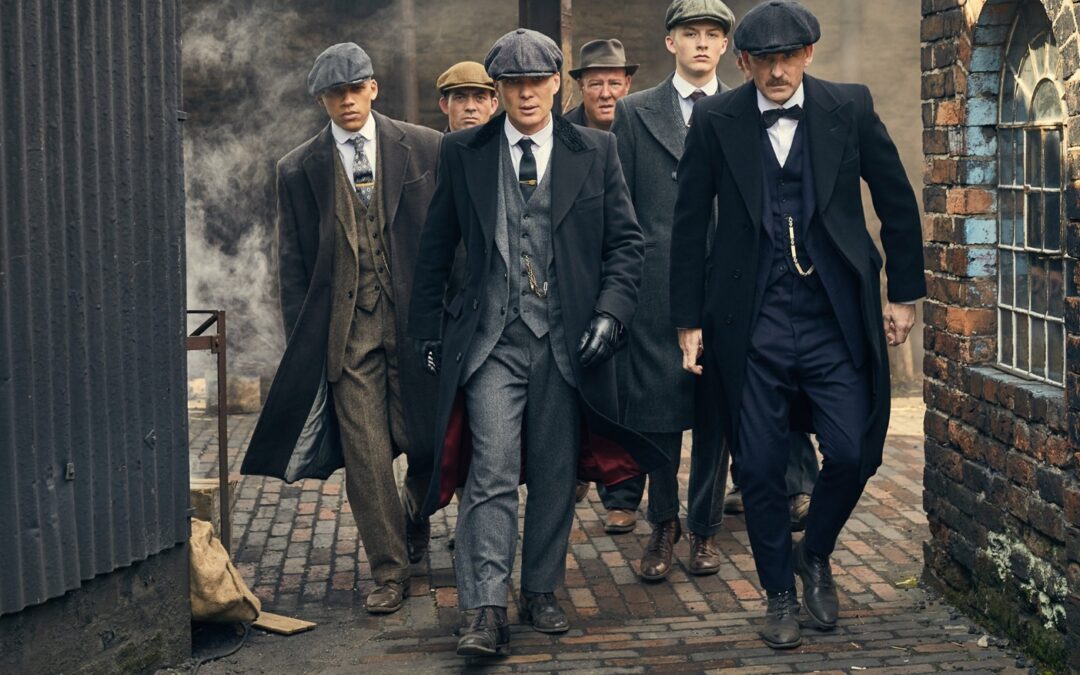
Ever since the gritty streets of Birmingham first flickered onto our screens back in 2013 with the original Peaky Blinders series, the show’s fashion has been more than just costumes—it’s become a cultural phenomenon. Flat caps, tweed suits, and that unmistakable undercut hairstyle didn’t just define characters; they sparked real-world trends that barbers and tailors are still riding high on today. Now, with the release of Peaky Blinders: The Immortal Man hitting theaters on March 6, 2026, and Netflix on March 20, the hype is back in full force. And let’s be honest, who wouldn’t want to channel a bit of Tommy Shelby’s swagger?
For fashion designers, students, and enthusiasts at Fashionnovation, this movie isn’t just entertainment—it’s a masterclass in blending historical authenticity with modern edge. We’re talking rich textures, layered looks, and accessories that scream power and resilience. This article dives deep into the styles of key cast members like Cillian Murphy, Rebecca Ferguson, Barry Keoghan, and Sophie Rundle, breaking down what makes them tick for 2026 trends. We’ll explore how these outfits draw from 1920s and 1930s working-class grit, how they’ve evolved for the big screen, and practical ways to adapt them into your designs or wardrobe. Plus, we’ll suggest affiliate-friendly pieces to link in your own content—because why not turn inspiration into income?
Whether you’re sketching your next collection or just curious about what makes a suit “Shelby-approved,” stick around. By the end, you’ll have the tools to create looks that are timeless, not trendy, ensuring long-term appeal in a fast-fashion world.
The Historical Roots of Peaky Blinders Fashion: A Blend of Grit and Glamour
To truly appreciate the fashion in The Immortal Man, we need to step back to the real Peaky Blinders gang of the late 19th and early 20th centuries. These weren’t dapper gentlemen in tailored wool; they were tough Birmingham street fighters known for sewing razor blades into their flat caps—hence the “blinders.” Their style was practical: heavy boots for stomping rivals, overcoats for hiding weapons, and tweed for enduring the industrial chill. But creator Steven Knight amped it up for TV, turning necessity into luxury. Costume designer Alison McCosh, who sourced vintage pieces for the film , explains how original 1940s clothing added authenticity, with elegant silhouettes that nod to post-war resilience.
In the movie, set in the 1930s amid economic turmoil, the fashion reflects power shifts. Tommy Shelby’s rise means richer fabrics like silk shirts and pinstripe wool, symbolizing ambition. For women like Ada’s character, it’s about empowerment—think structured coats and bold accessories that command respect in a male-dominated world. This historical fusion is why the style endures: it’s rooted in real stories but polished for today’s audience.
Fashion students, take note: Study the era’s textiles. Tweed from Scottish mills, herringbone patterns for depth, and earthy tones like browns, grays, and blacks evoke the smoky factories. Modern twists? Designers like Zegna (who dressed Murphy for the premiere) incorporate sustainable wool blends, making it eco-friendly for 2026 collections.
Ah, Cillian Murphy. The man who made us all reconsider the flat cap. In The Immortal Man, his Tommy Shelby is back with that brooding intensity, and his wardrobe is sharper than ever. Murphy’s real-life premiere look—a custom Zegna double-breasted wool overcoat with wide pinstripes, peaked lapels, a brown silk shirt, and matching scarf —perfectly bridges the character’s grit with high fashion.
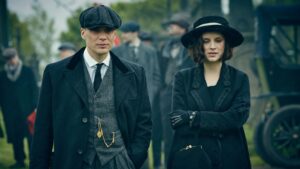
Break it down: Shelby’s suits are three-piece wonders, often in herringbone tweed or wool for texture. The vest adds structure, while high-waisted trousers create a elongated silhouette—ideal for designers experimenting with proportions. Accessories? A pocket watch chain for that vintage tick, and leather boots polished to a sheen. Murphy himself once joked about hating the undercut haircut at first, only for it to become a global trend [post:0]. Now, in 2026, barbers report a resurgence, with fades paired with longer tops for versatility.
A Closer Look At Cillian Murphy’s Peaky Blinders Premiere Outfit
Image: Cillian Murphy at the premiere, channeling Tommy Shelby in Zegna.
Peaky Blinders’ Stars Hit Brum Red Carpet For Movie Premiere • Channels Television
Image: Another angle of Murphy’s sophisticated suit, highlighting the pinstripes.
Rebecca Ferguson as Kaulo: Gypsy Glamour Meets Modern Elegance
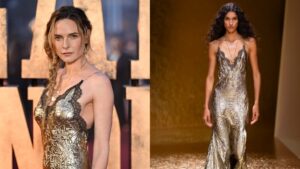
Enter Rebecca Ferguson as Kaulo, the Gypsy medium and sister to Tommy’s first love. Her character brings mystical depth, and her fashion? Pure opulence amid the grit. At the Birmingham premiere, Ferguson stunned in a Roberto Cavalli spring 2026 gold crushed-fabric gown with lace trim, a plunging neckline, and low back . It’s slinky, sequined, and screams red-carpet royalty, but ties back to the film’s themes of hidden power.
In the movie, Kaulo’s style mixes Romani influences with 1930s flair: flowing skirts in deep velvets, layered jewelry (think amulets and pearls), and shawls for dramatic effect. As Glamour notes, she’s one of the women making “big power moves” , her outfits reflecting that—structured shoulders for authority, metallic accents for allure. For fashionistas, this is a lesson in contrast: pair soft fabrics like silk with edgy details like lace edging.
Rebecca Ferguson in Roberto Cavalli at ‘Peaky Blinders’ Movie Premiere
Image: Ferguson in her Roberto Cavalli gown, alongside the runway inspiration.
Rebecca Ferguson Shines In Gold At The Peaky Blinders Premiere – Red Carpet Fashion Awards
Image: Ferguson posing on the red carpet, showcasing the gown’s shimmer.
Barry Keoghan as Duke Shelby: The Next Generation of Rebel Style
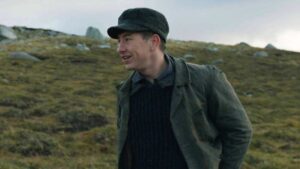
Barry Keoghan steps in as Tommy’s wayward son Duke, bringing fresh energy to the Shelby legacy. His on-set looks—leather jackets, flat caps, and rugged knits [image:7]—echo the original gang but with a youthful twist. Think distressed leather for that worn-in vibe, paired with slim trousers and boots ready for action.
Keoghan’s style draws from 1930s workwear: cable-knit sweaters for warmth, newsboy caps for anonymity. It’s less polished than Tommy’s, more raw—perfect for designers targeting streetwear lines. In 2026, this translates to hybrid pieces: leather jackets with tech fabrics for durability.
Netflix Gives First Look At Barry Keoghan In ‘Peaky Blinders’ Movie
Image: Keoghan in character, leaning out of a vintage truck.
Peaky Blinders | Barry Keoghan joins feature film cast | Film Stories
Image: Keoghan in a cap and coat, capturing the rugged essence.
Sophie Rundle as Ada: Empowering Women’s Fashion in a Man’s World
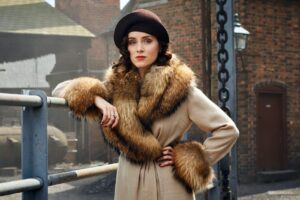
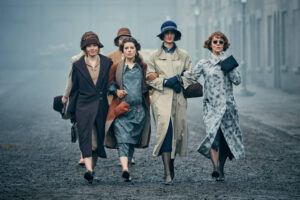
Sophie Rundle’s Ada has always been the moral compass, and her style evolves in the film to show growing influence. Fur-trimmed coats, cloche hats, and tailored dresses [image:5] blend femininity with fortitude. Think beige wool coats with fox fur collars for luxury, gloves for elegance.
Ada’s looks inspire modern power dressing: midi skirts with belts for definition, patterns like florals for softness amid hardness. For educators, discuss gender dynamics—how Ada’s outfits subvert expectations.
Sophie Rundle (Ada Thorne) looks so beautiful in S4 : r/PeakyBlinders
Image: Rundle as Ada in a fur-collared coat.
Having Her First Job Be Peaky Blinders Set The Bar High For Sophie Rundle
Image: Ada with Tommy, in period attire.
Red Carpet Revelations: How the Cast’s Premiere Looks Fuel 2026 Trends
The Birmingham premiere was a fashion spectacle. Murphy’s Zegna , Ferguson’s Cavalli , and the cast’s collective vibe [image:9] show how Peaky style translates off-screen. Fans dressed in tweed , proving its viral power.
For designers, mix vintage with contemporary: pinstripe overcoats over hoodies. This hybrid approach keeps it relevant.
PAPPED: Netflix Rolled Out The Red Carpet For Peaky Blinders: The Immortal Man World Premiere! | SPIN1038
Cillian Murphy walks red carpet for Peaky Blinders premiere
Image: Murphy, Ferguson, and Roth on the carpet.
Modern Adaptations and Affiliate Opportunities
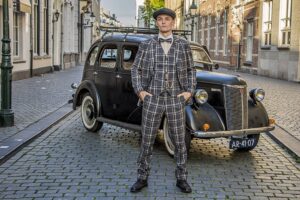
Bring Peaky into 2026: For men, tweed blazers over jeans. For women, lace-trimmed slips.
Design tips: Use sustainable materials for eco-appeal.
3-piece Peaky Blinders Gaston Green – ready-to-wear suit
Image: Modern green tweed suit.
3-piece tweed 1920’s style suit
Image: Plaid 1920s-inspired suit.
Polly Gray – Lizzie Stark – Esme Shelby and Linda Shelby in the Peaky Blinders
Image: Women in Peaky-inspired outfits.
Stephanie Collie obituary | Design | The Guardian
Image: Funeral scene with veiled hats.
Conclusion
The Immortal Man isn’t just closing a chapter—it’s immortalizing a style that’s adaptable, educational, and eternally cool. From Murphy’s suits to Ferguson’s gowns, these looks offer endless inspiration for designers chasing that 50,000-views-per-day viral hit. Experiment, adapt, and link wisely for traffic that lasts.