Fashion has incredibly morphed through different eras of time to 21st century clothing and fashion. Have we ever thought about how much fashion has changed over the course of time? The way we choose clothing in the 21st century is completely different from the ancient times. 21st century outfits all revolve around making fashion statements. All the changes in the nineteenth and twentieth century are the reason behind the fashion in the 21st century and has impacted the lives of many people in different ways.
Before the 1960’s
Before the 1960’s, long dresses, suits, hats and corsets were the main trend and fashion for the people of that time. But in the 1960’s the youth showed that they were powerful by changing the fashion trend to a much changed fashion environment which was known as the hippie clothing.
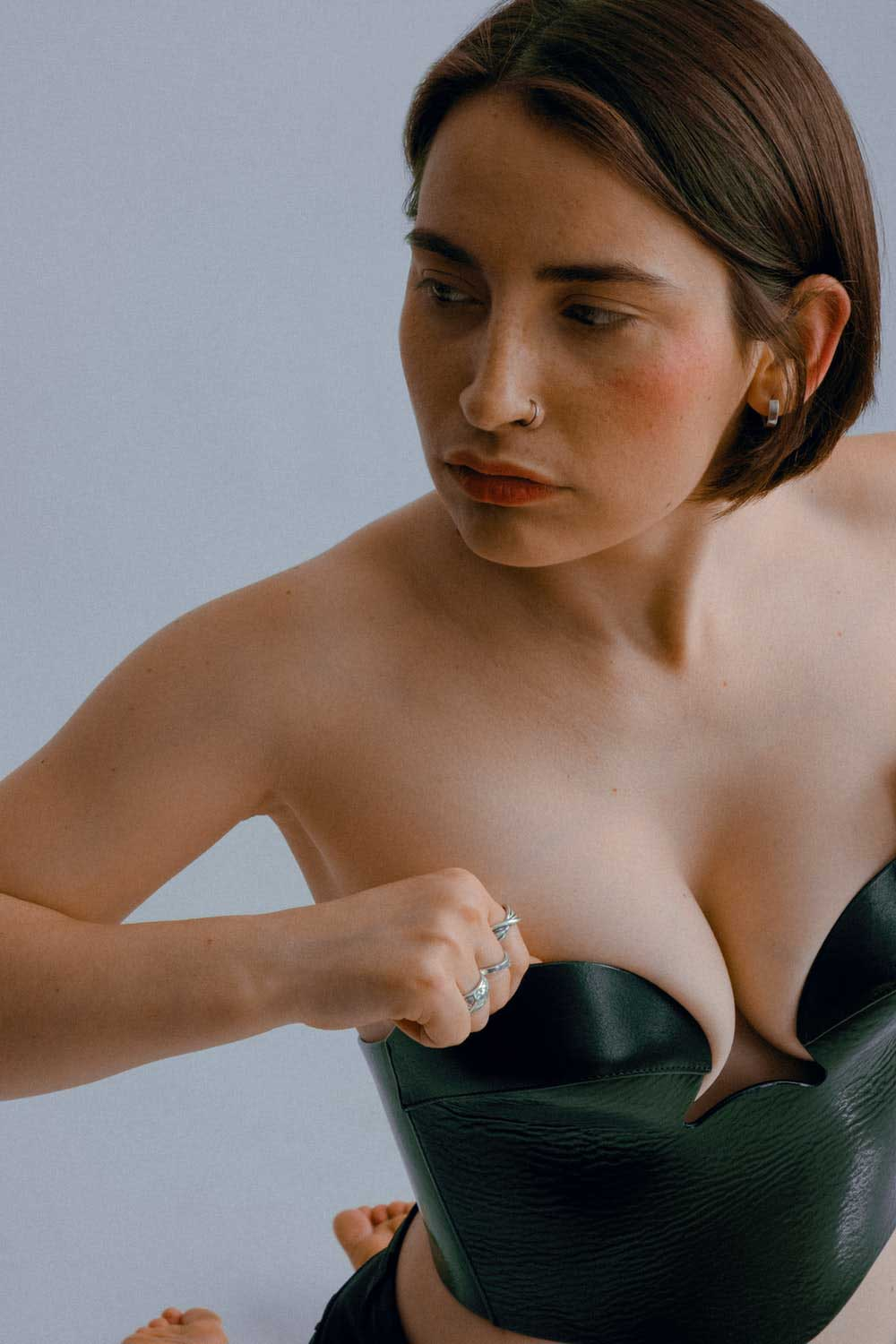
Figure: A woman wearing corset. A corset is a tightly fitting undergarment which extends from below the chest to the hips. Source: https://unsplash.com/photos/H7h3WorjoTI
The clothes of this century were much looser and dressing was in the form of a bit more revealing clothing, like mini-skirts. The clothes had a more casual look. There was the unisex look at the time of this century. The ragged jeans were also very popular.
1800s: Foundation of 21st Century Clothing
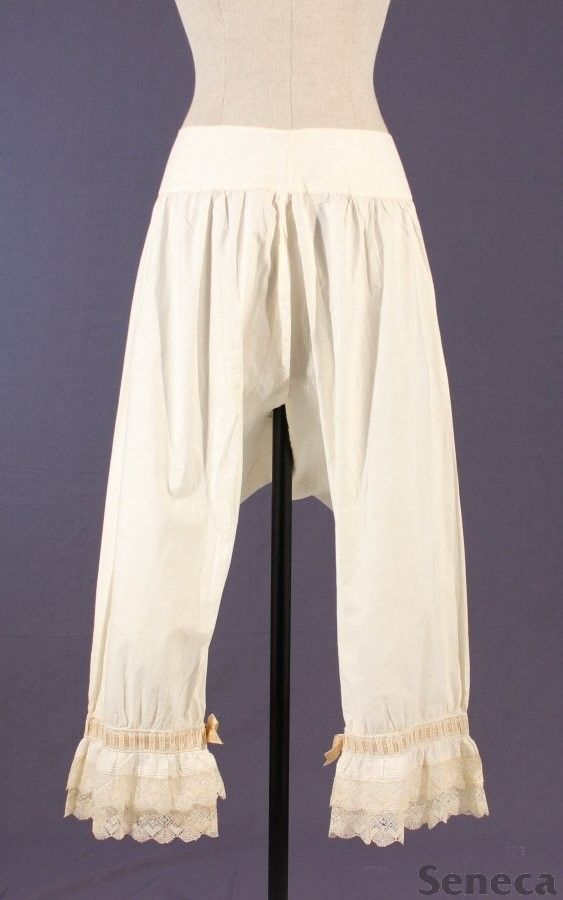
During the mid 1800’s, all outfits worn by women consisted of different materials to complete a whole wardrobe. The dresses that woman wore, composed of pantalettes, chemise, corset and a petticoat. Pantalettes were long clothing worn under everything else.
Pantalettes were long underpants with a frill at the bottom of each leg made from linen or silk, designed with tucks and flounces to give a layered look toward the feet. A chemise was the main one piece undergarment worn over the pantalettes. A corset would be worn over the chemise; it is a tightly fitting undergarment which extends from below the chest to the hips. It is used to add lift to the bust area and to add shape to the waist and hips. This cloth was used to highlight the shape of the waist to draw attention away from the natural shape of the waist line. It caused health problems for some women due to tightness of the corset. The corset is pulled together so tightly that it would squeeze the inner organs of a woman’s body together causing digestive problems and may cause reproductive problems; also it could even result in death. According to the weather outside and the season would determine the necessity of wearing a petticoat. But gloves and bonnets were always worn in those days. During the early 1800’s, long beautiful hair with possible curls was often seen.
1900s–1990s Evolution
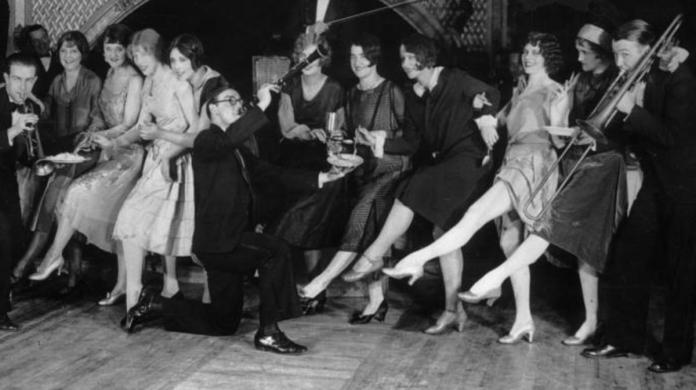
From the nineteenth century to the twentieth century fashion changed rapidly. In the 1990’s to 2000, there has been very beautiful clothes. In the beginning of the twentieth century, corsets returned again into action by breaking its bad name with a relaxing feel on women. In the 1920’s, the boyish look of women became a fashion. And women were known as “flappers” due to their short haircuts; like the “bob”, short skirts, and straight dresses.
Figure: Flappers dancing and enjoying themselves. Source: History.com
Women started going outside for working and being more involved with sports during that time. Designers started to experiment with new hemlines by making them long in the back but shorter in the front. Since the 20th century till now Jeans is counted as a fashionable dress code. However we have shifted from the former modes of fashion and clothings, we haven’t let them go. Instead we are getting back to them and fusing them with the latest trends.
Source: Compiled from Vogue Runway, Wikipedia 2020s in Fashion, McKinsey State of Fashion 2026
21st century clothing: What is 21st century fashion?
21st century fashion is the styles accepted by a large population of specific regions of the world from 2001 to 2100. Between the time period of 2001 to 2100, all the fashion trends, 21st century outfits, 21st century clothing, make the 21st century fashion. As we are just standing on 2023, we are literally only finished the one fifth of this century.
To understand the 21st century fashion history, we also need to understand the past. At this time of the twenty-first century, fashion has moved a few steps back. Clothing in the 21st century is quite amusing because designers are not only focusing on the next big thing but are also focusing on bringing the past into the future.
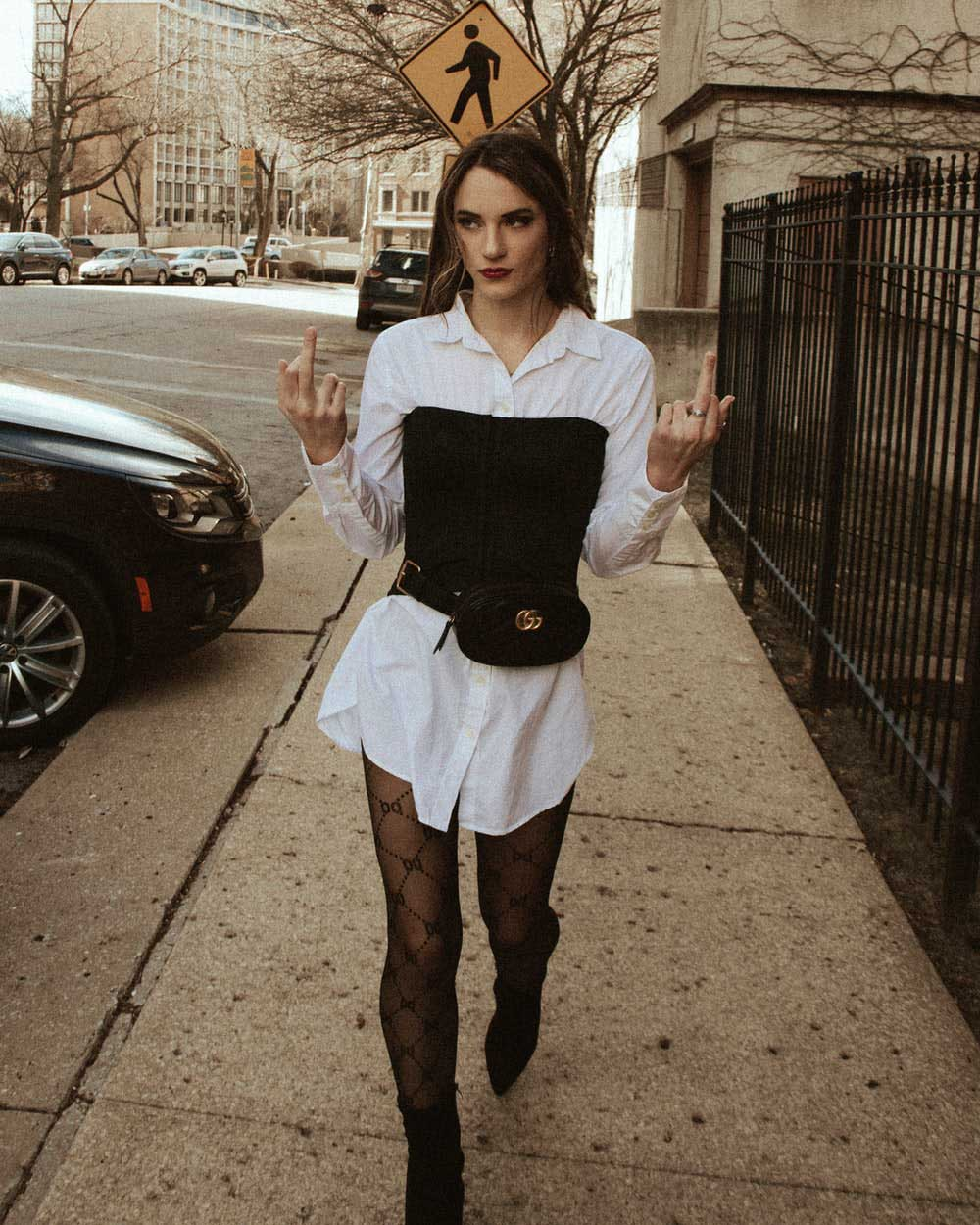
Figure: A woman wearing mini skirt with leggings representing the 21st century clothing. Source: https://unsplash.com/photos/-LU2yUMLNRA
Teenagers are still wearing miniskirts with leggings (skin tight multicolor tights) as a major style; worn underneath the skirt along with a dashing blouse.
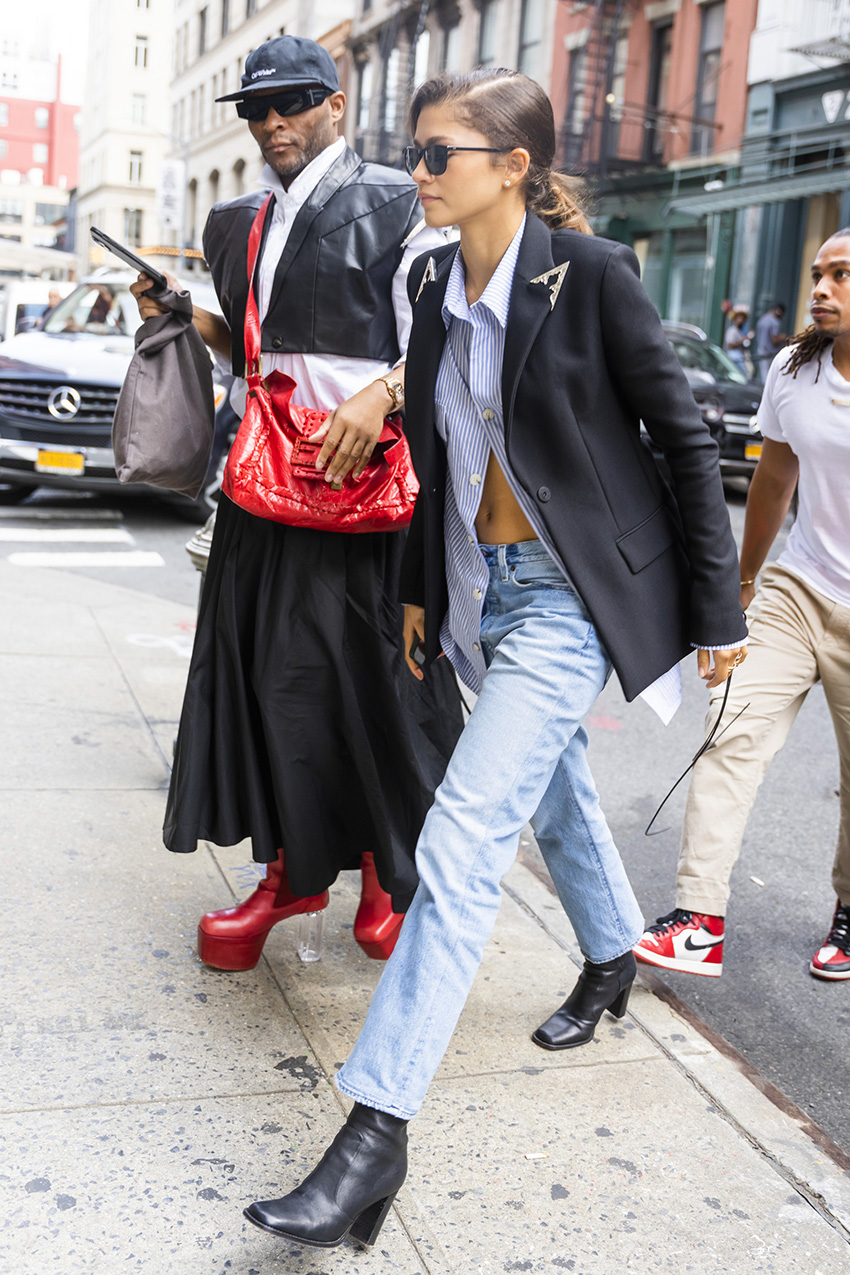
Celebrity Y2K revival – Zendaya-inspired low-rise looks. Source: Who What Wear
Figure: Woman wearing jeans and t-shirts. Source: https://unsplash.com/photos/D1W3rQGaNhI
Many women now wear jeans and t-shirts for more comfort. Even sarees are now seen to wear different new looks. The new millennium fashion is the remix of the 60’s, 70’s and the 80’s mixed together to make the 2000’s a major fashion statement. Fashion, a small word, with so many different characteristics. We now wear whatever and whenever we want. This is fashion in today’s world. The twentieth century changed the outlook of women by giving them the right to fight for what they wished to wear. Fashion in the nineteenth and twentieth centuries has impacted the normal lives of every people. Fashion has changed but still, it is the same in many ways. We should not underestimate ancient fashion or style because what goes out, wears out will always come back as future trends.
The characteristics of fashion in the 21st century
21st century fashion is characterized by its versatility and agility. This century is shaped with technology, the fourth industrial revolution (Industrial Revolution 4.0), The touch of connectivity, automation, advanced analytics and manufacturing technology have transformed the global business for years. The touch of fast fashion and its triumph over slow fashion has shaped the fashion trends and made them agile as never before, making a products’ lifespan less than a week! So, the 21st century outfits are brief, short-lived, trendy and agile.
21st century people are fast!
21st century people are fast as the century’s demand. They are always in a hurry to cope with the situations, they are adaptive and they adopt the newest trends with lightning fast decision where the previous century people were quite slow to grab a new fashion. With the advent of technology and social media like facebook, twitter, instagram, pinterest, the 21st century people are always hungry for new trends and to adopt those trends.
Technology, AI & Sustainability Revolution in 21st Century Fashion
The fourth industrial revolution continues: AI predicts trends with high accuracy and powers the “AI Shopper”. McKinsey State of Fashion 2026 calls AI the #1 business necessity. Sustainability is now mandatory — circular economy, resale, repair, and the EU Digital Product Passport (2027) are changing everything.
Industry Outlook 2026 – What McKinsey Says
According to the McKinsey & BoF State of Fashion 2026 report:
AI is the #1 opportunity for the industry
US tariffs are reshaping supply chains (76% of executives say this is the biggest issue)
Resale market will grow 2–3× faster than new retail
Jewellery is the fastest-growing category (4.1% annual unit growth)
Low single-digit industry growth expected — agility wins
Tip for readers: This is why second-hand platforms like Depop and Vinted are exploding right now.
21st century outfits
The 21st century outfits fit the temperament of the 21st century people. The outfits are brief, most of the time simple and modern.
2000s Fashion
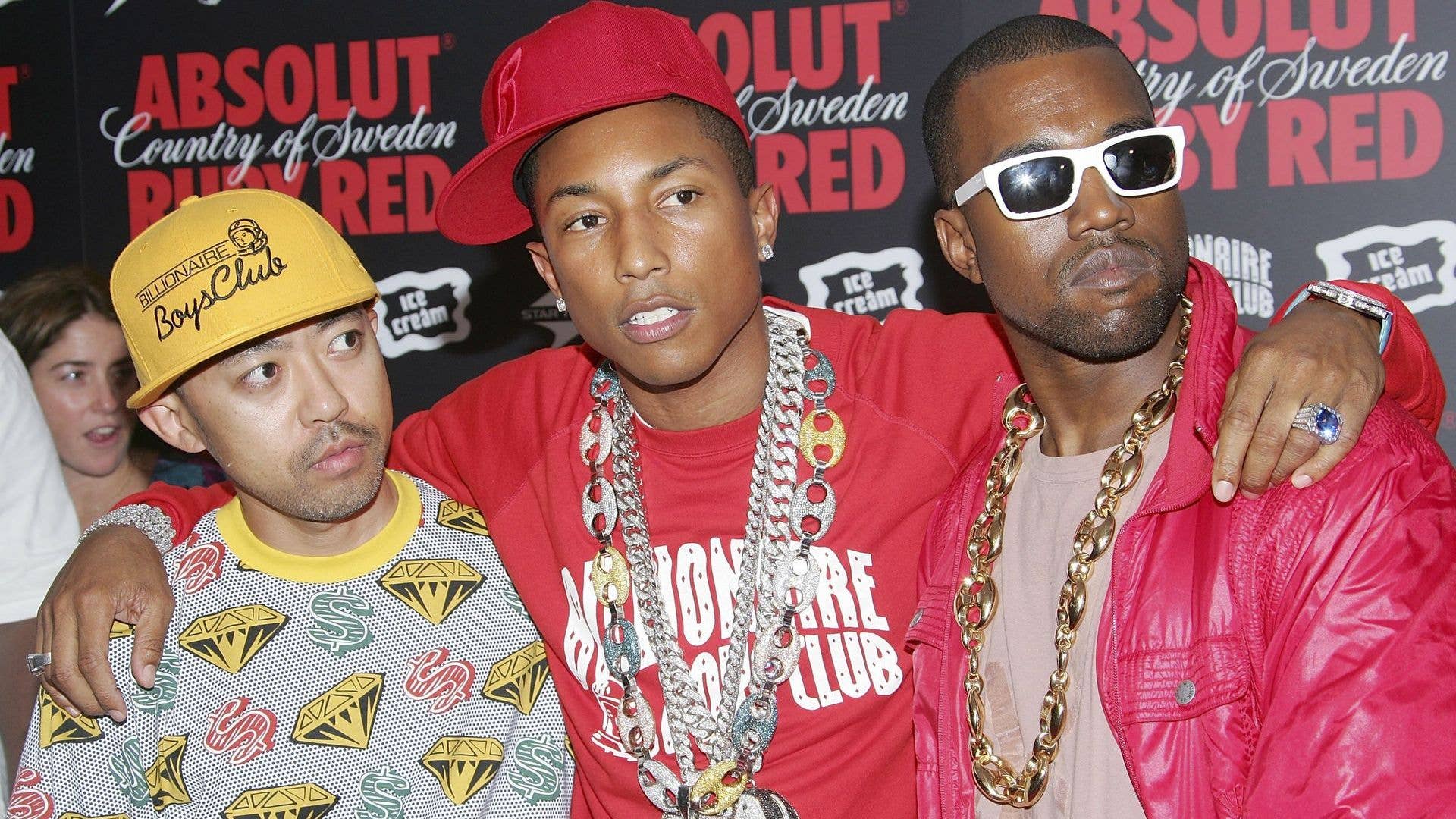
2000s fashion means fashion from 2001 to 2009. 2000s fashion is characterized by its global mash up where fusion of vintage styles, global and ethnic clothing like boho were the top trends. Fashions of numerous music-based subcultures like Hip-hop fashions, generally was the most popular among young people of all sexes, followed by the retro inspired indie look in the later part of the decade.
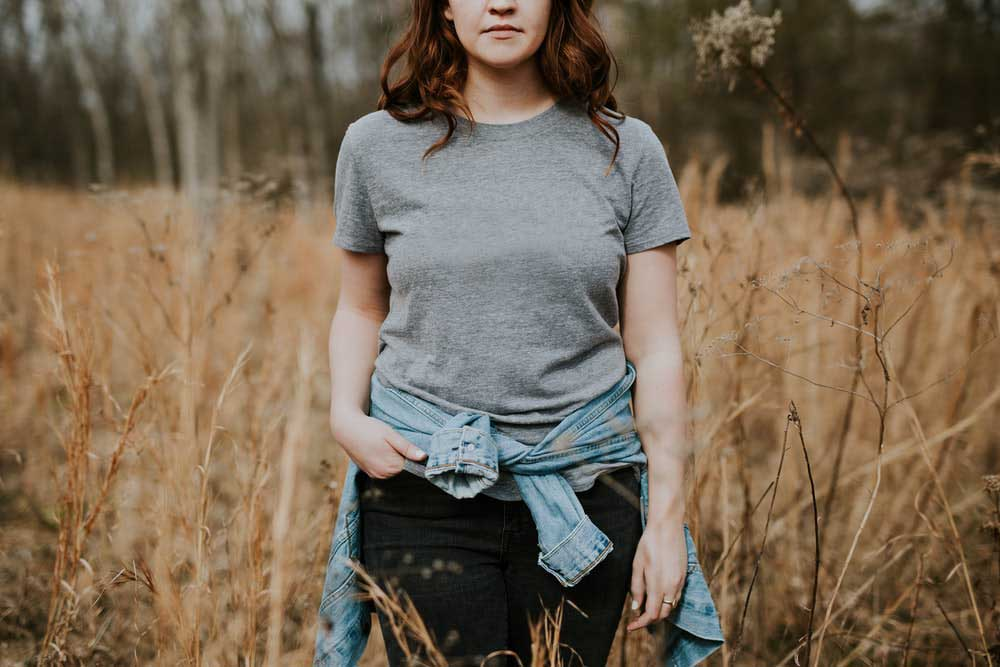
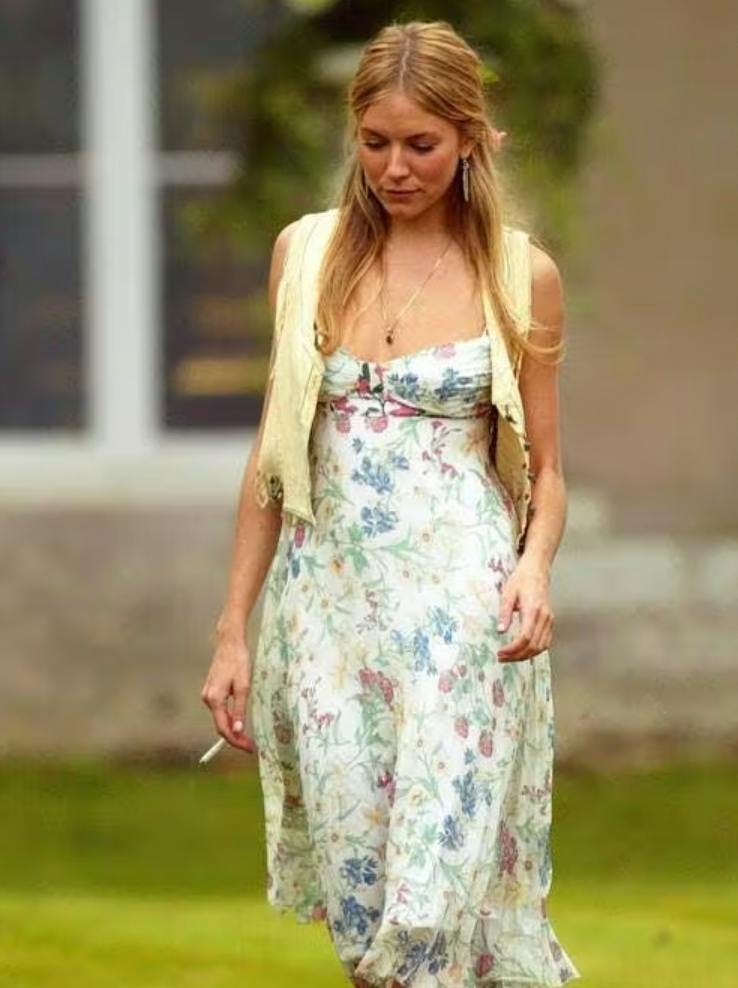
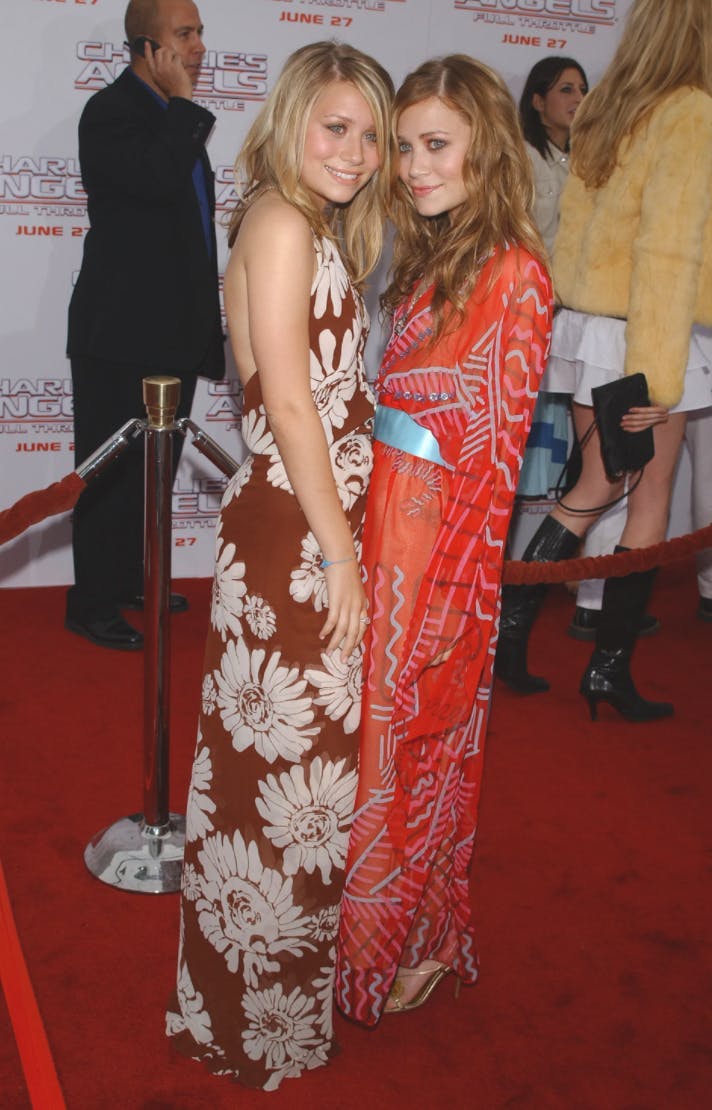
Boho, short for bohemian is categorized by its loose, flowy, patterned, and beaded clothing. The 2000s boho style dominated as a trend as celebrated like Sienna Miller, Mary-Kate and Ashley Olsen, Britney Spears, Nicole Richie, and Beyoncé adopted it with grace.
Sienna Miller. Photo courtesy: L’Officiel
Mary-Kate and Ashley Olsen, Photo courtesy: L’Officiel
Hip-hop fashion of the 2000s. Photo courtesy: Image via Getty/Evan Agostini
25 and older aged men and women adopted a dressy casual style which was popular throughout the decade. Globalization influenced the fusion of Middle Eastern and Asian dress into mainstream European, American, and Australasian fashion. Furthermore, eco-friendly and ethical clothing, such as recycled fashions and fake fur, were prominent in the decade.
Fusion of traditional and western clothing. Fashion in the 21st century outfits. Source: Wikipedia.
In the early 2000s, many mid and late 1990s fashions remained alive around the globe, while simultaneously introducing newer trends. The later years of the decade saw a large-scale revival of clothing designs primarily from the 1960s, 1970s, and 1980s.
In the 2000s, the early to its mid, the rise of fast fashion was a major event. The transition from slow fashion to fast fashion was marked by this decade. H&M, Forever 21, Zara, Target, etc. brands. Many US fashion brands played a monumental role in shaping this decade.
2010s Fashion
2010s fashion starts from 2010 and ends in 2019. This decade has certain characteristics of its own.
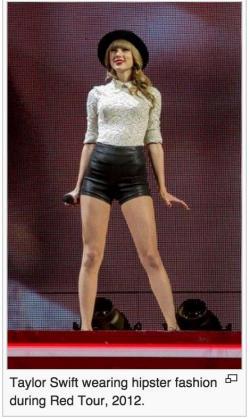
This decade was defined by some iconic catalysts like hipster fashion, athleisure, a revival of austerity-era period pieces and alternative fashions, swag-inspired outfits, 1980s-style neon streetwear, and grunge and skater fashions influenced unisex 1990s-style elements. The later years of the decade were influenced by the social media influencers promoting fast fashion brands on Pinterest and Instagram.
Popular global fashion brands Adidas, Balenciaga, Burberry, Christian Dior, Fashion Nova, Forever 21, Gucci, H&M, Hugo Boss, Louis Vuitton, Marks and Spencer, Nike, Uniqlo, Under Armour, etc. shaped this decade with their ingenious collections.
Taylor Swift in Hipster Fashion. Photo Courtesy: Screenshot via Wikipedia’s “2010s in Fashion” page.
A woman wearing an athleisure wear. Photo courtesy: Wikimedia Commons
90’s Grunge aesthetic fashion wear returned in the 2010s fashion of the 21st century outfits. Photo courtesy: luanna (instagram)
The Key Features of 2010s Women’s Fashion were: Crop tops, High-waisted bottoms, Maxi dresses and skirts, Bold prints, including floral, animal, and geometric patterns on clothing and accessories, Athleisure wear, Chunky sneakers, Jumpsuits and rompers, Chokers, Bold colors, Vintage-inspired accessories.
The 2010s women’s fashion was characterized by a mix of retro and modern elements, bold prints and colors, and a focus on comfort and individuality.
The third decade-2020s Fashion (Updated March, 2026)
2020s fashion started from 2020 and will end in 2029. Hit by and recovering from the Covid-19, this decade has a lot of salient characteristics. TikTok and instagram are major marketing tools for many brands in this decade. Marketing strategies involve third parties, particularly influencers and celebrities. Sustainability has become a buzzword in this decade… (← keep your full original paragraph here exactly)
2024–2026 Key Trends (WGSN, McKinsey State of Fashion 2026, Vogue, BBC)
Bold Colours & Dopamine Dressing – Electric blue, yellow, red (Loewe, Dior)
2020s fashion started from 2020 and will end in 2029. We are in this decade and so far this decade is too much exciting. Hit by and recovering from the Covid-19, this decade has a lot of salient characteristics.
TikTok and instagram are major marketing tools for many brands in this decade.
Marketing strategies involve third parties, particularly influencers and celebrities.
Sustainability has become a buzzword in this decade and all the major brands are now committed to offer products made sustainably. Both environmental and social sustainability are on the focus as consumers are now too much concerned about sustainably sourced and made products.
Thus reducing, reusing, recycling, and circular economy have become extremely crucial for the brands’ business. Moreover, second hand clothing are becoming more and more popular day by day.
You can read our 2021, 2022 and the fashion trends of 2023 through these links.
21st century fashion designers
As you have come to know about 21st century fashion, you should also know some titbits about the 21st century fashion designers, the true catalysts who are bringing the changes.
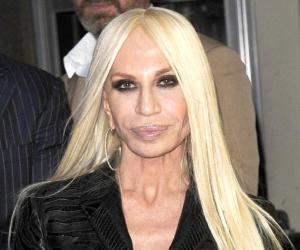
Donatella Versace, a beacon light of 21st century fashion and clothing. Source: https://www.thefamouspeople.com/profiles/donatella-versace-4743.php
She is the sister of Gianni Versace, the founder of the Italian fashion brand Versace. After Gianni’s murder in 1997, Donatella inherited the brand and took it the next level and now, she is the chief creative officer of the company. Some of her works include supporting Elton John’s AIDS Foundation. She is the first woman to win the GQ Designer of the Year award.
Ralph Lauren. Image source: https://www.thefamouspeople.com/profiles/ralph-lauren-2613.php
Born on October 14, 1939, Ralph Lauren has emerged as a fashion designer and businessman. He is the founder of the Ralph Lauren Corporation, a fashion brand named after himself, a global multibillion-dollar fashion enterprise.
At the beginning of his career, he was a salesman for a tie company. Then he went on to launch his own fashion lines and established himself as a popular name in the fashion industry within years. This American fashion designer is also well known for his humanitarian activities.
Marc Jacobs. Source: https://en.wikipedia.org/wiki/Marc_Jacobs
Born on April 9, 1963, Marc Jacobs is an American fashion designer. As the head designer for his own fashion label, Marc Jacobs, he has produced and gifted his followers with a lot of modern dresses. Formerly his brand name was Marc by Marc Jacobs, a diffusion line, which was produced for approximately 15 years before it was discontinued after 2015.
Marc Jacobs was the creative director of the French design house Louis Vuitton from 1997 to 2014.
Time magazine placed his name as the one of the 100 most influential people in the world in “2010 Time 100” list.
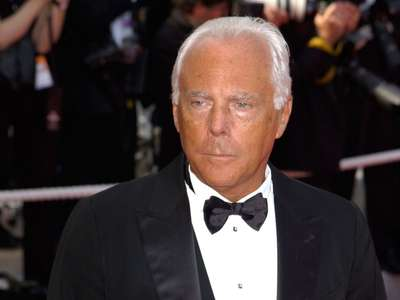
Giorgio Armani
Giorgio Armani. Source: https://www.britannica.com/biography/Giorgio-Armani
Born on July 11, 1934 in Piacenza, Italy, Giorgio Armani’s signature style is relaxed yet luxurious ready-to-wear and elegant, intricately beaded evening wear.
Armani intended to become a doctor but left medical school to pursue a career in fashion.
Karan began her career as an assistant designer with Anne Klein.
In 1988, Karan, recognizing the need for a more affordable fashion line, launched Donna Karan New York (DKNY) which is a women’s line.
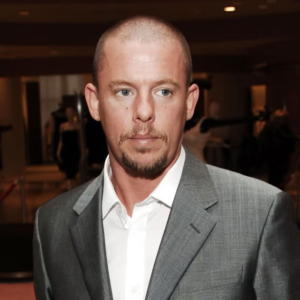
Alexander McQueen
Alexander McQueen, a British Fashion Designer. Source: Biography.com
Lee Alexander McQueen, born in 1969, a visionary artisan in the realm of fashion, left an indelible mark on the industry that still reverberates today. With a career that soared from humble beginnings to the pinnacles of haute couture, McQueen’s designs were an exquisite blend of dark romanticism and avant-garde innovation. His runway shows were legendary spectacles, each a mesmerizing journey into the depths of his creative mind. Tragically departing the world too soon in 2010, McQueen’s legacy as a daring couturier and fearless provocateur endures, inspiring generations of designers to push boundaries and challenge conventions.
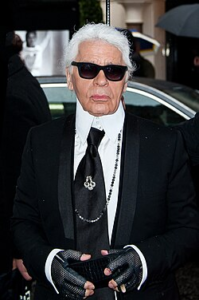
Karl Lagerfeld
Karl Lagerfeld. Source: Wikipedia
Karl Lagerfeld, a name that resonates through the glamorous corridors of fashion history, was a creative force unlike any other. With his signature high-collared white shirts, fingerless gloves, and iconic powdered ponytail, Lagerfeld stood as an indomitable figure at the helm of haute couture for decades. His genius knew no bounds, whether he was designing exquisite collections for Chanel, Fendi, or his own eponymous brand. Beyond the runway, Lagerfeld’s sharp wit and unmistakable style made him a legend whose influence forever shaped the fashion in the 21st century.
Future of Fashion 2026–2030
McKinsey and WGSN forecast deeper circularity, agentic AI shopping, smart fabrics, superfandom cosplay, and hyper-personalised style. Fashion will be faster, greener, and more personal than ever.
Iconic 21st Century Fashion Moments (So Far)
Lady Gaga’s meat dress (2010)
Alexander McQueen’s Armadillo shoes & Plato’s Atlantis show
Pharrell’s Louis Vuitton debut + genderless revolution
Y2K revival on TikTok (2022–2026)
Met Gala sustainability moments + AI-generated fashion experiments
FAQs – 21st Century Fashion 2026
What are the biggest 21st century fashion trends right now in 2026?
Transformative Teal (WGSN Colour of the Year), Gold Renaissance, Guardian Design accessories, fringe details, and circular/second-hand styles.
How has 21st century fashion changed from previous decades?
From corsets and formality to fast fashion, then to agile, sustainable, tech-driven personal expression.
Is fast fashion still dominant in 2026?
It coexists with circular models — second-hand is growing 2–3× faster (McKinsey State of Fashion 2026).
What are the biggest 2026 fashion trends according to runways?
Bold colours, tassels, loud luxury (BBC/Vogue)
Sabera Momtaz,
Department of English Notre Dame University Bangladesh (NDUB)
– McKinsey & BoF State of Fashion 2026- BBC Fashion Trends 2026- Vogue Runway 21st-Century Archive
To know the biggest fashion trends of 21st century, you can visit here! Moreover, if you want to know the future of fashion industry after Covid-19, you can click here!
And if you want to read one of our premium case studies on Fast Fashion Vs Slow Fashion, you can go here!
Fashion trends are always evolving and so do the 21st century fashion trends. This century is so much versatile with technology, globalization and fast pacing people that the trends have become even short lived than ever and 21st century outfits are getting more dramatic and evolving. Moreover, fast fashion has become a norm of the 21st century and thus there is a huge fast paced transitions due to the speed of fast fashion vs slow fashion. All in all, 21st century fashion is faster than the 20th century fashion and ever evolving, shaped with US-China trade war, Covid-19, Russia-Ukraine war, etc.
To cover the 21st century fashion and 21st century fashion trends, we have produced many different articles, and we also share WGSN Trend reports in our words so that you become aware of the trends and have a historical record of the past and future trends.
You can read our premium articles on Met Gala the fashion trends of 2019, 2021, 2022, 2023 and 2026 By studying these three years’ trends consecutively, you’ll have a broader perspective on how trend is moving in the 21st century fashion. If you’re a man or a fashion designer interested in designing men’s fashion, you can straight go here! This article is written based on the WGSN 2023-2024 trend reports!
Creativity in fashion is inexorably intertwined. Fashion is a style accepted by a certain population at a certain time. Creativity is something which enables one to create something new. So, the root of fashion which is style needs that essence of human being which creates and that is creativity. So, the relationship between fashion and creativity is, creativity is a part and parcel and the very essence of fashion for which. In this article, we will talk about:
The Essence of Creative Expression in Fashion
What is creativity and how does it immerse in fashion design?
What is Fashion?
The Intersection of Technology and Creativity
Bridging Sustainability and Creativity
Embracing Diversity and Inclusivity
The Power of Collaboration
Diversity and Inclusivity as a Catalyst for Creativity
Relationship Between Creativity & Fashion Design
Source of creativity in fashion
How to sharpen one’s creativity in fashion to ace in the fashion world
The Essence of Creative Expression in Fashion
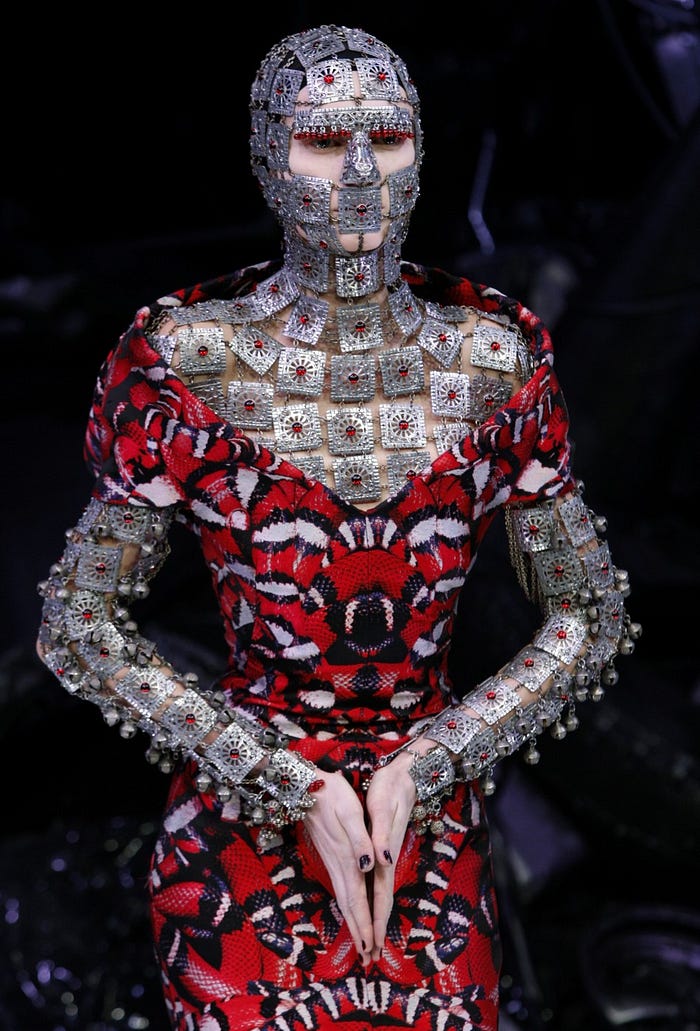
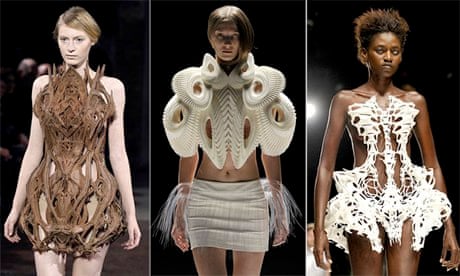
Creativity in fashion transcends beyond the mere act of wearing clothes. It serves as a language of self-expression where designers articulate narratives through textures, colors, cuts, and silhouettes. From the avant-garde creations of Alexander McQueen to the boundary-pushing designs of Iris van Herpen, innovative approaches to fashion redefine conventional norms and set new trends.
Alexander McQueen’s Avant-garde Fashion. Photo courtesy: Medium.
Iris van Herpen’s boundary-pushing creation. Photo courtesy: Iris van Herpen.
What is creativity and how does it immerse in fashion design?
What is Creativity?
Creativity can be seen as something where a new idea is formed and where some old ideas are modified in a new way and which gives us a new look. Creativity in Fashion design is the relationship between creativity and fashion.
A creative man can never lag. He/she always thinks something new which is different from other imagination Creativity is characterized by the ability to find hidden patterns, which is different from other imagination.
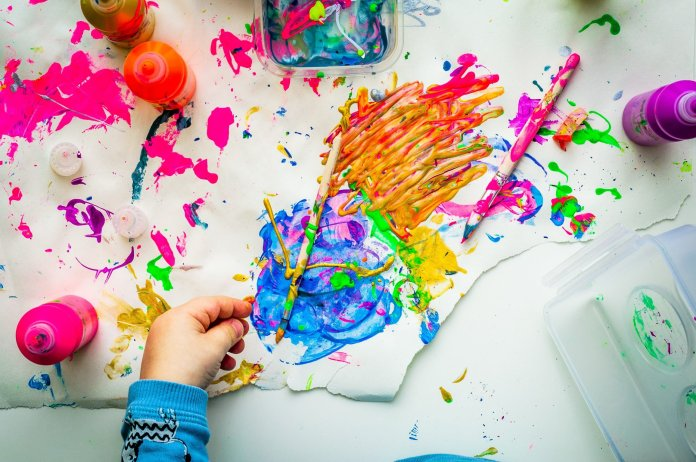
Creativity in fashion design. Creativity is characterized by the ability to find a hidden pattern, which introduces new ways to the world. Courtesy: Unsplash
Creativity is characterized by the ability to find a hidden pattern, which introduces new ways to the world. But the first and foremost thing of creativity is not only about thinking, it’s also about producing. There is a saying “If u have ideas but don’t act on them you are imaginative but not creative.” For example, a creative person can go creative even with artistic neon light displays. He can customize the alluring neon light displays with his own creative taste and creatr crazy creative displays for himself and others visiting his room. This is one of the most automatic forms of creativity that people are showing nowadays.
What is Fashion?
Fashion is mainly an expression of uniqueness and aestheticism in clothing, footwear, lifestyle, makeup, hairstyle, and body proportion.
In another way, it can be said that fashion is like a storyteller. It says that how a man is displaying himself.
How Fashion Shapes Our Society. Fashion shapes our society and creativity shapes fashion.
Fashion is everywhere, every corner of a body, how one walks, how one sits, each and everything is included in fashion. The term fashion is related to style.
But one kind of fashion doesn’t stay forever, it changes from time to time. At a particular time, a group of people chooses a style collectively and it is known as a trend.
Actually, we can say that the world is all about fashion. The world always tries to represent herself in a new way and it is called fashion. So fashion lies everywhere, in every people, in every corner of this beautiful world.
Fashion’s Evolution: From Tradition to Avant-Garde
Fashion evolves, not just in style but also in the process of creation. From traditional handcrafted techniques to technological marvels like 3D printing, the industry continually embraces innovation. The fusion of tradition with technology marks a pivotal shift in how designers approach their craft.
The Intersection of Technology and Creativity
Advancements in technology have opened doors to new dimensions of creativity in fashion. Designers now harness the power of AI, virtual reality, and augmented reality to not just design but also to redefine the consumer experience. From creating digital fashion collections to enhancing the shopping experience through AR try-ons, technology becomes the paintbrush for these modern-day artists.
Bridging Sustainability and Creativity in Fashion
The call for sustainability has brought about a revolution in the way fashion creativity is perceived. Designers are exploring eco-friendly materials, upcycling, and zero-waste production techniques. Innovations such as using pineapple or mushroom leather and recycled fabrics are revolutionizing the industry, proving that creativity isn’t just about aesthetics but also about responsible practices.
Creations by Dutch designer Iris Van Herpen during the Spring/Summer 2012 Haute Couture collection show in Paris. Photograph: AFP/Getty Images/Francois Guillot/Getty Images for IMG/Gareth Cattermole/Corbis/Britta Pedersen
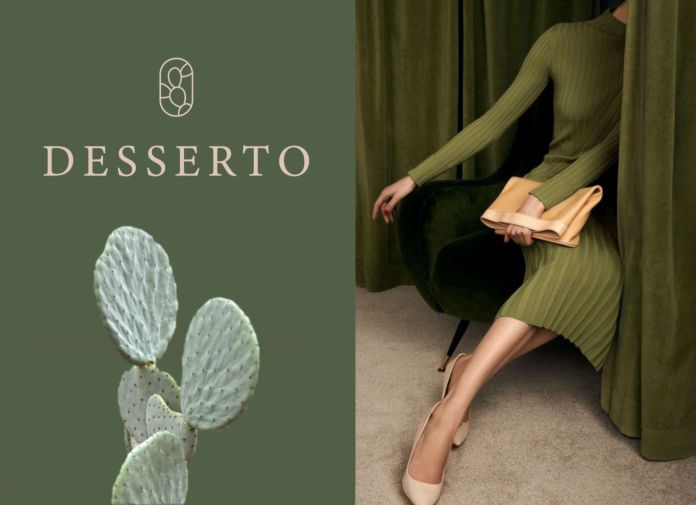
Creativity in fashion has no bounds. Now designers are also using sustainable materials like cactus leather to incorporate in fashion.
Embracing Diversity and Inclusivity
Fashion’s creativity isn’t just about the designs; it’s also about the stories it tells. The industry is becoming more inclusive, embracing diversity in sizes, shapes, colors, and backgrounds. Brands are celebrating uniqueness, breaking stereotypes, and challenging societal norms, fostering a more creative and accepting environment.
The Power of Collaboration
Collaboration stands as a pillar of creativity in the fashion industry. Designers team up with artists, musicians, and even scientists to create something beyond the conventional. These partnerships foster an environment where the amalgamation of various art forms results in creations that transcend boundaries and set new trends.
Portrait of Anne of Austria by Peter Paul Rubens, 1621-25, via Rijksmuseum, Amsterdam; with Model Lucette van Beek on Dolce & Gabbana runway, Fall 2012, photographed by Vittorio Zunino Celotto, via Getty Images
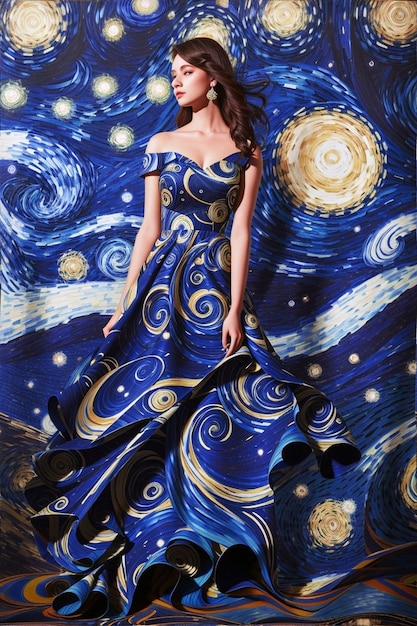
Vincent Vangogh’s The Starry Night inspired dress. An example of an art inspired fashion design, creativity in fashion has no limits. Photo courtesy: Freepik
Diversity and Inclusivity as a Catalyst for Creativity in Fashion
Fashion is evolving to embrace diversity and inclusivity, celebrating uniqueness in all its forms. Brands are breaking stereotypes, challenging societal norms, and fostering a creative and accepting environment. The industry’s pivot towards representation and inclusivity inspires new narratives and designs.
Relationship Between Creativity & Fashion Design
Creativity in fashion design is a must. People who are in fashion need to be mostly visual types of persons, and also better need to remember visual information in relation to any other form.
Creativity in visual arts is a visual type. It is therefore necessary to apply all the ideas and exercises to encourage creativity visually. There is a famous sentence -“Fashion is like a barrel that is constantly turning”.
It is necessary to approach the problem from a completely new side and creativity directed towards innovation. the complexity of it.
Fashion is all about creativity The more and more person’s work is unique and creative, the more the work will be highlighted. Every buyer wants unique collections and those unique collections come from creative minds.
Everybody thinks that creativity is something that comes by birth. But this not true. The more you will practice, the more you will learn.
Practice makes a man perfect. Here just a wish for change is needed, nothing more than that. The more you will practice the more, the work will be perfect. Another thing is an inspiration, which is most important for a creative mind, man learns by seeing newer things.
Our mind can be inspired by nature, flower, sea, building, or anything. We just need a fresh mind to make it work and he/she must be punctual.
The sources for creativity in fashion can be listed below:
You can see more creative task of our members here.
You can also watch a Fashionnovation video where you can get a glimpse of the creative tasks done by our members.
Conclusion
The satisfaction of needs is the main wish of mankind. Fashion designers are tasked to facilitate meeting the needs in the textile field in quest of satisfaction of that task and it is needed to apply and strive innovation.
Name: Rabeya Begum Mishu
Department of Textile Fashion and Design,
Bangladesh University of Textiles,
Id:2020-1-6-034
A woman in modest outfit. Courtesy: Photo by RODNAE Productions from Pexels
Modest fashion? From Jakarta to Dubai, London & soon even Miami, runways around the world are showcasing higher neckline, longer hemline, longer sleeves and looser cuts. This is Modest fashion!
The term modest fashion refers to a fashion trend of wearing less skin revealing clothes with stylish design. Although the exact interpretation of modesty varies across culture, religion and country. Beyond the various thoughts all agree on the idea that modest fashion is mainly focused on introducing the trend fashionably with the requirement of their faith, personal comfort and choice.
Origin of Modest fashion
Modest fashion can be seen throughout many different time, periods & culture. Although Abrahamic religions have more influence in modest lifestyle. Many Christian, Jewish, and Muslim women practice the veiling of their head, with Christian women wearing a head covering, Jewish women wearing a tichel, and Muslim women wearing a hijab.
However historically it can be connected with medieval clothing. Besides Robes, shawls and intricate Kaftans of 14th century Ottomans and Farthingale skirts of Elizabethan England could be considered modest.
Market of Modest Fashion
Having rich history behind modest fashion is now endorsed by global fashion brands and retailers, and was set to become a $450 billion industry. However, in 2018 modest fashion was considered as a $250 billion industry. According to Pinterest UK, modest fashion searcher increased 500% in 2019. More designers are restoring to longer and more flowy designs. The industry was expected to increase by 51% by 2019. According to the Global Islamic Economy Report, the Muslim fashion spent alone in the UK is estimated to reach £226 billion by 2020. Names like Dolce & Gabbana, H&M, Uniqlo have also entered modest fashion segments. Other brands, including DKNY, Tommy Hilfiger, Oscar de la Renta, Monique Lhuillier, Zara and Mango, have produced special collections for the Ramadan holiday.
Fashion Week/ Fashion Show based on Modest theme
A lot of fashion shows have been organized based on modest fashion theme. Muslim cities like Jakarta, Dubai & Istanbul have already organized fashion week successfully. Middle east country like Saudi Arabia, Qatar, Israel, Palestine, UAE, Turkey and African countries like Morocco, Algeria etc. are coming forward in support of modest fashion. Western fashion cities are also approaching with this theme. In February 2017, London hosted its first-ever Modest Fashion Week, featuring more than 40 labels showcasing styles that ranged from maxi dresses to hijabs. Israeli fashion company Modli which has mainly US based market also featured modest fashion items.
In 2018, the Islamic Fashion & Design Council (IFDC) has partnered with Milan Fashion Week (MFW) to host a modest fashion party. Miami fashion week based on modest fashion was also about to be hosted in 2020 but due to Covid19 pandemic they expect to reschedule it in 2021.
Contradiction & Misconception about Modest Fashion
For many people, Modesty is a modern taboo. It is the object of ridicule and scorn. Some believes Modesty inhibits freedom and it is the product of centuries of “Patriarchy”. Although the most important part of this development is that modest clothes are worn outside of a religious context. It depends fully on the consumer how they are accepting modest fashion. Most of the modest fashion are designed for both religious and non-religious consumers.
Once you put aside the misconception that modest fashion is only tied to religious and religo-ethnic desires, many of the fashion experts recommend quick to stress that covering up doesn’t have to equate to looking boring or avoiding trends. Currently many scholars are working and studying with this growing phenomenon such as British professor Reina Lewis from London College of Fashion.
The need for Security
Another theme found in the new modest fashion trend is the need for security. One of the primary functions of clothing is physical protection from the elements. However, clothing’s most significant purpose is more protection of a person’s dignity and privacy which inspires one’s spirituality. In an increasingly polarized and uncertain world, many women claim a need for extra “armor” to protect them from the unforeseeable.
The situation of the #MeToo movement has also materialized insecurity between the sexes. This rising tension is redefining relationships and social conventions.
Modesty Wear for Men
Hijab lines created by luxury brands such as Dolce & Gabbana and frequent shows in places such as London, Dubai and Paris, modest fashion is being bigger than ever for the ladies.
However, men have not been forgotten when it comes to trend-led modest fashion. In 2018 London Modest fashion week clothing targeted towards modesty wear for men. Hooded jubbah, denim khandoura, shemaghs, modest prayer hats and swanky sandals displayed on the center stage to an expectant crowd of media, bloggers and fashionistas. Alia Khan, the chairwoman of the Dubai-based Islamic Fashion and Design Council (IFDC) said: “The opportunity is in studying this area and catering sincerely to it. I predict this is the next area of growth we will all be hearing a lot more about.”
What’s Next?: Trend of modest fashion
The next stage for modest fashion lies in diversity: The diversity of men & women who are choosing to dress this way, as well as an expansion of designers, influencers and platforms that this department will seep into. It is expected that major retailers will collaborate with modest designers and more modest fashion events that live offline and empower women in person. Experts believe it will continue to grow naturally, as it caters to a particular person, not a culture or a religion.
Source: (Wikipedia, Forbes, Who What Wear, Arabian Business, TRT world, Khaleej Times, Miami Fashion week, IFDC)
In this world, a lot of genius artists have come, a lot have achieved fame and reputation. When we talk about fashion, and art can be a subject included there. Fashion includes every trending thing, every aspect valued by mass people. If we go into history, we will find out ancient clothing via artworks, like Vincent Van Gog’s own portrait or ‘Salvator Mundi’ by Leonardo. It’s a matter of fact that some of the artworks represented the mindset of painter and creator, their design, and their aspect of clothing. To know more about the trending life of then, we need to know about the artworks and artists, their inspiration, their aspirations. Let’s begin the journey with Leonardo da Vinci, a mystery of all time.
Leonardo di ser Piero da Vinci-this breathtaking name is shortly known as Leonardo da Vinci, a mystery for all time in the history of art! Whenever you say the name Leonardo, you get a face in your imagination, a man with a long crooked nose as the headmaster of Hogwarts, long hair and beard like Rabindranath Tagore, wearing a cap over his head!
That’s what Google shows us, little do we know his secrets that he hid well his nature, the brilliance of his mind! What we get to know is a little portion of his work (fewer than 25 artworks have survived) from his notebooks. People are always trying to dig up this brilliant person’s life, wanting to know more about the secret massages he left behind in his works. His motives have been the holy grail for the person who is looking at the artworks of Leonardo for the first time. Work represents the master, a secret represents a brilliant mind.
If you want to read another one of our uncommon article about Chemistry and fashion, you can go here!
Although we are not going to discuss the mystery, we will be talking about his early life, his family, his early training, and his companions.
Leonardo was born from a reputed family’s son and a peasant. His full name has a meaning. It means Leonardo the son of ser Piero from the city of Vinci. A name revealing the identity of his father. His father had 6 wives and 12 children born from the 5th and the 6th mistresses. Leonardo had a very distant relation with his siblings because of the age gap. He was the eldest of all.
He had received an informal education in Latin, Geometry, and Mathematics. He has recorded some events from his childhood in his notebooks, about a kite being an omen for his writing, terrified and curious about cave while exploring the mountain and the observation of water, writing and crossing out the river. His early life has significantly caught the eyes of historians. The fruit reveals the tree, but here the fruit and tree were so mysterious that the historians tried to look back at his roots, still, they found a little information about his keen eyes and observation power. His notebooks revealed his vast interest in anatomy, cartography, painting, paleontology, etc. He revealed a few when he was alive. The story of his early life bears a great deal of historical guess.
At the age of 14, he was brought at Florence where his nature turned to bloom day by day. He was appointed as a Garzone (studio boy) in the workshop of Verrocchio, the leading painter, and sculptor of his lifetime. At the age of 17, he became an apprentice of Verrocchio sharing the studio with some other apprentices who became renowned artists of their time later like Botticelli, Perugino, Ghirlandaio, Lorenzo di Cardi. He had command over theoretical and technical skills like drafting, metallurgy, metalworking, chemistry, leatherworking, mechanics and woodwork, drawing, painting, sculpting, and modeling because he immersed himself in diverse training. His training paid off and he had created a world of science with the help of crafts. His odd thoughts with the touch of art became the science of these days. It’s still unknown if he had put all his efforts to learn those skills but it is said that he had a gifted intelligence as well as a thrust for the unknown. As a result, we see a lot of architecture drawing in his notebooks. His painting structure was so much different than other artists of his time.
It is said that once Leonardo worked with Verrocchio in ‘The baptism of Christ’. It is said that Leonardo’s painting was way superior to his master and Verrocchio put down his brush, he never created an artwork again. Though it is an apocryphal story later when the parts drawn by Leonardo were examined, a new brush stroke pattern with a new color mixture was found. This proved his genuine talent in the field of artworks. He probably had worked as a model for his master as some artworks were drawn by his master had similar figures and the structure of his body was similar to them. His first artwork was made of pen and ink drawing in 1473 about the Arno valley which was cited as the first pure landscape in occident.
According to Vasari, young Leonardo was the first to suggest the Arno river as a navigable channel between Florence and Pisa!
Throughout history, Leonardo has been named as the prime example of the Renaissance, a man of universal Genius of all time. His unquenchable curiosity and inventive imagination have made him one of a kind. His approaches were very futuristic for his time. Many historians are still searching for the hidden motives of Leonardo throughout his very few leftover artworks. The journey is compared with the Holy grail quest, a quest for the light of truth!
Sabiha Moon Taha Department of Textile Fashion and Design, Bangladesh University of Textiles,
TFD-45
You can also read another of our premium article on Fashion in the 21st century here!
And if you want to read another one of our premium case studies on Fast Fashion Vs Slow Fashion, you can go here!
When do you think about Eid or Puja what comes first in your mind? Isn’t it about your dress up and makeover! Yes, it’s all about fashion. Nowadays, our clothes are more or less festival based.
Now if we are talking about fashion, we should know it’s all begun with “Nipun”, in 1973, officially a fashion industry in Bangladesh. The next milestone was “Aarong”, founded in 1978. Basically, our industry is based on festivals. The fashion houses make the most money during Eid-ul-Fitr, Durga Puja. The rest is during the Pohela Boishak, Falgun, Valentine’s day. In every festive season, this fashion trend changes. As many trends emerge, every designer tries to grab attention with his unique works.
Now if we look back the past two years we can get a clear picture of how these trends changed.
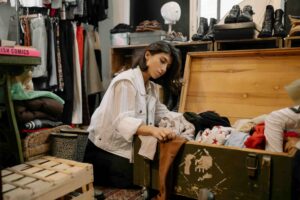
Female friends out shopping together
In 2018. Loose pants, loose trousers, side-striped trousers paired up with regular T-Shirt was enough for men to create a trendy and casual look. Hawaiian shirts, bowling shirts in pastels, and of course long blazer significantly reminded us about 50s’ style. For women, heavy abaya style dress or salwar suit flared shararas, embellished bottom, cigarette pants were trendy. Young ones preferred light color with a natural look. Again, the color blocking techniques really boomed that year. There were three ways: monochromatic (one color throughout the entire outfit in different shades), separate (contrasting colors mixed garments), and stand-alone (one color-blocked garment). 2018 was full of dramas for makeup. Black eyeliner took a dramatic turn, just trace it around both eyeliners, wing it out at a dramatic angle. The cat’s-eye flick got a new look. In 2018, metallic makeup in all shades was very trendy.
But those trends had to change in 2019. We can see changes in the pattern of the garments. Animal motifs were hugely used in pants, jackets, bags, scarfs, and so on. Patchwork was highly recommended. It was used in jumpsuits, pants, and more. As colorful as it is creative. Different types of shoulders were seen like puff shoulders. Dazzling bright colors and prominent bold patterns were really mind-blowing. Abstract prints were also popular and loved by young girls. The neon display was also on the rise with appealing hue and simple block prints. Girls were very fascinated about the different cut of a blouse like sleeveless, high collar, boat neck, Koli cut, choli cut, contrast blouse, etc. The young generation was much interested in local fabrics. Bold colors for makeup were used in 2019. Pink eyeshadow had gotten softer in tone and formula, making it easier to wear. It was more haphazard, messy-but-cool looking undone-but-done, far from perfect makeup is a thing.
In 2020, this pandemic situation, our fashion industry is highly affected. Still, we are trying to go with the flow. In this Eid, printed lawn dress, embroidered chiffon, or printed silk were preferable. For pants, fringe trouser pants, cigarette pants, bell bottoms, tulip pants, pencil pants were highly demanded. Kurtis with floral motif or shirts; asymmetrical design, digital mixed prints, silk tunic were chosen by young girls. Slim fit Punjabi with Islamic motif, sleeve & button plate with separate fabrics were seen. This year cool and deep dyeing shirts are classy as check shirts. For a casual look, jeans or trousers with combo patches, T-Shirt or shoulder tape two pockets shirts pair up with light color loafers/snicker/chinos are perfect. Polka dot, geometric pattern is trendy this year. Easy, breezy, and breathable handloom fabrics are suitable for this festive season. Handloom fabrics dyed with organic vegetable-based dyes are used which have been ethically sourced, last much longer, they are eco-friendly and comfortable. Soft lightweight kurtas, saris salwar kameez earthy shades of indigo, mustard, fawn, terracotta, and henna are more preferable. For makeup, this year all you need to do is line your lower lashes with either the same color or lighter shade than the one of the top. Forget a bold red lip, rather go for a bright pink lipstick. Matte will be much convenient than a creamy one. Animal paint on your eyelashes will create a super creative and cool look.
So, this is about our fashion trends which changed gradually. As we wear yellow in Falgun, red in valentine’s, colorful and vibrant something in Eid or puja, so the fashion changes. In so many years our style, choice, trends changed in many ways and hopefully, it will keep changing.
What more can I say, for me – Fashion is a festival in its own way.
Ria Debnath
Department of Textile Fashion and Design, Bangladesh University of Textiles,
Id: 2019-1-6-001